
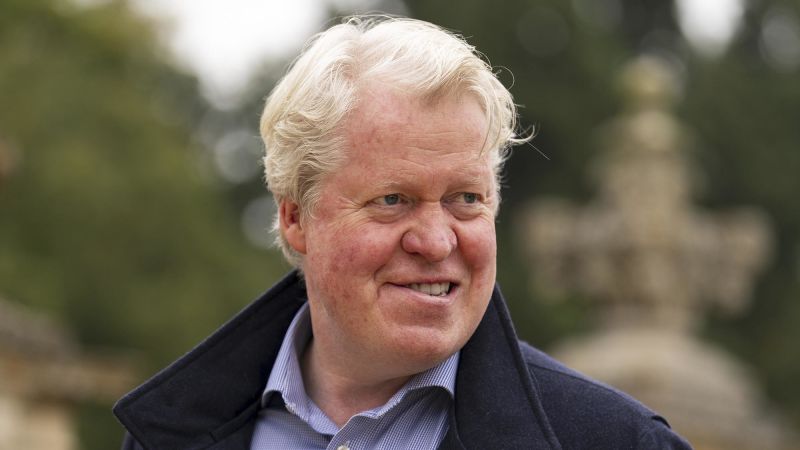
Earl Spencer Returns to the Center of a Royal Dispute
Qwenews.com – Nearly three decades after Princess Diana’s funeral placed Earl Charles Spencer before a global audience, Diana’s younger brother is again at the heart of a sensitive royal controversy. Extracts from his forthcoming memoir have revived painful questions about the days following her death in 1997 and about the relationship between Spencer and his former brother-in-law, now King Charles III.
Spencer says that, in a telephone conversation after Diana died, Charles reacted angrily when Spencer objected to Princes William and Harry joining their mother’s funeral procession. Spencer’s view was that Diana would not have wanted her sons exposed to that experience. He also alleges that Charles said:
“We’ll forget her soon enough.”
Buckingham Palace has firmly denied that account. Its response was notably forceful, suggesting that overwhelming grief can affect a person’s judgment, stating that “the pain of fraternal grief can cloud reason.” Spencer has rejected that characterization, describing it as gaslighting, a term used for conduct intended to make someone doubt their own memories or perception of events.
“It is not every day you wake up to find you’ve been gaslit by the King.”
The dispute has prompted sharply divided reactions in Britain. Some observers have questioned the value of reopening a family trauma involving the King and Diana’s sons. Others see Spencer’s account as an attempt to explain the protective instinct behind his actions at a moment when royal duty, public expectation and private bereavement collided.
A childhood shaped by Althorp
Charles Edward Maurice Spencer was born in London on May 20, 1964, less than three years before Diana. He belongs to one of Britain’s most prominent aristocratic families, with longstanding links to the royal household. Queen Elizabeth II was his godmother.
The Spencer family acquired Althorp, its estate in West Northamptonshire, in 1508. The house and surrounding grounds remain the family’s ancestral base, roughly two and a half hours north of London by road. Diana and Charles grew up there, and their shared childhood became central to the way he later described their bond.
Spencer has recalled affectionate memories of their early years, particularly the time they spent together as their parents’ marriage broke down. He portrayed Diana as an important companion during a difficult period for the family. Yet the siblings’ relationship was not free from conflict. Private letters that emerged during a 2002 trial involving Diana’s former butler showed strains between them after her separation from the then-Prince Charles.
One dispute concerned Diana’s wish to live in Garden House on the Althorp estate. The arrangement was initially accepted but was later declined by Spencer, who proposed other homes on the property. Another letter referred to a phone call in which Diana ended the conversation by hanging up on her brother. Those episodes offered a reminder that, despite the extraordinary circumstances surrounding Diana’s life, the Spencers also experienced ordinary family disagreements.
The eulogy that defined his public role
Any assessment of Earl Spencer’s place in the royal story is shaped by the funeral speech he delivered on September 6, 1997. In Westminster Abbey, he remembered Diana not only as a princess admired around the world, but as the sister with whom he had shared childhood routines and rivalries.
“She was the very essence of compassion, of duty, of style, of beauty.”
He spoke of a sister who had “mothered me as a baby,” argued with him at school and travelled with him between their parents’ separate homes on weekends. His remarks also included a fierce condemnation of the press, which he said had pursued Diana relentlessly. He called her the “most hunted person of the modern age.”
The speech drew applause inside the abbey and from people listening outside. For many, it became one of the defining public moments of mourning after Diana’s death. It also established Spencer as a guardian of her memory, a role that has continued to shape the attention given to his comments about the royal family.
From Eton to journalism and historical writing
Spencer was educated at Eton College in Berkshire, close to Windsor Castle, before studying modern history at Magdalen College, Oxford. His working life took him into broadcasting. Beginning in 1986, he spent a decade with NBC News in the United States as an on-air correspondent.
He later developed a career as an author, writing extensively about history and members of his own family. His books have also examined royal figures, including Charles II. That background has given Spencer a public identity beyond his association with Diana, though her life and death remain inseparable from how he is viewed internationally.
He has five daughters and two sons from his first three marriages. Althorp continues to serve both as a private family home and as the place most closely linked to Diana’s childhood and legacy.
An early view of Diana’s marriage
Spencer’s relationship with Charles was not always defined by tension. When the then-Prince of Wales met Diana at Althorp in 1977, Spencer initially viewed him positively. Speaking in 1999 about the couple’s plans to marry, he recalled Charles as pleasant and charming and said he felt relaxed about the relationship.
That earlier warmth makes the present disagreement especially striking. It is not simply an argument over a single alleged conversation; it reflects the lasting emotional weight of the period after Diana’s death. For William and Harry, who were boys at the time of the funeral, the renewed debate touches an event that remains among the most examined moments in modern royal history.
Spencer’s memoir claims a place within that wider history: the perspective of a brother who believed he was defending Diana’s wishes. The palace’s denial ensures that the account will remain contested. What is clear is that the questions raised by Diana’s death, her public life and the responsibilities placed on those around her have not faded with time.
Related Reading
Frequently Asked Questions
What is Who is Earl Spencer the man at?
Who is Earl Spencer the man at is the main topic of this guide. The article explains the context, practical details, and next steps readers should understand.
Why does Who is Earl Spencer the man at matter?
Who is Earl Spencer the man at matters because readers are looking for a useful answer, not just a short summary. Good content should match search intent and help them decide what to do next.