
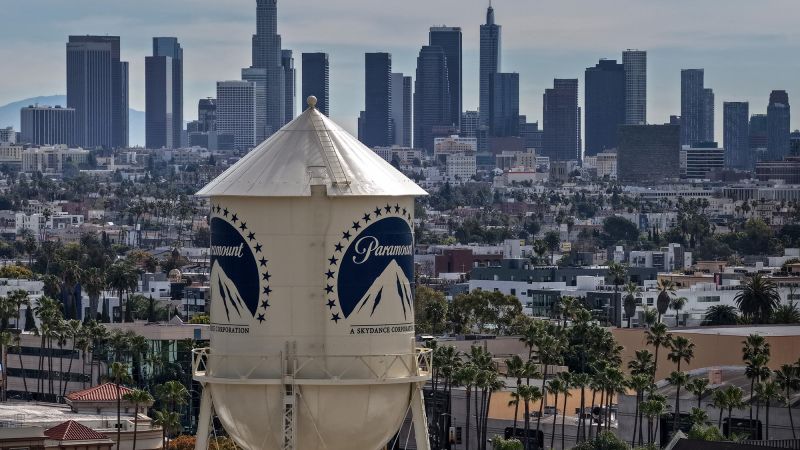
Trump’s DOJ Approves Paramount-Warner Bros. Merger, as State Lawsuits Loom
Qwenews.com – The Trump-era Department of Justice has granted final approval for the merger between Paramount and Warner Bros. Discovery, a landmark decision that has ignited debate among media analysts, politicians, and consumers. This green light, announced on Friday, allows Paramount to move forward with finalizing the deal by the end of September, despite ongoing scrutiny from state attorneys general. The DOJ’s statement emphasized that the merger would not “pose a significant risk to competition or consumer interests,” asserting that its effects on streaming platforms, traditional television, and film production are minimal. The approval comes as a major victory for Paramount, a company deeply connected to the Trump administration’s regulatory priorities.
Federal Approval and Antitrust Concerns
The merger, which unites Paramount Skydance with Warner Bros. Discovery, was initially blocked by the Biden administration in late 2023 due to fears of reduced competition in the entertainment industry. However, under the Trump administration’s more relaxed antitrust stance, the Department of Justice has now cleared the deal. Officials argued that the combined entity would enhance content diversity and innovation, particularly in the rapidly evolving streaming market. They also noted that the merger’s impact on local news and journalism, which has been a key issue in past debates, would be mitigated by Paramount’s commitment to investing in media outlets like CNN.
The DOJ’s decision follows a thorough review of the deal’s potential to consolidate power, especially in the face of growing dominance by tech giants like Netflix and Disney. While the federal regulators found no substantial harm to competition, critics argue that the Trump administration’s shift in antitrust enforcement has made the approval process more favorable to large corporations. This has raised concerns about the long-term effects on market fairness, with some analysts suggesting the merger could limit choices for consumers and stifle innovation in the entertainment sector.
State Lawsuits and Political Backing
Although the federal approval is a crucial step, a coalition of state attorneys general is still preparing to challenge the merger. California’s Department of Justice, in particular, has stated that it will “remind the federal government of the importance of state-level antitrust enforcement.” This potential legal push has been fueled by allegations that the Trump DOJ prioritized corporate interests over public welfare, especially in deals involving media conglomerates. Senator Elizabeth Warren, a vocal critic of the merger, called it a “betrayal” of consumer rights, citing a perceived lack of rigor in the federal review process.
The merger’s approval has also drawn attention to the political connections of key figures involved. Larry Ellison, Oracle’s co-founder and a major investor in Paramount, has been a consistent supporter of the deal. His son, David Ellison, became Paramount’s CEO shortly after the merger’s announcement, sparking questions about the influence of political allies in shaping regulatory outcomes. Bruce Springsteen, a prominent cultural critic, recently highlighted these ties on “The Late Show with Stephen Colbert,” quipping that Paramount’s alignment with Trump has led to a “kiss his ass” strategy to secure the merger.
While Paramount has defended its actions, stating that the merger will “deliver benefits to consumers, creators, and the entertainment industry,” opponents argue that the deal could centralize media power in the hands of a few major players. The Trump DOJ’s approval has been seen as a reflection of the administration’s preference for deregulation and its alignment with corporate interests, a stance that has divided opinions on both sides of the aisle. Nevertheless, the federal clearance has given Paramount a significant edge in completing the transaction, as it now faces fewer obstacles in the regulatory arena.
The merger’s completion is expected to reshape the media landscape, combining Warner Bros. Discovery’s vast library of content with Paramount’s strong presence in television and streaming. This integration has the potential to create a powerful media empire, with combined assets spanning films, television networks, and digital platforms. However, the looming