
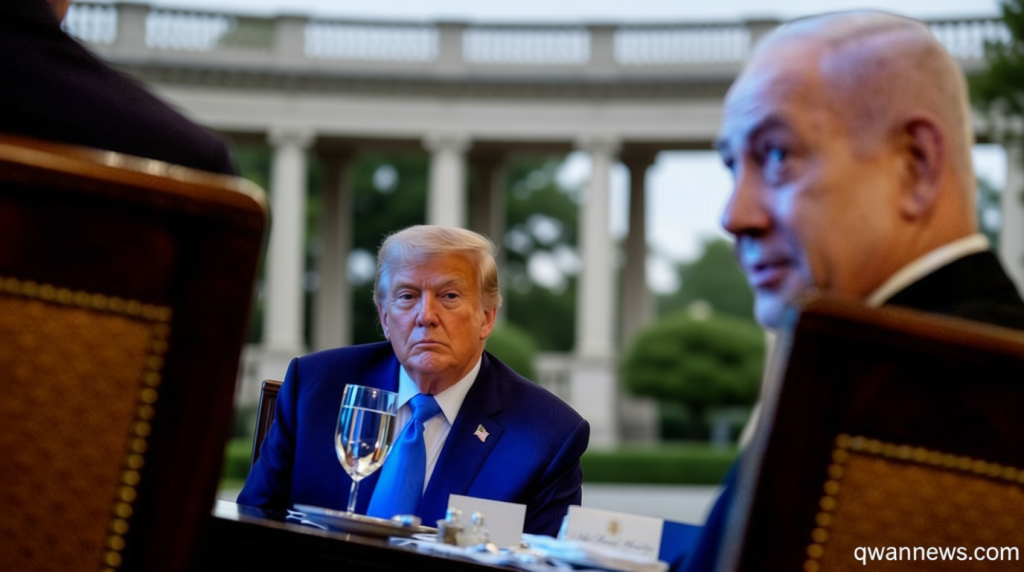
Netanyahu’s Dreading Moment: Trump’s Pact with Iran
Qwenews.com – President Donald Trump’s new agreement with Iran has become a defining moment for Benjamin Netanyahu, Israel’s prime minister, as it aligns with his long-standing fears of reduced American support for Israeli security. The deal, which was announced during a critical strategic meeting in late June, signals a potential pivot in U.S. foreign policy toward Iran, raising concerns among Israeli officials about the future of military operations in the region and the easing of economic sanctions on Tehran. Netanyahu, who had previously opposed the 2015 Iran nuclear deal, now faces a new challenge: balancing his domestic political agenda with the implications of Trump’s approach on Israel’s strategic position.
The Strategic Shift in U.S.-Iran Relations
Trump’s agreement with Iran marks a significant departure from the previous administration’s policies, which had imposed strict sanctions on Tehran in response to its nuclear program and regional aggression. The new framework, outlined during a series of high-level discussions, aims to ease these penalties in exchange for commitments from Iran to curb its ballistic missile development and nuclear activities. While the specifics of the deal remain under review, Israeli analysts warn that it could embolden Iran’s regional ambitions and weaken the deterrence that has long been a cornerstone of Israeli defense strategy. For Netanyahu, this represents a calculated risk that may test his ability to secure long-term support from the United States.
Netanyahu’s Mixed Reactions and Political Calculations
Despite his public opposition to the 2015 nuclear deal, Netanyahu has chosen a more measured response to Trump’s latest agreement. During a press conference on Monday, he refrained from directly criticizing the deal, instead emphasizing the need for continued dialogue with the U.S. on Iran’s security threats. This restraint, however, has sparked debates about his strategic priorities, with some Israeli officials questioning whether his silence is a sign of compromise or a calculated move to avoid further straining relations with Trump. The prime minister’s political team has been working to frame the agreement as a necessary step to ensure stability in the Middle East, even as critics argue it undermines Israel’s proactive defense posture.
“There are cases in which President Trump and I do not see eye to eye. … I am responsible for Israel’s security interests, and it needs to be done wisely,” Netanyahu stated during a recent briefing, highlighting the complexity of his relationship with the U.S. leader.
Netanyahu’s approach has been shaped by the broader political landscape in Israel, where the October elections loom as a major event. His coalition partners, including far-right figures like Finance Minister Bezalel Smotrich and National Security Minister Itamar Ben Gvir, have expressed frustration with the deal, arguing that it weakens Israel’s deterrence capabilities. Meanwhile, former Prime Minister Naftali Bennett, a key rival in the upcoming elections, has called the agreement a “security misstep,” while military veteran Gadi Eisenkot has criticized the outcome as a “miserable result” of poor planning. These divergent opinions underscore the internal challenges Netanyahu faces as he navigates the delicate balance between international diplomacy and domestic political pressure.
The agreement also has implications for the ongoing conflict in Lebanon, where Israel has been conducting military operations to target Hezbollah. Trump’s decision to pause the campaign, which had been a central component of Netanyahu’s strategy, has been met with mixed reactions. While some Israelis see it as a strategic victory in securing international support, others view it as a concession that may allow Iran to consolidate its influence in the region. The U.S. administration’s rationale for the deal—centered on reducing tensions and redirecting resources to other priorities—has been praised by some as pragmatic, but questioned by others as overly lenient toward Iran’s long-term goals.
As the agreement takes shape, the focus keyword, “Trump’s agreement with Iran,” has become a central topic of discussion in both Israeli and international media. Analysts note that the deal’s success will depend on its ability to address key security concerns while maintaining diplomatic momentum. For Netanyahu, the challenge lies in ensuring that the agreement does not erode the U.S.-Israel alliance, which has been a linchpin of his political strategy. With the October elections approaching, the prime minister’s response to the deal may serve as a barometer of his ability to unite his coalition and secure re-election in a fiercely contested race.
International reactions to Trump’s agreement with Iran have been varied, with allies in the Gulf and Europe expressing cautious optimism. However, the deal has also drawn scrutiny from those who fear it may pave the way for a broader Iranian nuclear program. As negotiations continue, the focus keyword, “Trump’s agreement with Iran,” will likely remain a focal point for political analysts, as they assess its long-term impact on regional security and global diplomacy. Netanyahu’s ability to adapt to this new framework will be crucial in determining the future of Israeli-U.S. relations and the trajectory of Middle East tensions.