
Smoke Turns Into Crisis: Collins First Nation Faces Sudden Wildfire
Qwenews.com – When Miiyah Paavola first spotted the thick smoke from her home in Namaygoosisagagun First Nation, northwestern Ontario, it seemed like a distant threat. But within hours, the situation escalated dramatically. On July 13, the Ministry of Natural Resources had assured residents there was no immediate danger, a claim that would soon be tested. As the fire approached, the community was forced to evacuate in a matter of minutes.
A Rapid Escape Through Smoke and Water
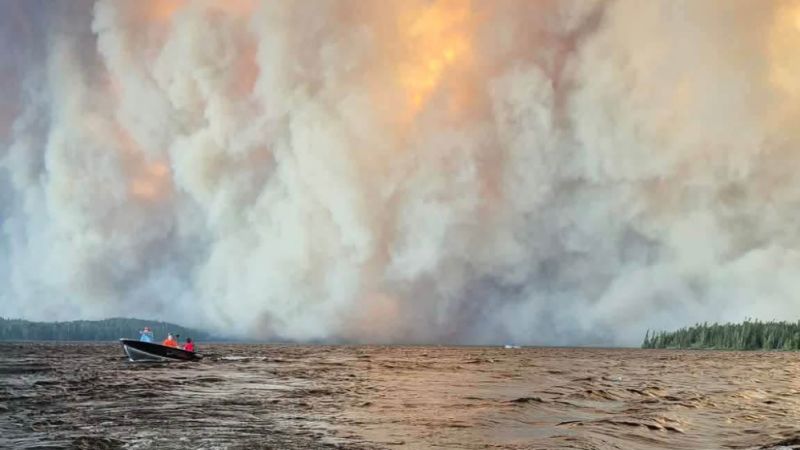
Paavola, along with five others, boarded a small aluminum boat with three dogs and a cat. The journey was perilous, as the smoke became a constant presence. “All you could see was orange and gray, and it was very dark,” she recalled. The boat’s 40-minute trip across Collins Lake was fraught with challenges, including strong waves and a near-collision with a rock.
“It was very scary. There were quite a few times I felt like we were about to tip,” Paavola said.
Despite the chaos, only 25 of the community’s approximately 60 members were present during the fire’s arrival. The quick action likely saved lives, as residents crowded into aging boats powered by outdated motors. Many had to leave their pets behind, adding to the urgency of the escape.
Fire’s Devastating Reach
The flames reached the shoreline within sight of the boat, and the smoke followed swiftly. “If we had waited any longer, we would have been dead,” Paavola added. Her mother, Chief Helen Paavola, wasn’t in the village at the time. A fire official had previously warned her that the smoke was from a smoldering fire farther away, not an imminent threat.
“All I could think was … they’re gone. My children are gone. My community is gone,” Chief Paavola told CNN.
When the evacuation was complete, the relief was overwhelming. “There are no words to explain the relief that I felt when I knew everybody was out,” she said. However, the destruction was complete—her home, like all others in Collins First Nation, was lost to the blaze.
Broader Wildfire Emergency
The fire that engulfed Collins is part of a larger crisis gripping Canada. As of Thursday night, 889 active wildfires were spreading across the country, with 163 located in Ontario alone. The Canadian Wildland Fire Information System reported the alarming numbers, highlighting the scale of the disaster.
Collins has become a stark symbol of the devastation caused by this week’s wildfires. Linda Debassige, Grand Council Chief of the Anishinabek Nation, noted that over 30 homes were lost, along with critical facilities like the administration office, school, and community center. “If they waited for an emergency response, we would all be on a recovery mission looking for the bodies of children, elderly people, men and women,” she warned.
Government officials, including Ontario Premier Doug Ford, acknowledged the fire’s unusual proximity to the community. “The fire had started unusually close to the village, leaving little time to respond,” Ford stated. The incident has sparked renewed questions about whether Ontario’s wildfire strategy is adequate for increasingly severe fire seasons.
Jurisdictional Challenges and Support Gaps
Linda Debassige also highlighted that Collins, classified as a “near band” community, has struggled with government support due to its incomplete federal recognition. This status complicated access to resources, leaving the community to fend for itself during the crisis. The Anishinabek Nation is currently covering the costs of accommodation, meals, and supplies for evacuees in Thunder Bay.
Residents expressed frustration over the lack of preventative measures, such as fire breaks, after previous wildfire threats were reported. The current emergency has underscored the vulnerability of such communities and the need for improved preparedness.