
The addictive 8 seconds where ‘nothing else in the world matters’
Australia’s Rodeo Dreamers
Qwenews.com – As the gate creaks open, 14-year-old Johnathon Carlo charges into the arena atop a tiny bull. His right hand flails in the air before he tumbles into the dirt, but the crowd erupts in cheers. Striding back to the chutes, he rubs his left wrist—the spot where the bull rope is held. “You hurt?” a parent asks. “Nah,” the teen replies. For bull riders, pain is more than a physical sensation—it’s a mindset. The goal is to stay on the bull for eight seconds. Anything less is a B/O, a buck off, and a missed opportunity for points.
From Queensland to Texas
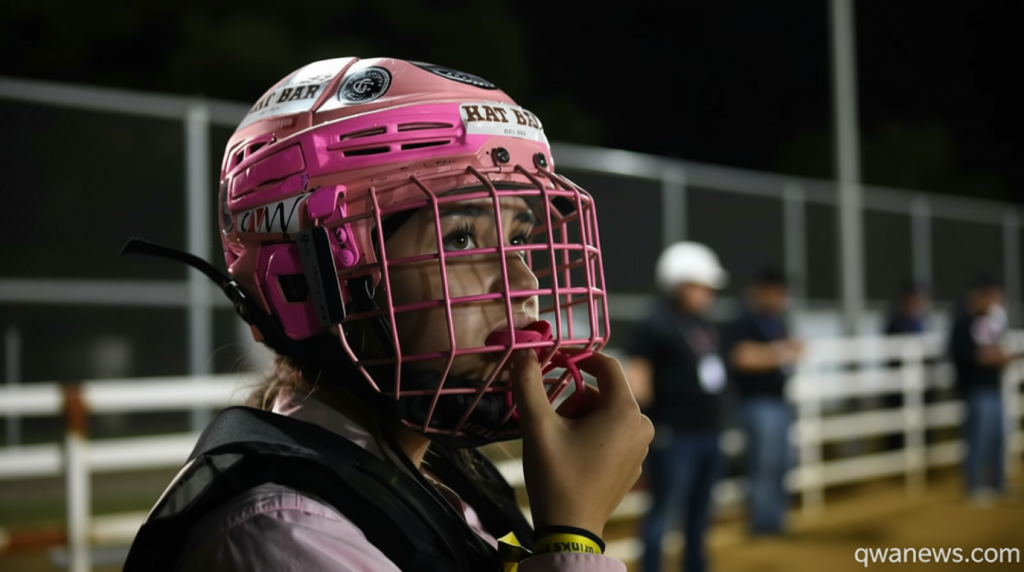
Australia’s rodeo culture, shaped by vast cattle stations, offers a unique twist on the global sport. While the objective remains the same—dominate the bull for eight seconds—the scale of the stations, some larger than U.S. counterparts, creates a distinct flavor of the cowboy tradition. This summer, nine young Australian hopefuls will travel to Texas for the Youth Bull Riders World Finals. Among them is Bella Brinner, a 12-year-old cowgirl determined to “show the boys who’s boss.” Others include Jake Washband, who chose bull riding at age 7, and EJ Morris and Kobi Evans, both 13, who dream of claiming world titles in the U.S.
Pioneers of the Rodeo Scene
Behind these riders stands a network of passionate parents who formed Red Dirt Australian Rodeo, a non-profit, to fund their journey. “It’s just a great experience for them,” says Clint Morris, a parent and mentor. “They get over there and they’re messing with the world.” Yet, in a nation where football and soccer dominate, bull riding remains a niche pursuit. The Australian branch of Professional Bull Riders Inc. has spent years cultivating talent, but the risk of injury and the cost of travel make the path to fame uncertain.
Roots in the Land
Australia’s cowboy culture mirrors its American counterparts, though the terms are adapted. Stockmen and ringers replace cowboys, while trainees are called jackaroos or jillaroos. This heritage traces back to white settlers who established massive cattle stations, often without fences, and forged a hardy lifestyle. Rural Australia echoes the Midwest in its love for folk music, trucks, and cowboy hats. But this tradition also carries a legacy of displacement. Johnathon grew up in Cherbourg, a former Aboriginal mission in rural Queensland, where his ancestors were segregated under colonial policies.
From 1900 to the 1970s, dozens of Aboriginal groups were forced from their lands to live in government reserves. Some became stockmen, mastering the art of mustering cattle on horseback. “The cattle industry, it was built off the backs of my people,” says Damien Bond, a third-generation bull rider. His brother Charlie mentors young riders, including Johnathon, who began his journey on horses at Charlie’s home. Now, the siblings regularly travel to rodeos across Queensland, where the 34-kilometer drive from Narangba, Bella Brinner’s semi-rural hometown, is just one part of the adventure.
A Legacy of Resilience
Bella, who wears a pink helmet and chaps, names her favorite bulls Ice Cube, Monkey, and Flopp. “They’re just like little puppies,” she says. Meanwhile, Johnathon’s mother, Elizabeth Davidson, admits she’s always anxious as he steps into the arena. “Then I get really excited when he rides,” she shares. “The way he just looks for his family, and he gives us a wave.”
For some Australian bull riders, the reward isn’t in the U.S. but in the land they call home. The sport’s roots, intertwined with indigenous history, remind them that the 8-second ride is more than a competition—it’s a connection to a past that still shapes their present.