
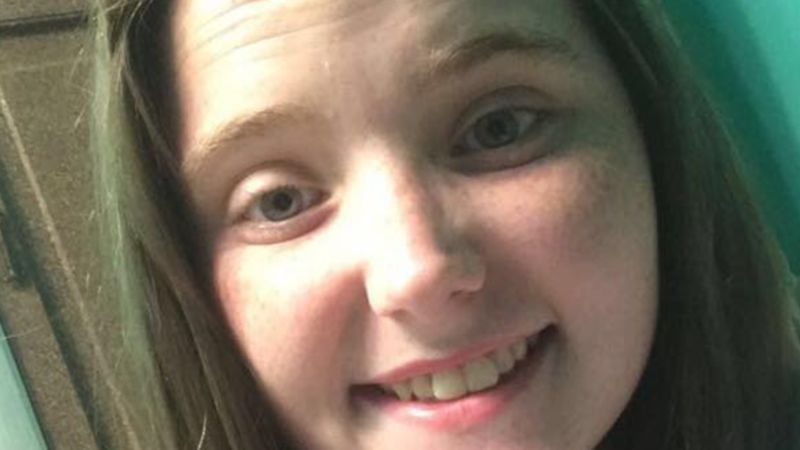
Thousands of Texts Take Center Stage in Matthew Farwell Trial
Qwenews.com – A vast archive of private messages is becoming central evidence in the federal trial of Matthew Farwell, the former Stoughton police officer accused of killing Sandra Birchmore and her unborn child in 2021.
Investigators recovered roughly 40,000 messages exchanged by Farwell and Birchmore over several years from her phone and laptop. The communications trace an intensely personal relationship, its mounting strains and Birchmore’s final hours. Prosecutors and defense lawyers agree the texts matter; they sharply disagree over what the messages reveal.
Farwell, 40, has pleaded not guilty. His trial, now in its third week at Boston’s John J. Moakley Courthouse, concerns the death of Birchmore, who was 23 and about 10 weeks pregnant when she died.
The Final Exchange
On February 1, 2021, a winter storm moved through eastern Massachusetts while Birchmore spent much of the day at her Canton apartment preparing for the possibility of becoming a mother. She had bought a stroller, looked at nursery items and exchanged messages with a friend about newborn clothing.
At 9:07 p.m., Farwell texted her to ask whether he could briefly come to the apartment.
“Are you still up?”
“Okay to come by for a second?”
Birchmore responded immediately, offering to see him and asking whether he was all right.
“Yeah. You can come say hi. You okay?”
“Door’s open when you get here.”
Those were the last messages Birchmore sent. Surveillance video showed Farwell entering the building seven minutes later. Prosecutors say he remained inside for about 30 minutes.
Three days later, Birchmore was found dead on the floor of her bedroom. A duffel bag strap was around her neck and tied to a closet-door handle. State and local officials initially determined that she had died by suicide. Her family questioned that conclusion, and federal prosecutors later brought charges alleging Farwell killed Birchmore and the fetus she was carrying.
Two Competing Interpretations
The prosecution portrays the message history as evidence of an alleged long-term pattern of grooming and control. Prosecutors contend Farwell began a sexual relationship with Birchmore when she was 15 and he was 27. They argue that the relationship continued while Farwell was married and working as a police officer, and that he had a motive to prevent Birchmore from revealing it.
Farwell is charged with killing a witness or victim in an effort to stop Birchmore from potentially disclosing alleged grooming and sexual abuse of a minor. A separate count tied to her pregnancy alleges a violation of a federal statute protecting unborn children.
The defense has presented a different interpretation. Farwell’s lawyers contend that Birchmore was emotionally unstable and died by suicide after he ended their relationship. They have pointed to the same message archive as support for their position.
The importance of the records was clear from the first day of testimony. During opening statements, attorneys for both sides referred to text messages 33 times while presenting fundamentally different accounts of the relationship. The following week, two FBI agents read messages aloud for jurors.
Birchmore initiated more of the conversations, and Farwell sometimes blocked her number on his phone, FBI Special Agent Heidi Kelsch testified. The quantity of messages gives jurors an unusual opportunity to examine the relationship over time rather than relying only on recollections from outside witnesses.
A Digital Record of a Relationship
Birchmore was known by family members as someone who frequently communicated by phone. Her cousin, Angelique Pirozzi, described her as highly social and deeply invested in her friendships.
“She was outgoing and very passionate about her friendships,”
“She overshared — she texted people constantly.”
That habit left investigators with an especially large electronic record. Prosecutors say approximately 600 messages were sent or received during Birchmore’s last hours. Those communications may be among the most closely examined evidence in the case, particularly because there is no uncontested forensic account resolving what happened inside the apartment on the night Farwell visited.
Legal observers note that extensive private correspondence can be especially influential because it allows a jury to see people communicating in real time. Chris Dearborn, a Suffolk University law professor who has followed the trial, said the messages may make Birchmore’s perspective feel immediate to jurors.
“It’ll come across like she’s speaking to them (jurors) from the grave,”
Dearborn described it as unusual for investigators to possess years of messages documenting the evolution of a private relationship. He said such evidence can carry substantial weight if it is presented without overwhelming the jury.
“That could be powerful evidence as long as it’s not overdone,”
The messages are also being used to address motive, a crucial issue for prosecutors. Dearborn said the government seeks to establish the strongest possible explanation for why Birchmore might have been killed because the forensic evidence is not definitive.
Pregnancy and the Paternity Question
Tensions between Birchmore and Farwell intensified in December 2020 after she told him that she was pregnant and that he was the father. Prosecutors maintain Farwell believed he was the father in the weeks before her death. They also say Birchmore had previously threatened to disclose their relationship if he did not impregnate her.
A DNA test conducted after Birchmore’s death found that the biological father was a U.S. Army recruiter, not Farwell. That result has added another layer to the trial’s examination of what Farwell knew, what Birchmore believed, and how their relationship had changed before her death.
Farwell has since been decertified as a police officer and is prohibited from working in Massachusetts law enforcement. The jury’s task is not merely to assess isolated exchanges but to decide whether the full record supports a homicide case or the defense claim that Birchmore took her own life.
More than five years after Birchmore’s death, the digital trail she left behind has become the courtroom’s most detailed account of the relationship at the heart of the case.
Related Reading
Frequently Asked Questions
What is She exchanged 40 000 texts?
She exchanged 40 000 texts is the main topic of this guide. The article explains the context, practical details, and next steps readers should understand.
Why does She exchanged 40 000 texts matter?
She exchanged 40 000 texts matters because readers are looking for a useful answer, not just a short summary. Good content should match search intent and help them decide what to do next.