
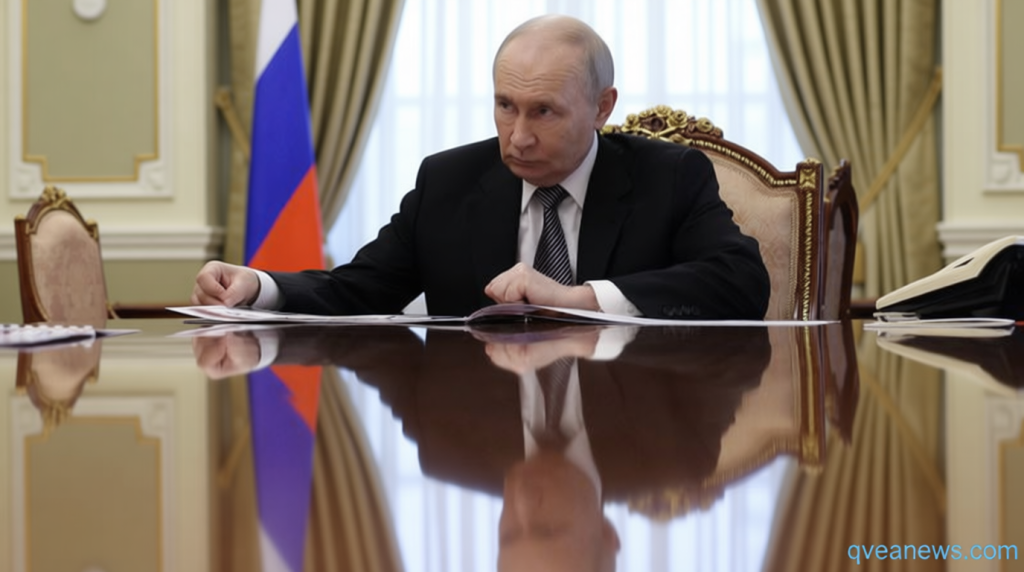
Putin and Trump Held ‘Businesslike’ 90-Minute July 4 Call, Moscow Says
Qwenews.com – On July 4th, Russian President Vladimir Putin participated in a businesslike 90-minute phone conversation with U.S. President Donald Trump, according to the Russian foreign ministry. The call occurred shortly before the NATO summit in Turkey, which is set to begin the following day, and Trump plans to attend. This interaction comes amid heightened tensions in the ongoing conflict in Ukraine, where Moscow has intensified its military operations in the eastern Donetsk region. The Kremlin emphasized the call’s focus on resolving the war through political and diplomatic channels, while highlighting Trump’s pledge to support efforts aimed at de-escalation.
Strategic Context of the Conversation
The dialogue between Putin and Trump was framed as a pragmatic exchange, with both leaders addressing key issues such as the war in Ukraine and the role of NATO. Putin reiterated his stance that a peaceful resolution requires Kyiv to acknowledge Russian territorial gains and negotiate an end to hostilities. Trump, in turn, reaffirmed his commitment to assisting in this process, despite recent shifts in U.S. foreign policy toward reducing its military involvement in the conflict. The call underscored the evolving dynamics between the two nations as they navigate the complexities of international alliances and regional stability.
“The Russian side once again emphasized the preference for a political and diplomatic resolution to the conflict,” the ministry stated. “Kyiv and its European sponsors are banking on prolonging and even escalating the war.”
Ukrainian Reactions and the Path Forward
Ukrainian President Volodymyr Zelensky expressed optimism about the call, describing it as a “very good” exchange that highlighted America’s decisive role in shaping the conflict’s outcome. He noted that the conversation provided a tangible opportunity to accelerate peace talks and reduce the war’s impact on civilian populations. However, Zelensky also criticized the Kremlin for its “disinformation” tactics, including claims of capturing Kostyantynivka in Donetsk, which he described as an attempt to mislead the public. The upcoming NATO summit will serve as a critical platform for further discussions on the war’s trajectory and international support for Ukraine.
“It is just another Russian lie, an attempt to generate some kind of a news story,” Zelensky remarked Saturday.
Analysis from the Institute for the Study of War (ISW) suggests that Russian military claims, such as the capture of Kostyantynivka, often reflect a broader narrative of dominance rather than actual battlefield progress. The think tank noted that such statements aim to bolster morale and justify continued military operations. Meanwhile, Ukraine has been strategically targeting Russian energy infrastructure, including oil refineries and power plants, to weaken its economic and military capabilities. In the past month alone, eight refineries have been attacked, with over 60 storage tanks destroyed or damaged. These strikes have also affected Crimea, where Russian forces maintain a military presence since the 2014 annexation.
The war in Ukraine has seen significant territorial shifts, with Ukrainian forces reclaiming parts of the south while Russian advances have stalled due to heavy casualties. This has created a complex situation where both sides are simultaneously claiming progress, even as the conflict remains deadlocked. The 90-minute call between Putin and Trump is seen as a diplomatic effort to bridge these differences, though it also reflects the growing influence of the U.S. in shaping the war’s direction. As the NATO summit approaches, the outcomes of this meeting will be closely watched for signs of renewed cooperation or shifting alliances in the region.
Experts believe that the call underscores the importance of maintaining a dialogue between the two leaders, despite their differing views on the conflict. Trump’s emphasis on “rightsize” U.S. contributions to NATO’s military model signals a possible recalibration of American involvement, while Putin’s focus on a political resolution highlights Moscow’s long-term strategic goals. The combination of military actions, diplomatic talks, and economic pressures will likely define the next phase of the war. As the global community awaits the summit’s results, the 90-minute conversation between Putin and Trump remains a pivotal moment in the ongoing geopolitical landscape.