
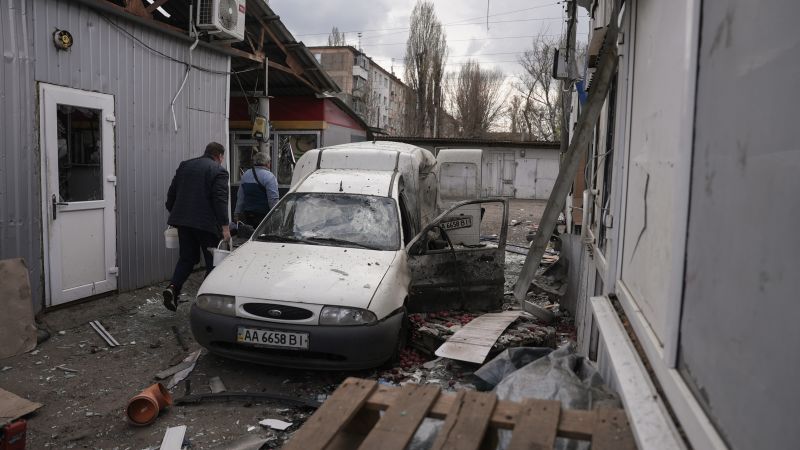
‘Only fools are not afraid’: Ukrainians adapt to life under constant Russian drone attacks
Qwenews.com – In southern Ukraine, Nikopol seldom captures media attention, often eclipsed by the looming danger at the Zaporizhzhia Nuclear Power Plant just opposite it across the Dnipro River. Yet this city, situated on the front line of Russia’s full-scale invasion, has faced almost daily drone strikes since the war began, according to local authorities. Its close proximity to Russian military positions—just two miles away on the other bank—has made civilians particularly vulnerable to short-range drone attacks.
A New Reality in Daily Life
Oleksandr Varytsev, a poet and local charity founder, described the growing familiarity with danger despite persistent fear. “We’ve actually grown somewhat accustomed to the danger, though the feeling of fear never really goes away,” he said. “It’s very scary—and if it’s scary for me, you can imagine how older men and women feel when they come to our volunteer center.”
“We keep our heads up all the time, we no longer look down at our feet.”
Targeting Civilians in the Shadows of War
A harrowing incident in June highlighted the deadly reach of these attacks. Authorities shared video footage of a small Russian drone striking an elderly woman in a wheelchair, resulting in the deaths of three people, including the 87-year-old woman and her son. In April, a drone attack on a city bus claimed four additional lives. These events underscore a shift in tactics, with FPV drones increasingly focused on civilian targets rather than military assets—a trend also observed in frontline cities like Kherson and Kramatorsk.
Adapting to the Drone Threat
Residents have been forced to alter their routines to evade attacks they refer to as Russia’s “human safari.” Outdoor spaces such as bus stops are now avoided, while schools and kindergartens have closed. Essential services like the national post office and public transportation are routinely suspended. “People are afraid to walk in the street, but they’re adapting to the new reality,” Varytsev remarked.
Living with the Shadow of War
Before the invasion, Nikopol had a population of around 100,000 and was known for its strawberry production. Today, local officials estimate that half the residents have fled, leaving the city to empty before their eyes. Oleksii Kirillov, a freight transportation veteran with over two decades in the field, noted that his work now revolves more around evacuation efforts than logistics. “The situation is very dangerous, and there are more and more attacks every day,” he said.
Defending Against the Sky
Residents have taken creative measures to counter the drone threat, such as installing overhead fishing nets to trap FPV drones. These nets, initially covering roads, are being extended to sidewalks to make streets safer for movement. Meanwhile, a city-wide warning app has been developed to alert civilians of incoming drones, and some communities have adopted drone detector devices called “Chuykas.”
Limitations of Current Defenses
Experts like Carmine Clemente, a radar systems professor at the University of Strathclyde, acknowledge the devices’ utility but caution their limitations. “It’s better than nothing, but it’s not a silver bullet,” Clemente said. “It can give you probably a couple of minutes, at least, to get off the bus and try to get sufficiently far away to hide.”
“Only fools are not afraid.”
According to Kateryna Bondar of the Center for Strategic and International Studies, these detection tools are being marketed more to civilians than the military. They are now used by bus companies, drivers, emergency volunteers, medics, and military personnel alike. As the war continues, Ukrainians in Nikopol and other frontline areas are determined to survive the aerial onslaught, even as fear remains ever-present.