
NTSB Still Searching for Answers in Philly Medevac Crash
Qwenews.com – The National Transportation Safety Board remains locked into a months-long effort to determine why a twin-engine Learjet 55 medevac jet plunged into a Philadelphia neighborhood last year, killing eight people. Investigators say the aircraft rolled left roughly one minute after takeoff and entered a violent dive, dropping at nearly 10,000 feet per minute while accelerating past 275 MPH. Those findings form part of more than 1,500 pages of factual data the NTSB released Tuesday concerning the January 31, 2025, accident.
What Happened in the Final Seconds
The jet was ferrying an 11-year-old patient—freshly discharged after medical treatment—along with her mother back to Mexico when it tore through the night sky over Northeast Philadelphia and struck the ground in a massive fireball. All six occupants plus two bystanders on the ground were killed, and at least 19 additional people sustained injuries.
Security footage captured the takeoff audio, confirming both engines were at full power at the moment of the accident. A second camera, mounted at a nearby drive-through, recorded the aircraft’s lights streaking toward the ground at a sharp downward angle. Investigators noted the Learjet’s cockpit voice recorder had been inoperative for several years; Mexican authorities stated the aircraft’s age exempted it from carrying one.
The tail clipped a shopping-center sign before the jet slammed into a roadway, carving a crater roughly eight feet deep. Cars and homes burned across a debris field stretching more than a quarter mile long and 800 feet wide. The core of the right engine was recovered from a second-floor bedroom 665 feet from the impact point, and an aircraft tire was likewise found inside a bedroom. Portions of the landing gear were wedged beneath a vehicle.
What Investigators Still Don’t Know
Despite the volume of new documentation, the NTSB has not identified a cause for the sudden loss of control. A final determination arrives only when the investigation closes. The pitch-trim system, which manages the nose’s up-and-down attitude so pilots need not constantly compensate for speed changes, was recovered from the wreckage with its setting at 3.97 degrees rather than the expected 5.5. That discrepancy could have demanded extra control force, but the board has not concluded whether it contributed to the pilots’ apparent loss of control.
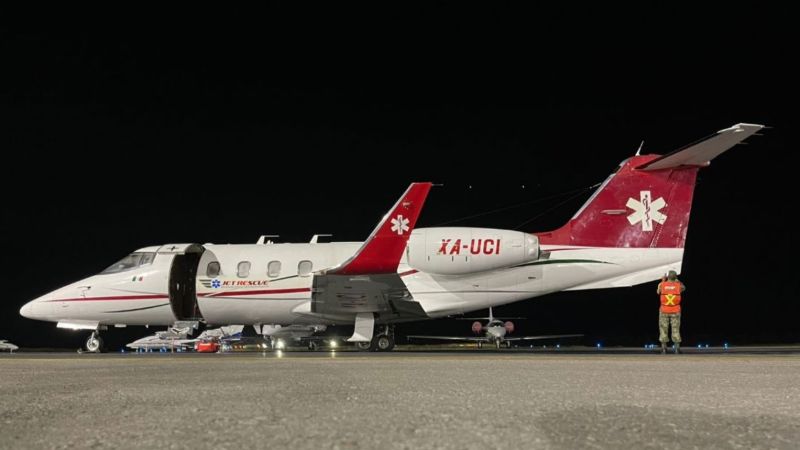
The aircraft, registered in Mexico and operated as Jet Rescue Air Ambulance, had just been fueled with 600 gallons before departing Northeast Philadelphia Airport. It reached roughly 1,500 feet altitude before descending. Both pilots—led by the company’s 46-year-old chief pilot—had completed required training and logged thousands of flight hours.
Company history adds context: Jet Rescue Air Ambulance was involved in crashes in Mexico in 2019 and 2023 and a fatal accident in Fort Lauderdale in 2013. Four of its aircraft were permitted to operate in the United States under FAA-inspector supervision. In an NTSB interview, that inspector said he did not know how many prior accidents the company had been involved in or what inspections had been performed. The company was also required to notify the FAA before each U.S. flight, but no such notification was filed for the accident flight.
The Philadelphia crash landed just two days after a midair collision between an American Airlines regional jet and a U.S. Army Black Hawk helicopter near Ronald Reagan Washington National Airport claimed 67 lives. Together with subsequent incidents, the pair intensified public scrutiny of aviation safety oversight.
“The NTSB still searching for answers” remains the defining posture of this investigation: the board has assembled the factual record but has not yet reached a causal determination.
Frequently Asked Questions
How many people died in the Philadelphia medevac crash? Eight people were killed: six aboard the Learjet 55 and two on the ground. At least 19 more were injured.
When did the crash occur? The accident took place on January 31, 2025, shortly after takeoff from Northeast Philadelphia Airport.
Has the NTSB determined a cause? No. The board has published more than 1,500 pages of factual findings but has not issued a final cause determination. That conclusion comes only when the investigation is formally closed.
What was the pitch-trim discrepancy? Recovered trim components were set at 3.97 degrees instead of the expected 5.5 degrees. The NTSB has not concluded whether this contributed to the loss of control.
Was the aircraft required to have a cockpit voice recorder? Mexican authorities stated the aircraft’s age exempted it from that requirement, though the recorder had been nonfunctional for several years.