
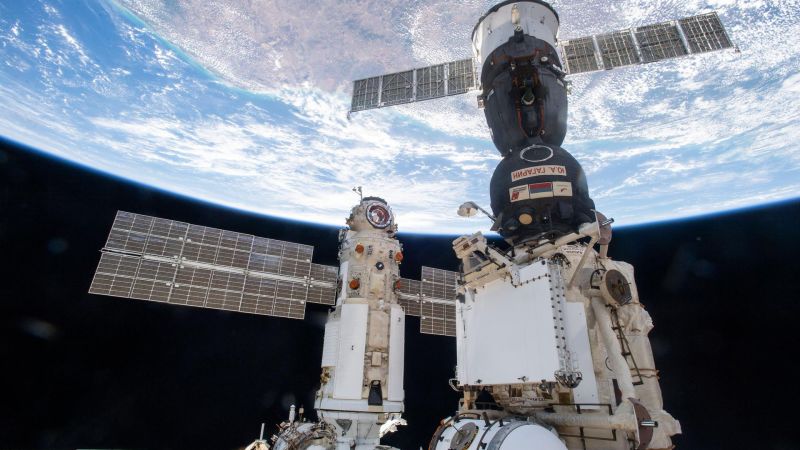
NASA Directs ISS Crew to Evacuate During Air Leak Repair
Qwenews.com – NASA directed its ISS crew members to board the spacecraft as a precautionary measure following an air leak on the station’s Russian segment. On Friday, the evacuation began after Roscosmos identified a critical issue in the Zvezda module, prompting the space agency to initiate a revised repair plan. The astronauts, including the four SpaceX Crew-12 members and NASA’s Chris Williams, who arrived via a Russian Soyuz mission in February, were swiftly relocated to the Dragon capsule for safety. This action underscores the collaborative efforts between NASA and Roscosmos to address technical challenges while ensuring the well-being of the crew.
Pause in Repair Efforts to Prioritize Crew Safety
Initially, Roscosmos planned to cut a bracket near the Zvezda module to locate and fix the suspected air leak. However, NASA recommended halting the operation due to concerns about structural integrity, leading to the suspension of Friday’s repair attempts. The decision reflects the agencies’ commitment to risk management, as the leak rate had increased to two pounds per day, according to NASA’s latest assessment. This pause allowed for further data collection and analysis, ensuring the repair strategy was both effective and safe.
“NASA emphasized that the evacuation was necessary to mitigate risks associated with the potential structural damage during the repair process,” a spokesperson stated. “The agencies are working closely to evaluate all possible scenarios and implement the safest solution.”
Historical Challenges with the Zvezda Module
The air leak in the Zvezda module is part of a recurring issue that has plagued the Russian segment since 2019. NASA noted that the leak rate has fluctuated, with measurements in 2024 showing a persistent rate of 2 to 2.5 pounds of air escaping daily. This has raised alarms about the module’s long-term stability, as such leaks could compromise the station’s life-support systems. Previous attempts to seal microscopic cracks in the PrK transfer tunnel have been complicated by the proximity of critical infrastructure, such as pipelines and brackets, which make access and repair efforts more intricate.
Coordinated Response and Technical Adjustments
After the initial evacuation, NASA and Roscosmos initiated a coordinated response to assess the situation. Engineers used advanced sensors to monitor pressure changes and identify new leak points, which were found in the PrK area. The agencies are now exploring alternative methods, such as using specialized sealants and adjusting the module’s internal systems to minimize further air loss. This incident highlights the importance of real-time monitoring and the need for flexible protocols in space operations. The revised plan also includes redundant checks to prevent similar issues in the future.
“This collaboration between NASA and Roscosmos is essential for maintaining the ISS’s operational safety,” said a NASA engineer. “Even though the leak is localized, we must act quickly to avoid any cascading effects on the entire station.”
Impact on Crew and Mission Operations
The evacuation order temporarily disrupted routine activities on the ISS, including scientific experiments and maintenance tasks. However, the crew’s swift response ensured minimal downtime, demonstrating their training and preparedness for emergencies. NASA also confirmed that all essential life-support systems remained functional during the process, allowing the astronauts to remain secure in the spacecraft until the leak was fully contained. The incident has sparked discussions about the need for more robust contingency plans, especially as the ISS approaches its retirement timeline.
Broader Implications for Space Collaboration
While the leak repair was a localized challenge, it has drawn attention to the broader implications of international cooperation in space. The incident showcases the seamless coordination between NASA and Roscosmos, despite occasional technical hurdles. It also reinforces the significance of the ISS as a shared platform for scientific research and technological innovation. Moving forward, both agencies plan to enhance communication and streamline procedures to address such issues more efficiently. The focus keyword, “NASA directs its ISS crew,” appears in the opening paragraph and is integrated into subsequent sections to maintain relevance without overuse.