
Israel’s Far-Right Openly Promotes Gaza Settlement Expansion Ahead of Election
Qwenews.com – As the October 27 election approaches, Israel’s far-right political factions have intensified their efforts to promote the expansion of settlements in Gaza, openly championing the idea of reestablishing Jewish communities across the territory. This movement, which has gained significant traction in recent months, seeks to capitalize on the current Israeli control over more than half of Gaza to push for long-term territorial consolidation. The push reflects a broader strategy to challenge the 2005 disengagement plan, which saw the evacuation of settlements and the establishment of a new political equilibrium in the region.
A Rally of Ideological Unity and Territorial Ambition
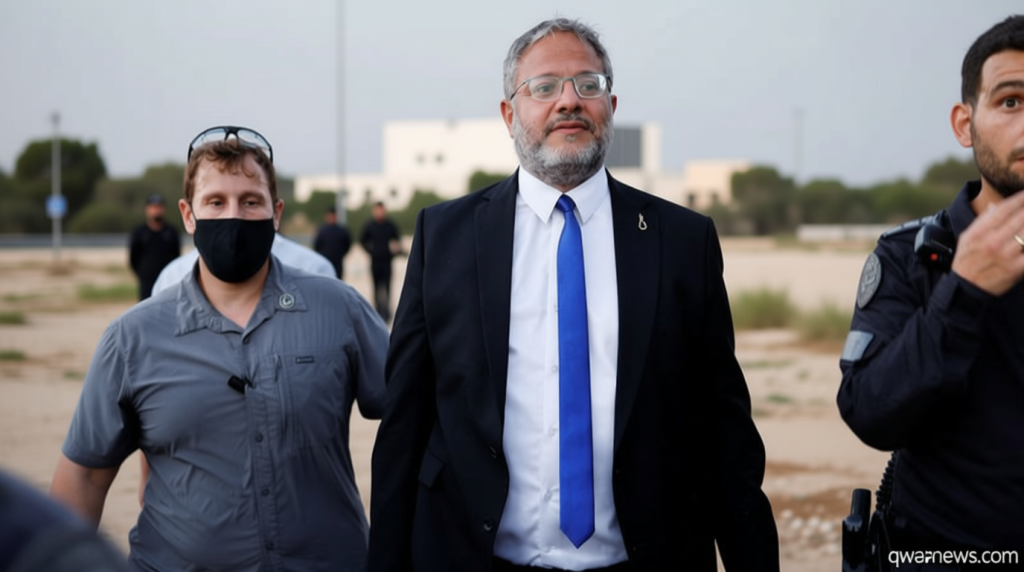
On Sunday, National Security Minister Itamar Ben Gvir and Finance Minister Bezalel Smotrich led a massive demonstration along Gaza’s border, bringing together thousands of settlers and activists under the banner of the hardline Nachala movement. The rally focused on the reclamation of three northern settlements—Nisanit, Dugit, and Elei Sinai—as a symbolic step toward reclaiming the entire Gaza Strip. Despite the Israel Defense Forces (IDF) declaring the area a closed military zone to restrict access, participants defied barriers, demonstrating their resolve to assert Israeli presence in the region.
Smotrich, a vocal advocate for the far-right, emphasized the urgency of expanding settlements, stating that the current situation in Gaza presents an unprecedented opportunity to reverse previous territorial concessions. “Where there is no settlement, there is no security,” he declared in late June, framing the ongoing conflict as a chance to undo the 2005 disengagement. The government, now led by Smotrich and Ben Gvir, has already made substantial progress in the West Bank, with three northern Gaza communities awaiting approval from Prime Minister Benjamin Netanyahu, who remains noncommittal on the matter.
“The war in Gaza is not just a military campaign—it’s a political one,” Ben Gvir remarked during the rally. He argued that the far-right’s vision for a Jewish majority in Gaza is both inevitable and necessary for national security. “If someone had said three years ago we’d control 70% of the Gaza Strip, no one would have believed it,” he added, highlighting the transformation of the situation since the 2025 US-brokered ceasefire. The IDF’s current control of over 53% of the territory has set the stage for further expansion, with the far-right pushing to solidify that dominance through settlement projects.
The demonstration underscores the far-right’s determination to advance their agenda ahead of the elections, where they hope to secure enough support to force Netanyahu into a more aggressive stance. By mobilizing settlers and leveraging public sentiment, the movement aims to pressure the government into finalizing plans for broader settlement expansion. Their rhetoric emphasizes the importance of voluntary Palestinian migration as a key component of their strategy, framing it as a natural outcome of Israeli military and political efforts.
Analysts note that the far-right’s open advocacy for Gaza expansion is not only a political maneuver but also a response to shifting public opinion. As the conflict in Gaza has intensified, many Israelis have grown more supportive of the settlement cause, viewing it as a way to protect national interests and secure long-term control over the region. The movement has also positioned itself as a counterbalance to more moderate factions, arguing that the current administration is too hesitant in its approach to territorial expansion.
With the election on the horizon, the far-right’s plans for Gaza settlements appear increasingly viable, as they continue to rally public and political backing. Their strategy hinges on the belief that a strong showing in the polls will force a change in policy, allowing for the creation of new communities that will further entrench Israeli presence in the area. This shift in focus marks a pivotal moment in the Israeli-Palestinian conflict, as the far-right openly embraces the idea of territorial expansion as a central pillar of their