
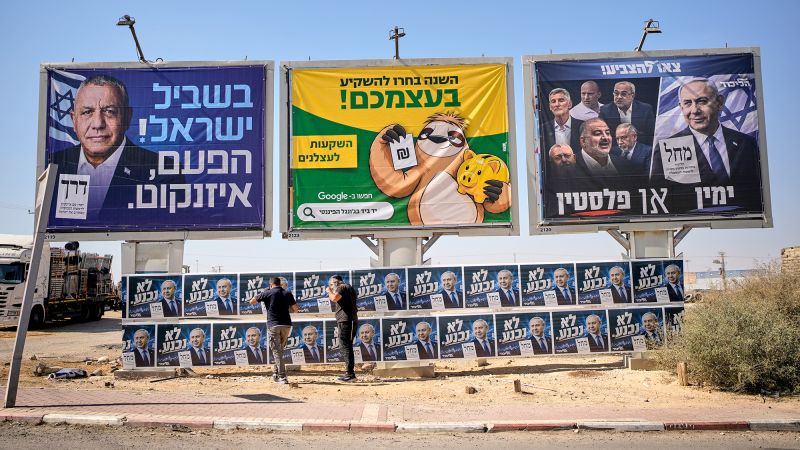
Israel’s Election: What Is at Stake
Qwenews.com – Israel is holding its most consequential election in years as voters weigh the legacy of war, political division and Prime Minister Benjamin Netanyahu’s future. The result could shape the country’s approach to security, religion, democratic institutions and coalition politics.
The vote is the first parliamentary election since the Hamas-led October 7, 2023, attack, the deadliest security failure in Israel’s history. The conflicts that followed in Gaza, Lebanon and Iran have imposed major demands on Israeli society, increased military service obligations and deepened international isolation.
For many voters, the election is a judgment on the leaders who were in office before and after October 7. It also reflects broader concerns about national security, military service, the role of ultra-Orthodox communities and the balance of power between elected leaders and the courts.
Netanyahu Again Takes Center Stage
Israel is holding its most closely watched contest around Netanyahu, the country’s longest-serving prime minister. The question is not only whether he can remain in office, but whether Israelis want the nationalist and religious direction associated with his outgoing coalition to continue.
Netanyahu’s government was the first Israeli administration in decades to complete a full four-year term. It depended on far-right parties led by Bezalel Smotrich and Itamar Ben-Gvir, as well as two ultra-Orthodox parties, creating a coalition that emphasized nationalist and religious priorities.
His time in office has also been defined by legal and political pressure. Netanyahu became the first sitting Israeli prime minister to stand trial on corruption charges. His government’s proposed judicial changes, which would have limited the Supreme Court’s authority and weakened other institutional checks, prompted large protests in 2023.
How Israel’s Election System Works
Voters choose party lists rather than directly electing a prime minister. Israel’s 120 Knesset seats are allocated proportionally to parties that clear the 3.25% electoral threshold.
Thirty-six party lists were competing as of Monday, though polling suggested only 11 to 13 might enter parliament. Because no party has ever secured an outright 61-seat majority, coalition talks are essential to forming a government.
Election night may therefore offer only part of the answer. The president must nominate a candidate to try to build a governing coalition, and negotiations can take days, weeks or months.
A Fragmented Race
Likud, Netanyahu’s right-wing party, is one of the two main forces in the contest. Its leading challenger is Yashar, a new centrist party led by former military chief of staff Gadi Eisenkot. Polling has shown Eisenkot ahead of Netanyahu in head-to-head questions over suitability for prime minister.
Surveys have produced very different estimates. A Channel 12 poll put Yashar first with 23 seats and Likud second with 21, while a Channel 14 projection gave Likud 30 seats and placed Eisenkot’s party near 20.
Most polls put Netanyahu’s prospective bloc at 49 to 55 seats, short of the 61 needed for a majority. That bloc includes Likud, the parties led by Smotrich and Ben-Gvir, and the two ultra-Orthodox parties.
Opponents of Netanyahu are not a unified bloc. Eisenkot faces competition on the right from parties led by former Prime Minister Naftali Bennett and former Defense Minister Avigdor Liberman, while the Democrats party led by Yair Golan sits to the left. Their competing ambitions could make coalition-building difficult even if Netanyahu’s allies fall short.
FAQ: Israel’s Election
Do Israelis vote directly for prime minister?
No. Israelis vote for parties, which receive Knesset seats based on their share of the vote. A prime minister emerges through negotiations among parties after the election.
How many seats are needed to govern?
A governing coalition needs support from at least 61 members of the 120-seat Knesset. Israel is holding its most politically complex vote in years because neither major camp is expected to reach that number alone.
Why could the result take time to become clear?
Even when vote totals are known, the decisive phase may be coalition negotiations. Parties must agree on a leader, policy priorities and the terms of joining a government.