
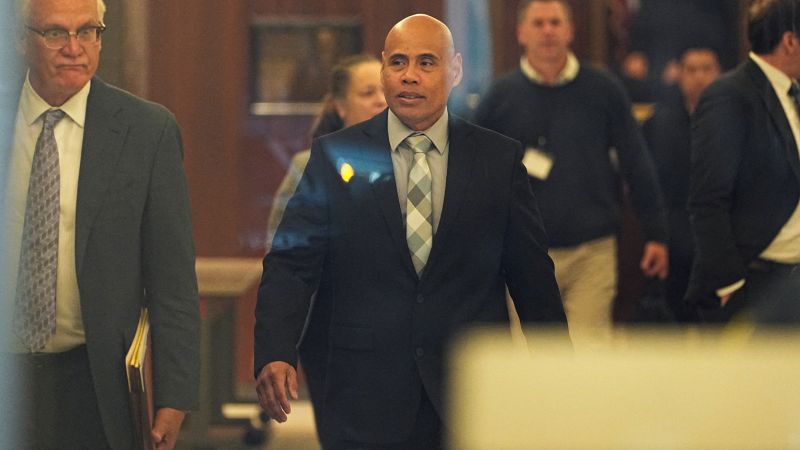
ICE Officer Enters Not-Guilty Plea in Federal Case Over Minneapolis Shooting
Qwenews.com – An Immigration and Customs Enforcement officer accused of misleading FBI investigators after a January shooting in Minneapolis has pleaded not guilty in federal court. Christian Castro, 52, appeared before a US magistrate judge Friday after a federal indictment charged him with six counts of making false statements.
The case centers on the January 14 shooting of Julio Cesar Sosa-Celis, a 24-year-old Venezuelan man who was wounded in the leg. Prosecutors allege that Castro fired through the front door of a Minneapolis residence and later gave investigators a false account of the events leading to the gunfire.
Castro told investigators that he had been assaulted with a broom handle and a snow shovel before he used his weapon. Federal and state prosecutors contend that account was untrue. The allegations now place him in separate criminal proceedings in Minnesota, one in federal court and another involving state assault charges.
State and Federal Cases Move Forward
Castro’s federal court appearance came one day after he appeared in Minnesota state court on assault allegations. He was released from custody following that hearing. His attorney, Daniel Gerdts, did not comment as he left the courthouse Friday.
The federal indictment was filed earlier this month in US District Court. It is described as the first Justice Department prosecution of a federal officer tied to actions during Operation Metro Surge, the large immigration enforcement initiative that brought thousands of agents to the Twin Cities this year.
That operation became a major source of tension in Minneapolis and surrounding communities. It prompted extensive demonstrations and arrests, while two US citizens were fatally shot by federal officers during the broader crackdown. Castro’s prosecution adds another significant legal chapter to a period already marked by deep political conflict over federal enforcement activity in Minnesota.
The charges against Castro do not accuse him of fatally shooting Sosa-Celis. The Venezuelan man survived after being struck in the leg. Still, the dispute over what occurred at the Minneapolis home has raised serious questions about the use of force and the accuracy of statements given to investigators after an officer-involved shooting.
Months of Dispute Over Extradition
Before returning to Minnesota, Castro spent months at the center of an extradition dispute between Minnesota officials and Texas authorities. Minnesota prosecutors filed charges in May, but their attempt to bring him from his home state to face those accusations encountered resistance.
Authorities arrested Castro on May 29 in Cameron County, Texas, after a Minnesota judge issued a nationwide warrant. Texas law allowed him to be held for up to 90 days while Minnesota pursued extradition.
That process did not end with a signed transfer order. Texas Republican Gov. Greg Abbott declined last month to approve the extradition warrant. Minnesota officials had expressed concern that Castro could leave the country through the US-Mexico border after his release from a Texas jail.
Instead, Castro returned voluntarily after his release and surrendered to federal authorities once the separate federal indictment was issued. His decision to turn himself in allowed the federal case to proceed even as disagreements continued over Minnesota’s authority to prosecute him at the state level.
Conditions of Release and Employment Status
At an earlier hearing before a federal judge in Texas, Castro was released on a $75,000 bond. The court required him to wear a GPS ankle monitor, turn over his passport, and surrender any personally owned firearms.
The Department of Homeland Security has suspended Castro without pay while the criminal cases remain pending. The suspension means he is no longer working in his ICE role as the judicial process continues.
Castro has not been convicted of any offense. His not-guilty plea begins the formal defense phase of the federal prosecution, where the government will have to prove that he knowingly made false statements to the FBI. The state case will separately examine the assault allegations related to the shooting.
Jurisdiction Fight Remains a Central Issue
Beyond the facts of the shooting, the cases have exposed a conflict between Minnesota leaders and the Trump administration over who may bring charges against a federal immigration officer. Minnesota officials have maintained that the state may pursue its own criminal case involving conduct within its borders.
The Department of Homeland Security has rejected that position and called Minnesota’s prosecution unlawful.
“Unlawful and nothing more than a political stunt.”
The department has argued that only federal authorities have jurisdiction over the matter. That disagreement has shaped the extradition battle and is likely to remain relevant as both cases advance.
For Minneapolis residents, the proceedings offer a rare courtroom examination of an encounter that unfolded during a major federal immigration operation. The outcome could determine not only Castro’s criminal liability, but also how competing state and federal authorities address allegations involving officers operating in politically charged enforcement campaigns.
Federal prosecutors will now continue presenting their case involving the six alleged false statements, while Minnesota’s assault prosecution follows its own path. Castro remains subject to the conditions imposed by the federal court as both matters move through the legal system.
Related Reading
Frequently Asked Questions
What is ICE officer pleads not guilty to charges?
ICE officer pleads not guilty to charges is the main topic of this guide. The article explains the context, practical details, and next steps readers should understand.
Why does ICE officer pleads not guilty to charges matter?
ICE officer pleads not guilty to charges matters because readers are looking for a useful answer, not just a short summary. Good content should match search intent and help them decide what to do next.