
A Peek into the Lives of Pompeii’s Survivors
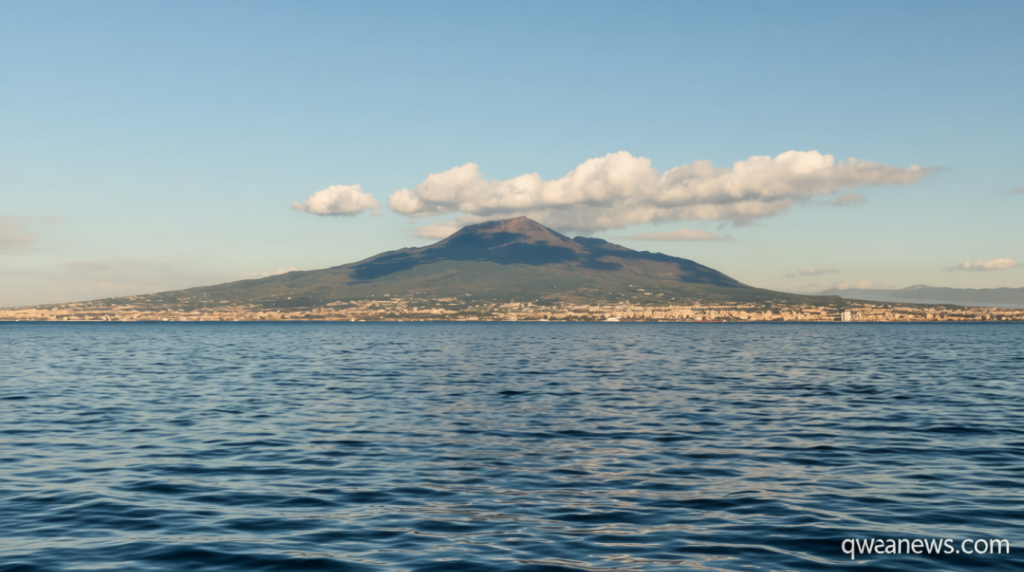
Qwenews.com – Pompeii, frequently envisioned as a frozen relic of history, was once a vibrant Roman city that abruptly halted its daily rhythms when Mount Vesuvius erupted in AD 79. Dr. Steven Tuck, a classics professor at Miami University in Oxford, Ohio, noted to CNN that the city’s preserved state has created a dominant tale: “Everyone perished, everything was lost.” However, his repeated visits to the site unveiled a different story, one hidden in the gaps of the historical record.
Missing Clues Challenge the Tale of Total Destruction
Tuck’s research uncovered what he calls “evidence via absence,” emphasizing the significance of items that were left behind. He highlighted the absence of household shrines and stables, as well as the lack of boats at the dock. “There’s a lot missing that should be there,” he explained. “The strong boxes where Romans stored their wealth are all empty. This doesn’t fit the story that everyone died.”
Revealing the Survivors: A Decade of Discovery
Over the past ten years, Tuck spearheaded the Pompeii Survivors Project, dedicated to identifying individuals who escaped the catastrophe. His work culminated in the 2025 publication of “Escape From Pompeii,” a book detailing the city’s survivors. To track their stories, he analyzed Latin inscriptions on stone plaques, comparing them to historical records to determine if their lives ended on the eruption’s day.
The Docuseries: A Journey Through Time
The new series “Pompeii: Out of Time,” hosted by actor Tom Hiddleston, explores the lives of three individuals—namely, a teenage blacksmith apprentice, a merchant, and a Praetorian Guard—on the day of the eruption. Hiddleston, who studied classics at the University of Cambridge, brings a personal connection to the project, having first visited Pompeii as a 17-year-old in 1998. The series debuts on National Geographic and will stream on Disney+ and Hulu starting Thursday.
Unseen Threats: The Earthquake’s Role
Though the eruption is the most famous event, the series also highlights the lesser-known role of earlier tremors. Christopher Jackson, a geologist at Imperial College London, explained that earthquakes struck the city for four days prior to the volcanic explosion. “These quakes had already weakened buildings and damaged water systems, but people didn’t link them to the impending disaster,” Jackson said. “It hadn’t erupted in their lifetime, so they didn’t realize the danger.”
Reconstructing the Past with Scientific Insight
Geologists like Jackson cross-referenced Pliny the Younger’s account of the eruption with geological data from Vesuvius. Pliny, a Roman lawyer and author, observed the destruction from across the Bay of Naples, capturing one of the earliest written records of a volcanic event. His uncle, Pliny the Elder, perished attempting to rescue civilians. These accounts, combined with modern research, provide a more nuanced view of the disaster’s impact and the resilience of those who survived.
“What makes Pompeii remarkable is the access we have to the rich details of everyday life,” Hiddleston remarked. “It’s a living monument to the past—something you can feel connected to across centuries.”
Ongoing studies at Pompeii, including Tuck’s work featured in the series, are uncovering new layers of understanding about the city’s inhabitants before and after the eruption. These findings reveal that the story of the disaster is evolving, highlighting human courage and adaptability in the face of nature’s fury.