
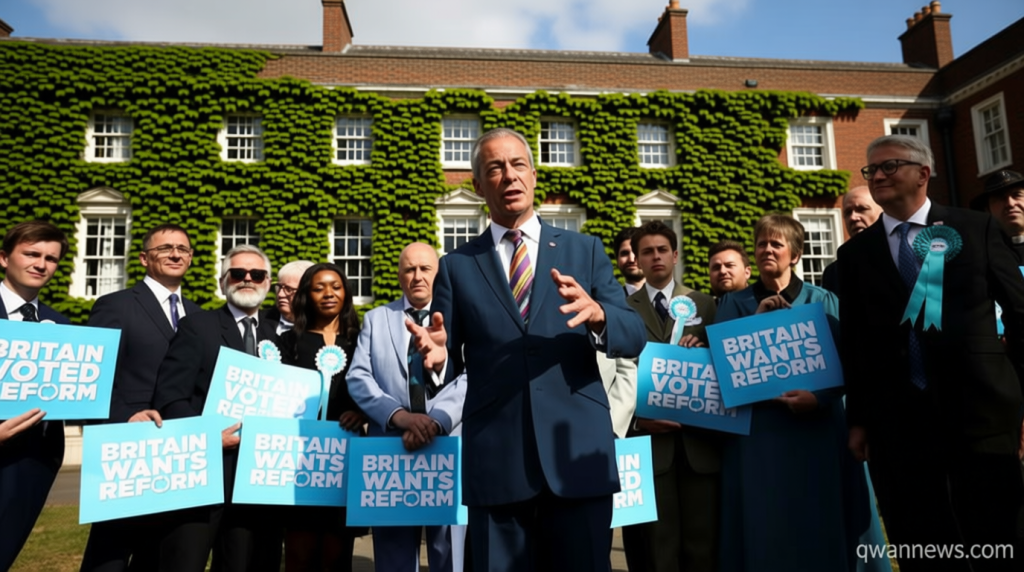
Brexit architect Farage under pressure as questions over funding mount
Qwenews.com – Nigel Farage, the Brexit architect and former leader of the UK Independence Party (UKIP), is now facing mounting pressure amid growing scrutiny of his financial dealings. Known for his role in steering the United Kingdom out of the European Union, Farage has remained a central figure in the political discourse since the Brexit referendum in 2016. However, recent revelations about his financial activities have cast a shadow over his public image, raising questions about transparency and accountability in his leadership of Reform UK. As the party’s influence wanes, Farage’s ability to maintain his status as a political heavyweight hinges on how effectively he navigates these emerging challenges.
Reform UK’s Struggles and Farage’s Financial Controversies
Reform UK, Farage’s current party, has been a dominant force in UK politics, especially after gaining significant traction in local elections. Despite its electoral success, the party has yet to achieve proportional representation in Parliament, with only eight members currently holding seats. This disparity has sparked concerns about the party’s ability to translate public support into legislative power. Meanwhile, the financial allegations against Farage intensify, with reports suggesting he may have underreported income from private sources. These accusations come at a critical time, as Reform UK seeks to solidify its position in an increasingly competitive political arena.
The controversy surrounding Farage’s finances deepens with the revelation of payments from George Cottrell, a crypto-financier and gambler. Cottrell was indicted in 2016 for money-laundering, wire fraud, and related crimes, serving eight months in prison before reaching a plea deal. The Sunday Times reported that these payments were used to bolster Farage’s social media presence and support his security operations, raising questions about whether they should have been disclosed under parliamentary rules. Critics argue that such financial contributions, though potentially personal, could have significant implications for the integrity of the Brexit movement and its leaders.
“No rules have been broken,” said Reform UK’s Treasury spokesman Robert Jenrick, defending the payments as “purely personal” and similar to gifts from family members. This argument suggests that the contributions from Cottrell were not meant to influence political decisions but rather to sustain Farage’s public profile. However, the timing of these payments—before Farage’s election campaign—has led to speculation about their role in shaping his political strategy.
Farage’s financial disclosures have also highlighted a broader issue within the UK political system. Public records show that he earned over £2 million in additional income since becoming an MP in 2024, surpassing 20 times the basic parliamentary salary. This figure places him second only to former Prime Minister Rishi Sunak in the current Parliament, drawing comparisons to the wealth of senior politicians. While some argue that this income is justified by his public role, others see it as a symbol of the growing financial influence in UK politics, particularly for leaders of smaller parties like Reform UK.
The scrutiny of Farage’s finances has coincided with his reduced public appearances since the Guardian reported a £5 million gift from crypto-billionaire Christopher Harborne. This donation, given just before the 2024 general election, has fueled further debate about the role of private funding in political campaigns. As the parliamentary standards watchdog investigates these allegations, the pressure on Farage intensifies, with the potential for disciplinary action threatening to derail Reform UK’s momentum. This situation underscores the challenges faced by Brexit architect Farage under pressure to balance personal financial interests with public accountability.
Farage’s reputation as a Brexit architect has been shaped by his relentless advocacy for leaving the EU, a cause that once united a diverse coalition of voters. However, the financial controversies now challenge this narrative, as critics question whether his leadership has been driven by ideological conviction or financial incentives. The debate reflects a broader tension in UK politics: the balance between grassroots activism and the financial mechanisms that sustain it. For Reform UK, the stakes are high, as any misstep could jeopardize its position in the national government and diminish Farage’s influence as a political leader.