
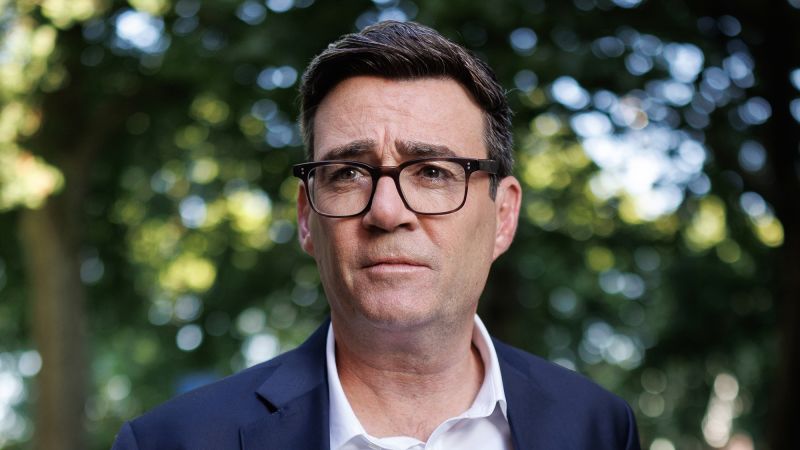
Andy Burnham Becomes Britain’s Seventh Leader in a Decade: Can He Break the Trend?
Qwenews.com – Andy Burnham will be Britain’s seventh leader in a decade, following his recent confirmation as the new leader of the Labour Party. This milestone marks a significant shift in the political landscape, as Burnham, who succeeded Keir Starmer, prepares to take on the role of prime minister. His leadership campaign centered on restoring public trust and implementing reforms to address the growing concerns of British citizens. With the economy facing headwinds and social services under strain, Burnham’s ability to unite the party and inspire confidence will be critical to his success.
A Leadership Transition Shaped by Election Results
Burnham’s rise to power was catalyzed by Labour’s disappointing performance in May’s local elections, which highlighted the need for a strong leader. As mayor of Greater Manchester, he had already established a reputation for pragmatic governance and regional development. His strategic by-election victory in Makerfield, a Labour stronghold in northern England, became a turning point in the leadership race. By securing a decisive win against Reform UK’s influence, Burnham demonstrated his appeal to both party members and voters, solidifying his position as the frontrunner.
“People are frustrated with the current state of affairs,” noted Simon Kaye, a policy director at Re:State. “The economy, NHS, and social care systems are all under pressure, and Burnham’s leadership offers a chance to reset these priorities.”
Policy Vision and Political Challenges
With the Labour Party now under his leadership, Burnham faces the daunting task of advancing his agenda. His campaign focused on devolving power to local governments, which he believes will empower regions like Manchester and reduce the centralization of decision-making. This vision aligns with his history of promoting regional autonomy, including his tenure as health secretary under Gordon Brown and his leadership in Manchester. However, the road ahead is fraught with challenges, including balancing ambitious goals with the financial constraints that have shaped recent political debates.
Burnham’s leadership will be tested by the need to address pressing issues such as housing shortages, industrial stagnation, and the ongoing impacts of Brexit. His predecessor, Keir Starmer, faced criticism for not fully capitalizing on the party’s potential to revitalize the economy. Burnham, meanwhile, must prove that he can deliver tangible results, particularly as the government prepares to tackle the rising costs of social security and the need for fiscal discipline.
“Burnham’s challenge is to not just replace Starmer but to redefine the Labour Party’s identity,” Kaye explained to CNN. “His focus on regional governance and economic recovery could help the party reclaim its footing in a divided political climate.”
A Career Marked by Reform and Resilience
Andy Burnham’s political career has been defined by a commitment to reform and a focus on local issues. From his early days in Tony Blair’s cabinet to his later roles in health and regional development, he has consistently emphasized practical solutions and grassroots engagement. His experience as mayor of Greater Manchester, where he championed infrastructure projects and economic growth, has positioned him as a leader who understands the complexities of governing in a post-Brexit era. Yet, his path to the top was not without obstacles, as he faced setbacks in previous leadership contests and had to rebuild his political standing after returning to his home region in 2017.
Despite these hurdles, Burnham’s ability to adapt and respond to public sentiment has set him apart. His leadership now hinges on maintaining momentum and addressing the concerns of a population weary of economic instability and political gridlock. The success of his policies will depend on his capacity to build coalitions within the party and engage with a public that remains skeptical of both Labour and the Conservative Party’s approach to governance.
As the UK prepares for the next general election, Burnham’s tenure as leader will be closely watched. His administration’s focus on regional devolution and economic recovery may provide a fresh narrative for Labour, but the looming challenges of inflation, energy costs, and social unrest could test his leadership. Whether he can succeed where Starmer fell short will ultimately determine his legacy as Britain’s seventh leader in a decade—and whether he can inspire a renewed sense of hope in the nation’s political future.