
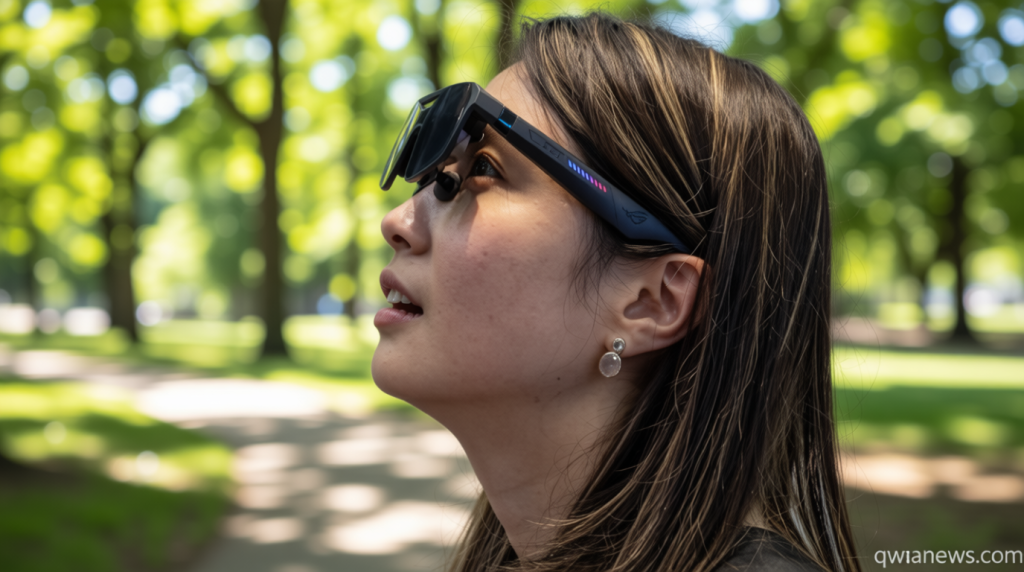
AI Glasses Are Aiding Cheating in Exams – A Growing Concern in Test-Obsessed Asia
The Rise of AI-Guided Cheating in Academic Settings
Qwenews.com – AI glasses are aiding cheating in exams, a trend that has sparked widespread debate in regions where academic performance is a critical determinant of future success. For years, students have resorted to traditional methods like whispering answers or using hidden notes, but the integration of artificial intelligence into wearable technology has introduced a more sophisticated and discreet means of deception. In East Asia, where competitive exams often define career pathways and social mobility, these devices are becoming a silent but powerful tool for those seeking to gain an edge.
Case Studies: AI Glasses in Action During High-Stakes Tests
Recent incidents in South Korea and Taiwan have highlighted the alarming reach of AI glasses in exam environments. During an English proficiency test, which frequently serves as a gateway to professional opportunities, examinees were caught using the devices to access real-time answers. In Taiwan, a medical school entrance exam candidate triggered suspicion when proctors noticed unusual heat patterns from their glasses, suggesting the presence of an AI-powered system. These cases, though isolated, signal a broader challenge to the fairness of standardized testing. As AI glasses become more prevalent, their role in exam cheating is likely to expand, necessitating stricter oversight.
“The technology is evolving so rapidly that even a few reported instances may only scratch the surface of the problem,” said Thomas Corbin, an Australian academic who has studied AI devices in testing environments. “These gadgets are no longer just tools for convenience—they’ve become a new frontier in academic dishonesty.”
How AI Glasses Enable Real-Time Cheating
AI glasses are designed to be compact and unobtrusive, making them ideal for use in exam settings. Equipped with built-in microphones, cameras, and connectivity features, these devices can transmit data to and from the internet, allowing students to receive instant solutions to complex questions. In some cases, the glasses can even project answers directly onto the user’s field of vision, bypassing the need for manual note-taking. This level of integration has raised alarms among educators, who fear the erosion of traditional learning values and the increasing reliance on technology during assessments.
Global Response to the Cheating Crisis
Exam authorities in China, the UK, and South Korea are taking swift action to address the issue. In China, over 10 million students took the national college entrance exam this year, with all glasses subject to rigorous inspection. The UK has also warned that AI glasses and earpieces could become a significant threat to exam integrity, prompting discussions on banning such devices in testing environments. South Korea’s education ministry is actively researching new measures to detect and prevent AI-assisted cheating, as the technology is already prohibited in certain exam halls. These efforts reflect a growing global awareness of the need to adapt testing protocols to keep pace with technological advancements.
“The current systems are lagging behind the capabilities of AI glasses,” noted Meng Zili, an assistant professor at the Hong Kong University of Science and Technology. “Students can now access vast knowledge bases instantaneously, which shifts the focus of exams from measuring memory to assessing access to information.”
Technological Advancements and Their Impact on Education
The rise of AI glasses is part of a larger trend of integrating artificial intelligence into everyday tools. Meta’s Ray-Ban AI glasses, launched in late 2023, have already seen over seven million sales worldwide, underscoring their popularity. These devices not only assist in cheating but also raise broader concerns about privacy and data security. As AI glasses become more intelligent and user-friendly, their potential to influence academic outcomes is expected to grow, prompting a reevaluation of how education systems assess knowledge and skills.
Experts argue that the widespread adoption of AI glasses could redefine the concept of academic integrity. While these tools offer convenience and efficiency, they also challenge the traditional notion of independent learning. Some educators propose a hybrid approach, allowing AI-assisted tools in certain contexts while enforcing strict rules during high-stakes exams. This shift may signal a new era in education, where the line between human effort and technological aid becomes increasingly blurred.
With the proliferation of AI glasses aiding cheating in exams, the focus of academic evaluation is undergoing a transformation. Institutions must now balance the benefits of technology with the need to preserve fair competition. As the debate continues, one thing is clear: the integration of AI into wearable devices is reshaping the landscape of education, demanding innovative solutions to ensure equitable learning outcomes. The future of exams may depend on how effectively these systems adapt to the challenges posed by AI-powered cheating tools.