
National Geographic’s Latest $300 Million Museum Offers a Vivid Journey Through Over a Century of Groundbreaking Exploration
A New Era of Immersive Discovery
Qwenews.com – Located just a few blocks from the White House, the National Geographic Museum of Exploration opened its doors on June 26, offering visitors a chance to experience the society’s 138-year legacy of discovery. With 100,000 square feet of space and a $300 million investment, this new venue transforms the former National Geographic Museum site into a dynamic hub for learning and adventure.
Inside, the museum blends archival treasures with interactive installations. A courtyard welcomes guests with life-sized wildlife sculptures, including a jaguar in pursuit of a capybara and a penguin tending to its young. These exhibits set the tone for a journey that spans continents and centuries, inviting visitors to connect with the natural world in unexpected ways.
Photography as a Legacy of Wonder
The museum’s first floor honors National Geographic’s iconic photography heritage. A digital archive displays every magazine cover ever printed, while a curved wall in the lobby showcases videos of glaciers, deep-sea trenches, and nomadic communities. A massive circular skylight allows natural light to illuminate the space, creating a seamless blend of history and modernity.
“This museum tells the story of amazing humans who’ve explored, from our founding in 1888 all the way up to people doing work in the field today,” said Emily Dunham, chief campus and experiences officer.
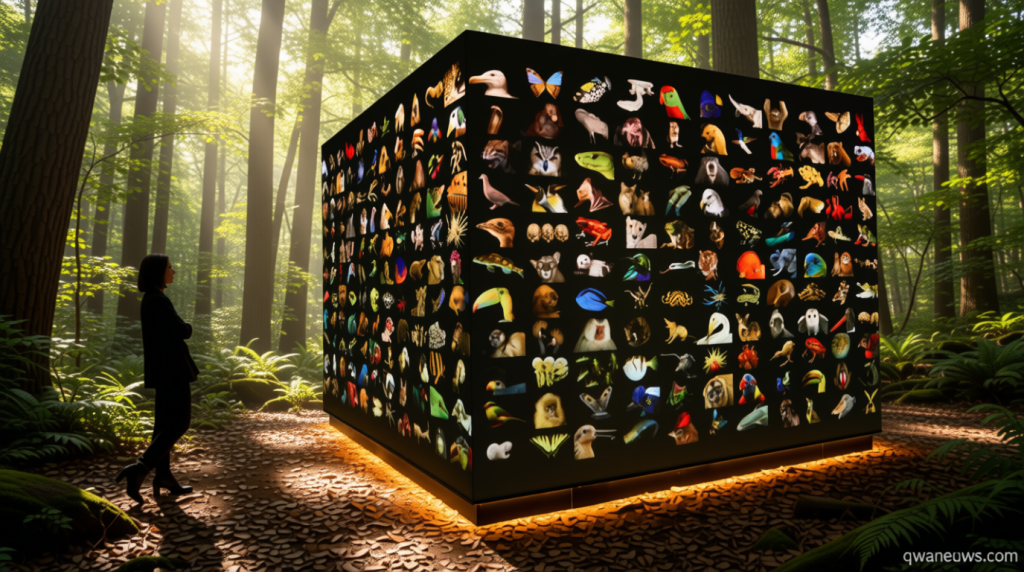
Interactive zones let visitors step into the role of an Explorer. A hidden passage behind a bookcase leads to the “Geoverse,” a 270-degree theater that immerses guests in the biodiversity of Peruvian cloud forests and Australian deserts. Meanwhile, the “Photo Ark: Animals of Earth” gallery features Joel Sartore’s project, which has documented over 18,000 species in human care.
“After you’ve seen these animals and looked them in the eye,” Dunham added, “how can you not care and want to protect them?”
Expeditions and Innovations on Display
Upstairs, the “Rolex Explorers Landing” highlights the tools and tales of modern adventurers. One exhibit showcases Steve Boyes’ gear, including binoculars passed down from his grandfather. These instruments helped Boyes map southern Africa’s Okavango basin, where he once observed four leopards in a single scene.
Among the displays is a mokoro, a narrow dugout canoe that has traversed 20,000 miles of exploration. Interactive maps trace recent expeditions, such as the 2019 project that installed the world’s highest weather station near Everest’s summit and efforts to chart the Amazon’s waterways from the Andes to the Atlantic. A replica of the JIM suit, worn by oceanographer Sylvia Earle to dive 1,250 feet underwater, underscores the museum’s commitment to innovation in exploration.
From the original yellow-bordered magazine to cutting-edge technology, the museum serves as a testament to National Geographic’s mission of illuminating and protecting the planet’s wonders. Its hands-on design ensures both children and adults can experience the thrill of discovery, bridging past and present through immersive storytelling.