
Paris Fashion Week Turns the Spotlight on Shape, Atmosphere and Fashion’s Changing Mood
Qwenews.com – Paris Fashion Week is moving through its busiest stretch, bringing together experimental newcomers, major luxury houses and a fashion crowd drawn as much to spectacle as to clothes. Rihanna has been in the city, while fans have gathered outside venues hoping to catch a glimpse of celebrities between shows. Inside, the schedule has ranged from intimate conceptual presentations to large-scale runway productions.
The opening day set an exploratory tone through work from newer talents, including Matières Fécales’ creative partnership, Swedish designer Ellen Hodakova Larsson and LVMH Prize recipient Julie Kegels. By Tuesday, established names such as Dior and Saint Laurent had raised the scale, presenting polished collections with the kind of theatrical production expected from Paris’s largest houses.
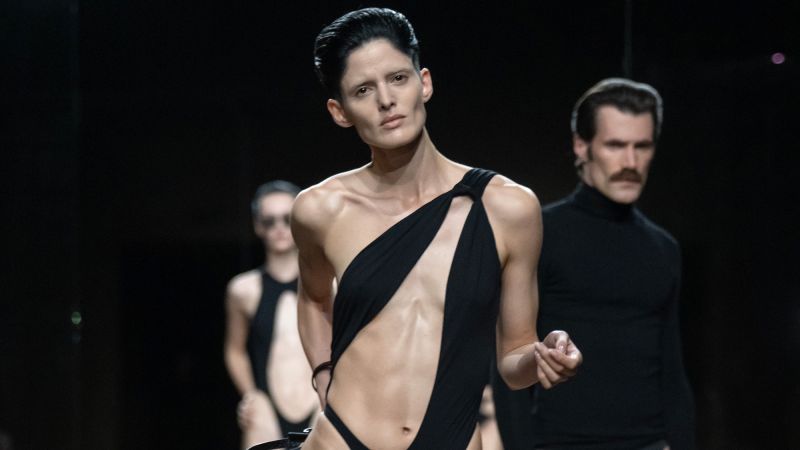
Across the week, designers have repeatedly asked how clothing can reshape the body, alter movement or transform the atmosphere around the wearer. The result has been a season filled with unexpected volume, unconventional silhouettes and garments designed to make an immediate visual impression.
Maison Margiela embraces disruption
Maison Margiela continued its longstanding interest in challenging conventional ideas of attractiveness. Glenn Martens staged the label’s latest runway outing amid fading flowers, creating an environment with a faintly decaying scent. The setting echoed the collection’s uneasy, deliberately offbeat energy.
Models appeared in knee-high boots without toes, sharply constructed blazers and shirts cut so open across the chest that they exposed a striking gap. Floral patterns collided visually with the flowers surrounding the runway, making the show feel less like a conventional display of seasonal dressing and more like a confrontation between clothing, set design and perception.
The house, widely associated with the distinctive split-toe tabi shoe, used this presentation to push further into a vocabulary of altered proportions and familiar pieces made strange. Martens’ approach suggested that elegance need not depend on symmetry, polish or easy wearability.
Rick Owens brings an otherworldly descent
At the Palais de Tokyo, Rick Owens once again used his signature sloping runway, which begins high above the fountain and sends models downward across the space. The route gives each appearance a cinematic feeling, as though the models have arrived from somewhere beyond the ordinary city landscape.
That futuristic atmosphere was amplified on Thursday by prismatic looks built around tentacle-like forms. Tulle was threaded onto elastic cords, producing dresses that moved and bounced as the models walked. The garments seemed to react to every step, turning motion into part of the design rather than treating it as a background detail.
Owens’ runway remains one of the clearest examples of how a show’s architecture can influence the reading of a collection. Here, the venue and the clothes worked together to create an image of otherworldly arrival.
Issey Miyake explores clothing and air
Satoshi Kondo, who has led Issey Miyake womenswear since 2019, approached the collection through a question about the space surrounding the body. Rather than simply outlining a figure, his designs considered whether fabric could capture and use air itself.
The Friday show opened with an interpretive dance lasting five minutes, choreographed by Tess Voelker. Voelker and her performers manipulated an immense expanse of pink fabric that expanded dramatically when it caught the air, then collapsed as the dancers redirected it. Its shifting form resembled a mushroom cloud at moments, while also demonstrating the collection’s central interest in volume and lightness.
Kondo translated that idea into the final three looks: two extremely lightweight jackets and a skirt made from nylon yarn. Each piece used a drawstring hem to retain the breeze, functioning almost like a small sail. The designs brought an abstract runway gesture into the realm of everyday dressing, suggesting that movement through the city could become part of the garment’s design.
Balenciaga signals a vivid new direction
Pierpaolo Piccoli’s Balenciaga collection offered bright City Bags in acid tones, oversized cummerbunds, capes and flowers inflated with air and arranged around the neck like braces. More than a year into his role, the Italian designer continues to steer the house away from the satirical and frequently cynical sensibility associated with Demna’s tenure.
A seemingly simple shirt captured that transition. Rendered in a rosy shade close to Piccoli’s celebrated Valentino pink, the boxy button-down had turned-up cuffs and a breast pocket, initially resembling a conventional office shirt. When the model turned, however, it revealed an integrated hood.
The shirt-with-hood idea had appeared under Demna as well, though usually in darker, more subdued versions. Piccoli’s interpretation retained the element of surprise while changing its emotional register through color and a cleaner sense of optimism.
Chloé revisits personal and house history
Chemena Kamali looked to the Chloé archive for her latest collection, drawing from pieces that have stayed with her during her three years at the house. One reference was the 1972 “Noel” suit, originally created by Karl Lagerfeld. Kamali reimagined its tailored structure and paired it with frilled lingerie-style harnesses.
Another archival fixation came from raincoats dating to the 1950s. That influence produced some of the collection’s most immediately appealing looks: translucent vinyl rain macs in pink and smoky gray, each fitted with softly rippling Inverness capes. They were layered over trench coats and elaborate dresses, allowing practical outerwear to become romantic and decorative.
Scarlet and classic yellow rain slickers brought a more hard-wearing character, accompanied by oversized sou’wester hats. Yet the runway styling kept the mood distinctly fashion-forward, with models wearing slingback pumps instead of rain boots.
An evolving week in the French capital
Elsewhere, Daniel Roseberry transformed a basement space at the Louvre into an elegant jazz-club setting, complete with black velvet curtains, cream-and-black carpeting, chandeliers and softly lit bistro tables. The atmosphere created a backdrop for evening-focused dressing, underscoring how runway environments are increasingly central to the message of a collection.
As the remaining shows unfold, Paris Fashion Week continues to demonstrate the broad range of contemporary fashion: archival reinterpretation, theatrical provocation, technical experimentation and color-driven glamour all share the same calendar. This season’s early highlights point to a particular fascination with clothing that does more than decorate the wearer—it changes silhouette, movement and the space around it.
Related Reading
Frequently Asked Questions
What is Here s what s happening at Paris?
Here s what s happening at Paris is the main topic of this guide. The article explains the context, practical details, and next steps readers should understand.
Why does Here s what s happening at Paris matter?
Here s what s happening at Paris matters because readers are looking for a useful answer, not just a short summary. Good content should match search intent and help them decide what to do next.