
The Role of the New World Cup Ball in Croatia’s Defeat to Portugal
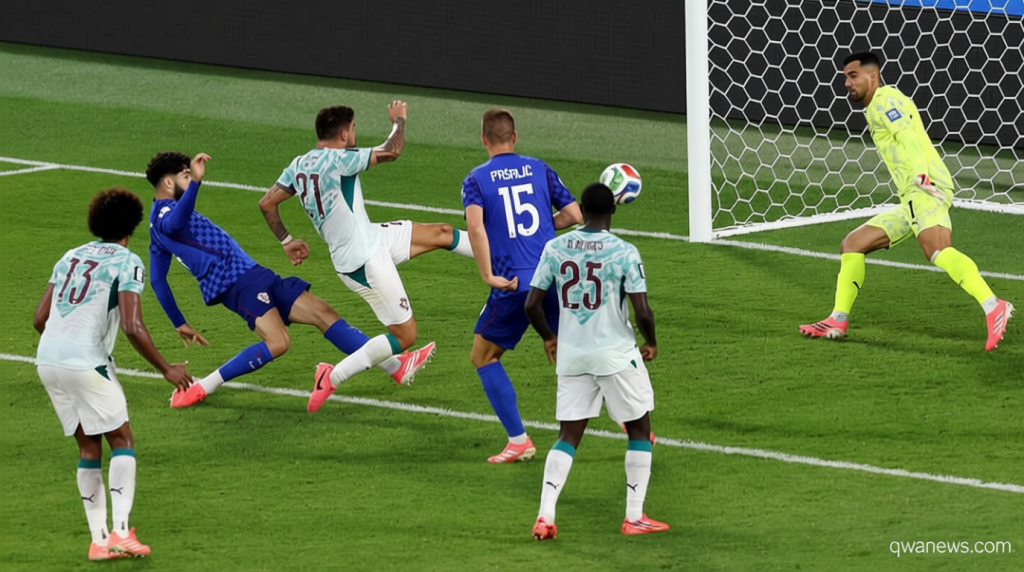
Qwenews.com – How the new World Cup ball, the Trionda, played a pivotal role in Croatia’s elimination from the tournament during their Round of 32 clash against Portugal has sparked intense debate. The controversial VAR decision, which overturned Croatia’s last-minute goal, underscores the growing influence of technology in determining match outcomes. This moment, occurring in stoppage time, left Croatian players heartbroken and Portuguese fans celebrating, raising questions about the balance between human judgment and machine precision in modern football. The Trionda ball’s advanced sensor technology, designed to enhance officiating accuracy, became a focal point of discussion as it directly impacted the game’s final decision.
How the New World Cup Ball Revolutionizes Offside Decisions
The Trionda ball, introduced for the 2026 World Cup, is equipped with IMU (Inertial Measurement Unit) sensors that track ball movement with unprecedented detail. These sensors, embedded within the ball’s surface, provide real-time data on contact points and trajectory, enabling VAR officials to make split-second calls with greater confidence. In the Croatia-Portugal match, the ball’s ability to capture the exact moment of contact between the cross and Igor Matanović’s head proved critical. The subtle interaction, which might have gone unnoticed by the naked eye, was flagged by the system, leading to the offside decision that sealed Portugal’s victory.
“It’s incredible how the new World Cup ball can detect such a tiny touch,” remarked a FIFA official during the match. “This is a leap forward in ensuring fairness and precision in high-pressure moments.”
The integration of this technology marks a significant evolution in football’s officiating tools. Unlike previous World Cup balls, which relied solely on visual inspection, the Trionda’s sensors offer an objective layer of analysis. This advancement is particularly valuable in tight games where offside decisions can determine the fate of a team. The system’s “heartbeat graphic,” visible to fans during broadcasts, provides a transparent view of the ball’s movement, reinforcing the idea that technology can make the game more equitable for all participants.
How the New World Cup Ball Changes the Game Dynamics
The Trionda ball’s influence extends beyond the Croatia-Portugal match, as it has been designed to address longstanding issues in football officiating. By incorporating cutting-edge sensors, the ball aims to reduce human error and provide instant, data-driven decisions. However, its implementation has also sparked discussions about the potential overreliance on technology. Critics argue that the ball’s precision could lead to more controversial calls, as even the smallest contact may be scrutinized under a microscope. Meanwhile, supporters claim it ensures fairness, particularly in critical moments where a single millisecond can alter the course of a game.
“The new World Cup ball is a game-changer,” said a sports analyst. “It’s not just about making better decisions—it’s about changing how we perceive the flow of the game.”
The Trionda’s design also emphasizes durability and aerodynamic performance, crucial for the grueling conditions of the World Cup. Its synthetic leather and optimized weight distribution allow for consistent flight patterns, ensuring that the ball’s behavior remains predictable throughout the match. These features, combined with the sensor technology, have made it a symbol of football’s embrace of innovation. Yet, the question remains: does this advancement enhance the game or complicate it? The Croatia-Portugal incident offers a compelling case study in the ongoing evolution of football’s rules and technologies.
Reactions to the Technology-Driven Decision
The VAR call in the Croatia-Portugal match elicited mixed reactions from players, coaches, and fans. Croatia’s coach, Zlatko Dalić, expressed deep disappointment, stating, “It kills the emotions. It kills everything within you.” His words reflect the emotional weight of the decision, which came just moments after Croatian players believed they had secured a crucial goal. On the other hand, Portugal’s coach, Roberto Martínez, praised the intervention, highlighting the ball’s role in the ruling. “How the new World Cup ball now has a chip, and it’s very clear that’s why the VAR intervened. It’s not a subjective opinion,” he noted, underscoring the technology’s ability to minimize bias in high-stakes decisions.
“The technology is there to help, not to replace,” added FIFA’s spokesperson. “But when it’s used in such dramatic moments, it can’t help but shape the narrative of the game.”
The incident has reignited conversations about the role of technology in football. While some players appreciate the accuracy it brings, others feel it adds an extra layer of pressure. The Trionda ball’s sensor data, which confirmed Mario Pašalić’s offside, has become a point of contention. For Croatia, it was a painful reminder of how technology can override human intuition. For Portugal, it was a validating moment that showcased the benefits of integrating such innovations into the World Cup framework.
The Broader Implications of Trionda Ball Technology
As football continues to modernize, the Trionda ball represents a turning point in the use of technology for decision-making. The ability to detect even the smallest touches of the ball could revolutionize not only offside calls but also other aspects of the game, such as goal-line technology and corner decisions. How the new World Cup ball is used in future matches may set a precedent for its adoption in domestic leagues and international competitions alike. The 2026 World Cup, with its emphasis on technological advancements, is shaping up to be a testing ground for these innovations, offering a glimpse into football’s future.
“The Trionda ball is more than just a piece of equipment—it’s a statement about football’s commitment to precision,” said a fan from the Netherlands. “But we also need to remember the human element that makes the game special.”
Despite the controversy, the Trionda ball’s impact on the Croatia-Portugal match highlights its potential to transform football. The technology’s integration into VAR systems ensures that decisions are based on objective data, reducing the margin for error. However, as the debate over its use continues, it remains to be seen whether fans will embrace this change or remain skeptical. The World Cup, with its global audience, will be instrumental in shaping the perception and acceptance of the new World Cup ball in the sport’s ongoing evolution.