
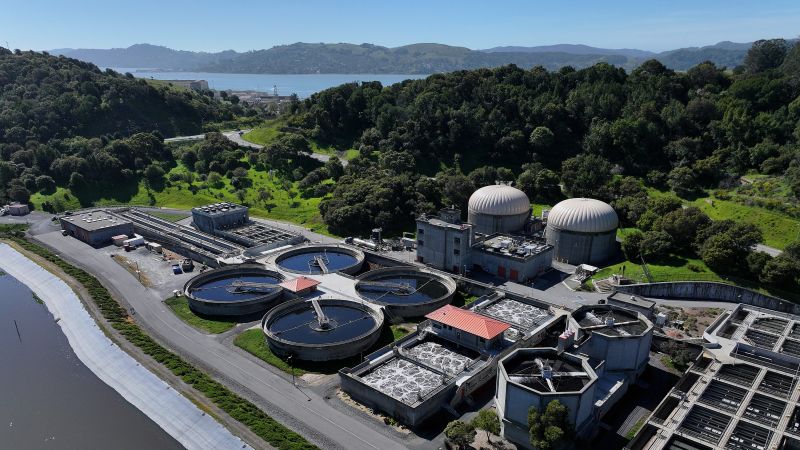
Foreign Cyber Threats Expose Weaknesses in American Water Infrastructure
Qwenews.com – A coordinated series of cyber intrusions targeting water facilities across multiple states has brought to light longstanding gaps in critical infrastructure funding. Industry specialists and government representatives indicate that these breaches demonstrate how international rivals can jeopardize essential services that most Americans consider routine. According to the Federal Bureau of Investigation, certain attacks resulted in reduced water pressure and flooding at various treatment sites, though local and state authorities confirmed that drinking water quality remained unaffected.
Government officials are now questioning why the attackers, who struck during an intense heat wave, did not escalate their operations. Had hackers manipulated equipment responsible for monitoring chemical levels, they could have endangered public health. One American official remarked, “Do we have the C team and they couldn’t do worse?” Another added, “How bad could it be if the A team turned to the US?”
International Suspects and Historical Context
While Iran remains a primary suspect in these hacking operations, Washington has not officially verified Tehran’s participation. For many years, American authorities have cautioned that sophisticated hacking units originating from Russia, China, and to a lesser degree Iran, have been building access to vital industrial networks throughout the country. These groups have been waiting for opportune moments to create widespread disruptions.
The weaker sections of American infrastructure—particularly municipal water and power facilities that support military installations—have become prime targets. Today, water operators serving smaller communities and counties find themselves at the center of investigations into one of the most significant cyber incidents affecting this sector in recent memory. Geographic coverage spans from South Dakota down to Georgia.
Local Incidents and Responses
Caitlin Durkovich, who previously served as deputy homeland security adviser in the Biden administration, explained: “It’s no secret that water utilities are under-resourced and vulnerable to cyberattacks, and it’s no secret that our adversaries know it.” She continued, “By targeting critical infrastructure, they can undermine public confidence in our leaders and impose significant costs with relatively little effort. They’ve spent years positioning themselves for exactly this kind of disruption.”
In central Georgia, Erin Thomas, spokesperson for the Clayton County Water Authority, noted that her organization had never encountered a cyber incident of this magnitude. The authority is currently examining “unauthorized cyber activity” that potentially caused a pump station malfunction, leading to a boil-water advisory during the early morning hours of July 27. Thomas stated, “Our main concern when this happened was to make sure that we got the system up and running.” The facility restored operations within hours of the initial breach.
Meanwhile, in Rapid City, South Dakota, officials reported on July 31 that a “cyber incident” impacted one of the city’s wastewater lift stations. Mike Theis, Rapid City’s public works director, expressed that the community was not surprised by the possibility of foreign targeting during potential wartime scenarios. Although he could not remember a comparable attack in the city’s history, Theis praised the “quick action from our employees who noticed abnormal behavior” on computer networks, which allowed them to isolate affected systems from the internet.
Policy Measures and Expert Concerns
These hacking episodes have prompted both federal and state-level policy initiatives. New York Governor Kathy Hochul, a Democrat, revealed plans to distribute approximately $9 million in grants aimed at enhancing cyber protections for water systems throughout her state. Additionally, Democratic Senator Adam Schiff of California intends to present legislation next week that would expand the Environmental Protection Agency’s capabilities to strengthen water sector cyber defenses, according to his spokesperson.
Beyond national security implications, water industry professionals and cybersecurity specialists have expressed considerable frustration regarding the continued direct internet connectivity of substantial portions of infrastructure. Marty Edwards, former leader of the Department of Homeland Security’s Industrial Control Systems Cyber Emergency Response Team, observed: “For the past 20 years, experts have been telling utilities to make sure their systems were not directly accessible from the internet.” He concluded that “this recent set of intrusions is the result of complacency and a lack of budget prioritization.”
Related Reading
Frequently Asked Questions
What is Why US water systems are vulnerable?
Why US water systems are vulnerable is the main topic of this guide. The article explains the context, practical details, and next steps readers should understand.
Why does Why US water systems are vulnerable matter?
Why US water systems are vulnerable matters because readers are looking for a useful answer, not just a short summary. Good content should match search intent and help them decide what to do next.