
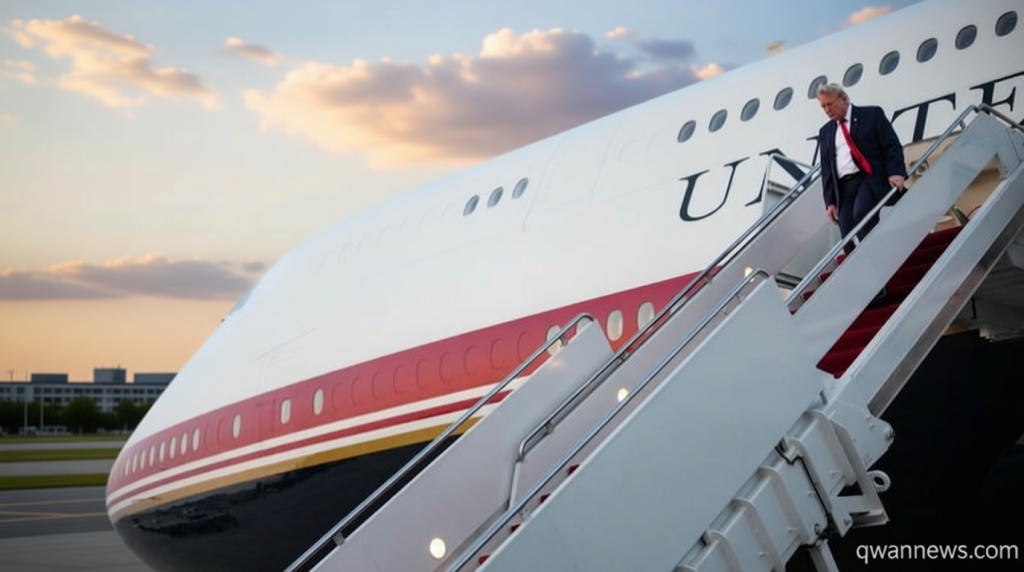
White House Rushes to Further Secure Trump’s New Air Force One
Qwenews.com – President Donald Trump’s newly acquired Air Force One has become a focal point for increased security measures, as the White House moves swiftly to enhance its defenses. The aircraft, funded by Qatar, has sparked debates over its readiness for international travel amid rising global tensions. Officials are currently working to implement additional safety protocols, aiming to mitigate risks associated with its use in high-profile destinations. While the plane is designated as the official presidential jet, Trump has expressed a preference to continue operating it domestically, raising questions about the urgency of the upgrades.
The White House’s accelerated timeline for securing the aircraft has drawn attention from both internal and external stakeholders. Recent reports indicate that the administration is prioritizing rapid implementation of counterterrorism technologies and reinforced cockpit barriers. These steps are intended to address potential vulnerabilities, particularly after Trump’s recent trip to Turkey. However, the expedited schedule has left some security experts skeptical, arguing that the process lacks the thoroughness required for such a critical asset. Despite this, the president has publicly endorsed the effort, calling it a “crucial step” in ensuring his safety abroad.
Security Upgrades and Operational Shifts
Details of the upgrades remain classified, but sources suggest they include advanced threat detection systems and improved communication networks. The White House has also expanded its contingency plans, ensuring that the aircraft can operate in contested airspace with minimal disruption. This includes the deployment of additional armed guards and the integration of real-time surveillance capabilities. While these enhancements are underway, the plane’s domestic use has been seen as a strategic move to test its capabilities while minimizing exposure to external threats.
“The White House’s focus on further securing the aircraft is commendable, but the timeline feels rushed for a plane that will soon be operating on the world stage,” said security analyst Maria Gonzalez. She emphasized that the current modifications may not fully align with the high-security standards expected for international travel. The Qatari-funded jet, which was first introduced earlier this year, has already undergone significant retrofitting, yet its readiness for long-haul missions remains under scrutiny. Trump’s decision to use it domestically underscores the administration’s cautious approach to risk management.
Boeing’s Role in the Fleet Modernization
Boeing, the manufacturer of the new 747s set to replace Air Force One by 2028, is working closely with the White House to ensure the current aircraft meets operational needs. The company has acknowledged the complexity of the project, noting that the retrofit process required extensive coordination with U.S. defense agencies. However, the rushed timeline has raised concerns about the quality of the final product. Despite these challenges, Boeing remains optimistic, stating that the new fleet will offer enhanced capabilities, including improved missile defense systems and state-of-the-art encryption technologies.
Analysts suggest that the White House’s push to further secure the existing jet may delay the full deployment of Boeing’s next-generation aircraft. The $400 million Qatari donation was initially meant as a temporary solution, but its prolonged use has prompted calls for a more comprehensive security strategy. Some experts argue that the current upgrades, while necessary, are only a fraction of what is needed to match the capabilities of the previous Air Force One. The White House has yet to provide a detailed roadmap, leaving the public to speculate about the true extent of the improvements.
As the security upgrades take shape, the White House is balancing the need for immediate protection with long-term planning. The administration has maintained that the aircraft is “fully operational” and safe for use, even as additional layers of defense are added. This confidence has been bolstered by the president’s own statements, which highlight his commitment to maintaining a secure and functional presidential fleet. Nonetheless, the situation has reignited discussions about the importance of investing in advanced security infrastructure to safeguard the nation’s leader during international engagements.