
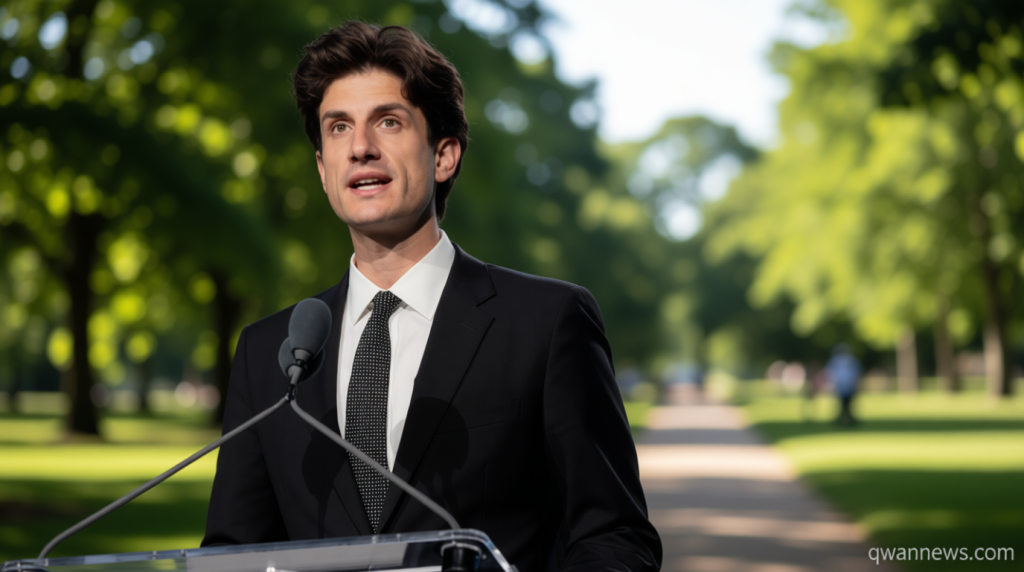
What to Teach a Kennedy About Politics? Jack Schlossberg’s Campaign Offers Surprises
Qwenews.com – What is there to teach a Kennedy about politics? Jack Schlossberg, a Democratic candidate in New York’s congressional race, has learned that even the most revered political families can benefit from fresh perspectives. His campaign, set to face off in the Democratic primary on Tuesday, has sparked debate by blending tradition with innovation, challenging the notion that legacy alone guarantees success in modern politics.
Unconventional Strategies in a Legacy-Driven Race
Though Schlossberg has never met JFK, his campaign has skillfully harnessed the Kennedy name to carve a distinct path in the 12th Congressional District. Unlike traditional candidates who rely on established networks, Schlossberg has embraced digital outreach, using social media to engage voters and redefine how family heritage can fuel political ambition. This strategy not only highlights his personal journey but also raises questions about the role of legacy in shaping political identities today.
His approach has earned praise for its modern edge, particularly at the recent Democratic National Convention, where he became a standout figure. Yet, it has also drawn scrutiny. Critics argue that his reliance on the Kennedy name may overshadow his own policies and qualifications, especially in a district where voters prioritize tangible results over historical ties. What is there to teach a Kennedy about adapting to the evolving landscape of political communication? Schlossberg’s campaign suggests that even the most iconic names must evolve to stay relevant.
The Kennedy Legacy and Modern Political Challenges
Despite the family name’s weight, Schlossberg’s campaign has faced hurdles that test his ability to balance heritage with innovation. Polls indicate skepticism about his viability, with some allies questioning whether he can sustain momentum in an eight-candidate race. His team’s efforts to counter bot-driven attacks and address potential missteps in the race highlight the challenges of maintaining credibility in a competitive primary.
Friends and supporters note that Schlossberg’s charisma and ambition sometimes create tension. For instance, his tendency to bypass traditional staff, like a press secretary, has led to delays in managing public relations. “People can’t accept that I’m a smart, hardworking individual who’s genuinely trying,” he explained during an interview. “They think I have to be unmanageable, taking naps and acting like I’m not functioning properly.” This anecdote underscores the perception that his campaign’s unique style may alienate some voters, yet it also reinforces his determination to break from convention.
The naps reference ties to a notable incident. In May, a New York Times article revealed that Schlossberg had abruptly told aides he needed to go home to rest on the day he planned to launch his campaign. Friends later clarified that this was a planned visit to his sister, Tatiana Schlossberg, who had not yet announced her terminal leukemia diagnosis. Though the leak of her illness was inevitable, the timing raised questions about his focus and preparedness. Tatiana’s essay in The New Yorker, published on November 22, and her passing on December 30, have added a personal dimension to his political journey.
Meanwhile, the Kennedy name continues to resonate in New York, particularly through the legacy of his uncle, John F. Kennedy Jr. The Hulu series “Love Story,” which recently aired, dramatizes the life of the late JFK Jr., nearly 27 years after his plane crash. For Schlossberg, this cultural relevance offers both an opportunity and a challenge—how to align his campaign with a historical figure while asserting his own voice in the political arena.
What is there to teach a Kennedy about the complexities of political identity? Schlossberg’s experience demonstrates that while family names can open doors, they also demand adaptability. His campaign’s blend of historical resonance and modern strategies has created a unique narrative, one that could either elevate his standing or expose vulnerabilities in the Kennedy brand. As the primary approaches, the district will be watching closely to see whether his approach proves effective or if the legacy proves too strong to ignore.
In a race where the stakes are high and the competition fierce, Schlossberg’s story offers a lesson in how political dynasties can navigate the demands of a new generation. Whether he succeeds or not, the campaign has already sparked conversations about the evolving role of legacy in today’s political climate—and what it means to teach a Kennedy about the changing rules of the game.