
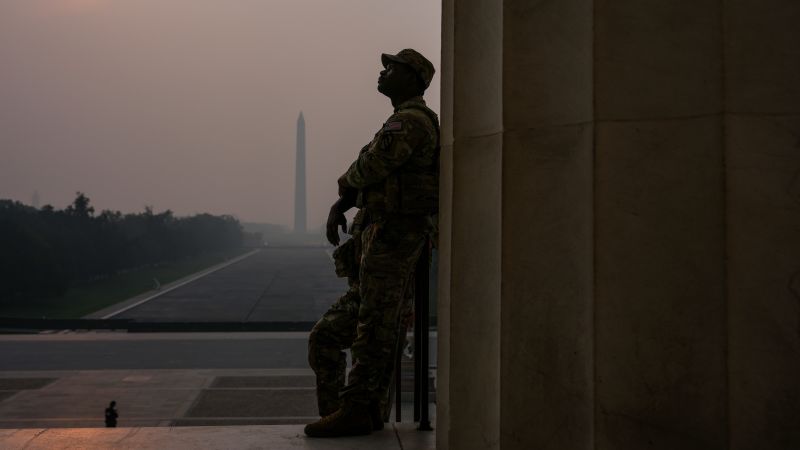
Trump Holds Canada Responsible for Wildfire Smoke, Threatens Higher Tariffs
Qwenews.com – President Donald Trump has claimed Canada is to blame for the smoky skies affecting the United States, leveraging the environmental issue as a catalyst for trade action. In a recent post on Truth Social, he stated he is “holding Canada responsible” for the wildfire smoke that has been worsening air quality across the Midwest and eastern regions. This accusation comes amid growing frustration over the recurring haze, which Trump asserts has not only health implications but also economic consequences. He hinted at potential measures to increase tariffs on Canadian goods, positioning the environmental crisis as a trade negotiation tool.
Environmental Impact and Economic Consequences
Trump’s remarks focus on the perceived failure of Canadian environmental policies, which he claims has allowed unchecked wildfires to generate harmful smoke. The president highlighted that over 100 million people in 18 U.S. states and the District of Columbia are facing air quality alerts, with some areas classified as “very unhealthy” or “hazardous.” He argued that the pollution has imposed a significant burden on American citizens, particularly those in the Midwest, where the smoke has been most persistent. This has led Trump to assert that the “cost of this pollution” should be addressed through trade measures.
“We are holding Canada responsible for the fact that they are not properly maintaining their forests, and brush therein, and the United States is being unnecessarily invaded by filthy, polluted, and unhealthy air, the quality of which is dangerous, and totally unacceptable!”
Trump’s focus on Canada’s environmental mismanagement is part of a broader strategy to justify economic pressure. He warned that the “cost of this pollution” would be integrated into Canada’s existing tariff obligations, potentially leading to higher duties on Canadian imports. The president emphasized that the issue is not just a one-time event but a recurring problem, framing it as “Willful Negligence” that has cost the U.S. billions in economic losses. His comments align with past efforts to use environmental concerns as a pretext for trade disputes.
Trade Tensions and Legal Challenges
Relations between the U.S. and Canada have long been a focal point of Trump’s trade policies. The administration has previously imposed steep tariffs on Canadian goods, citing unfair lumber trade practices and claims that Canada had taken U.S. auto jobs. While the USMCA trade agreement initially shielded Canada from many of these penalties, Trump’s recent statements suggest a shift in approach. He has directed his team to explore alternative legal avenues, including investigations and public comment periods, to push for increased tariffs despite a Supreme Court ruling that blocked his use of emergency powers.
Trump says he’s holding Canada accountable for the environmental damage, which he believes exacerbates the economic strain on American industries. The president has pointed to the impact of smoky air on manufacturing sectors, arguing that poor air quality reduces productivity and worker efficiency. By linking the environmental crisis to trade policy, Trump aims to reinforce his narrative of Canadian negligence. This approach has been consistent with his tendency to frame trade issues as both economic and environmental, using them to justify his aggressive tariff stance.
Recent Shift in Trade Strategy
The Trump administration’s decision not to renew the USMCA in its current form has reignited trade tensions with Canada. This move opens the door for higher tariffs on Canadian imports, which could target a wide range of products. Trump says he’s holding Canada to account for its environmental shortcomings, using the wildfire smoke as a justification for these economic measures. The administration is now preparing to initiate a new round of trade investigations, potentially allowing for the reinstatement of previously suspended tariffs.
While the U.S. and Canada have maintained a close trade relationship, Trump’s focus on environmental issues has created a new dimension to the dispute. The president has framed the smoke as a direct result of Canadian inaction, using it to argue for stricter trade conditions. This strategy reflects his broader pattern of intertwining environmental and economic arguments to justify trade actions. By emphasizing Canada’s role in the smoky skies, Trump says he’s holding the country responsible for both the environmental and economic costs of the crisis.
As the debate over trade and environmental policy continues, the potential for increased tariffs on Canadian goods remains a key point of contention. Trump says he’s holding Canada to account, using the wildfire smoke as a symbol of the nation’s negligence. The administration is working to translate this environmental grievance into economic leverage, aiming to pressure Canada into adopting stricter forest management practices. This approach underscores the administration’s commitment to using trade as a tool for environmental accountability, even as the debate over the best ways to address the issue persists.