
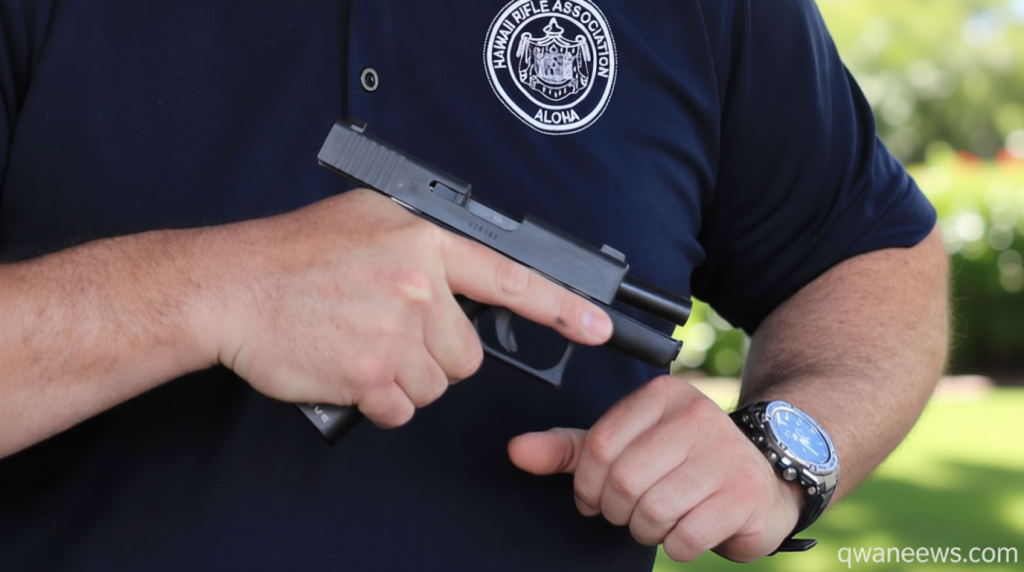
Supreme Court Strikes Hawaii’s Default Gun Ban on Publicly Accessible Private Property
Qwenews.com – The U.S. Supreme Court has struck down Hawaii’s default gun ban, ruling that the state’s law restricting firearms on private property open to the public is unconstitutional. This decision, announced on June 25, 2026, marks a significant shift in the court’s interpretation of the Second Amendment, emphasizing individual rights over state-imposed restrictions. The ruling centers on Hawaii’s “default” ban, which automatically prohibited guns on certain public spaces unless the property owner explicitly allowed them. By overturning this law, the court has reinforced its stance that firearm regulations must align with historical practices, as established in the 2022 Bruen decision.
Expansion of Gun Rights Under the Second Amendment
The 6-3 ruling highlights the Supreme Court’s growing commitment to broadening gun rights. Justice Samuel Alito, writing for the majority, argued that Hawaii’s law failed to meet the Bruen test, which requires modern firearm regulations to be consistent with historical tradition. The decision could embolden other states with similar “default” bans, as the court’s reasoning suggests that such restrictions are too broad and infringe on the right to bear arms. Advocates for the ruling stressed that the law’s application to spaces like retail stores and parks created an unnecessary burden on lawful gun ownership.
Under the Bruen framework, the court evaluates whether a gun law matches the historical understanding of the Second Amendment. Hawaii’s law, which imposed broad restrictions on firearms in places open to the public, was deemed inconsistent with this standard. Alito noted that the law “hobbles” the right to carry arms for self-defense, particularly in areas where individuals might feel vulnerable. The decision signals a possible trend where states with restrictive gun laws face challenges based on historical precedent, rather than contemporary safety concerns.
Opposing Perspectives and Legal Debate
The dissenting justices, including Sonia Sotomayor and Elena Kagan, argued that the ruling prioritizes individual gun rights over state authority in protecting public safety. Sotomayor contended that the court’s decision overrides Hawaii’s considered judgment to regulate firearms in accessible spaces, while Kagan questioned the distinction between the state’s law and older regulations. The justices emphasized that both modern and historical laws aim to address the threat of firearms to others, suggesting the court’s interpretation might be too narrow.
Justice Amy Coney Barrett’s concurrence provided a nuanced view, acknowledging that Hawaii’s law may not have strong historical analogies. She argued that the state’s cited examples of older regulations were insufficient to justify the broader restrictions. This divergence in opinions underscores the ongoing debate over how to balance gun rights with public safety, as the court’s decision could influence future legal battles in other states with similar laws.
Impact on State Gun Laws and Broader Implications
Hawaii’s law is part of a growing movement among states to implement stricter gun control measures. The “default” ban, which applied to private property open to the public, was designed to limit access to firearms in spaces where they could pose a risk. However, the Supreme Court’s ruling suggests that such laws may not survive scrutiny if they do not clearly align with historical practices. The decision has raised concerns among gun-safety advocates, who worry it could weaken state efforts to reduce gun violence.
Legal experts are now analyzing how this ruling might affect other states with similar laws. For example, the court’s focus on historical consistency could lead to challenges against laws in New York, California, and Maryland that restrict firearms in public areas. The ruling also reinforces the role of the Supreme Court in shaping gun policy, potentially shifting the balance of power from state legislatures to the federal judiciary. As the debate continues, the focus keyword “Supreme Court strikes Hawaii s default” remains central to understanding the court’s evolving stance on gun rights.
“This decision demonstrates the Court’s willingness to expand gun rights, even in spaces where state governments have traditionally exercised control,” remarked legal analyst Steve Vladeck. The ruling may serve as a precedent for future cases, influencing how states approach firearm regulations in publicly accessible private property. For now, it has set the stage for further legal and political discussions on the intersection of the Second Amendment and public safety.