
Reflecting Pool Algae Woes: Trump Admin Uses Hydrogen Peroxide to Tackle Crisis
Algae Outbreak After $13 Million Pool Renovation
Qwenews.com – The Lincoln Memorial Reflecting Pool, the centerpiece of Washington, D.C.’s national monument, has become a focal point of environmental and political scrutiny after its $13 million renovation. Completed over a week ago, the 2,800-square-foot water feature was filled with 6.5 million gallons of treated water, but the effort to revive its pristine appearance has been undermined by an alarming algae bloom. This latest episode highlights the persistent challenge of maintaining the pool’s aesthetic appeal, a problem that has plagued multiple administrations and now intensified under the Trump administration’s leadership.
Hydrogen Peroxide and Ozone Nanobubbler as New Solutions
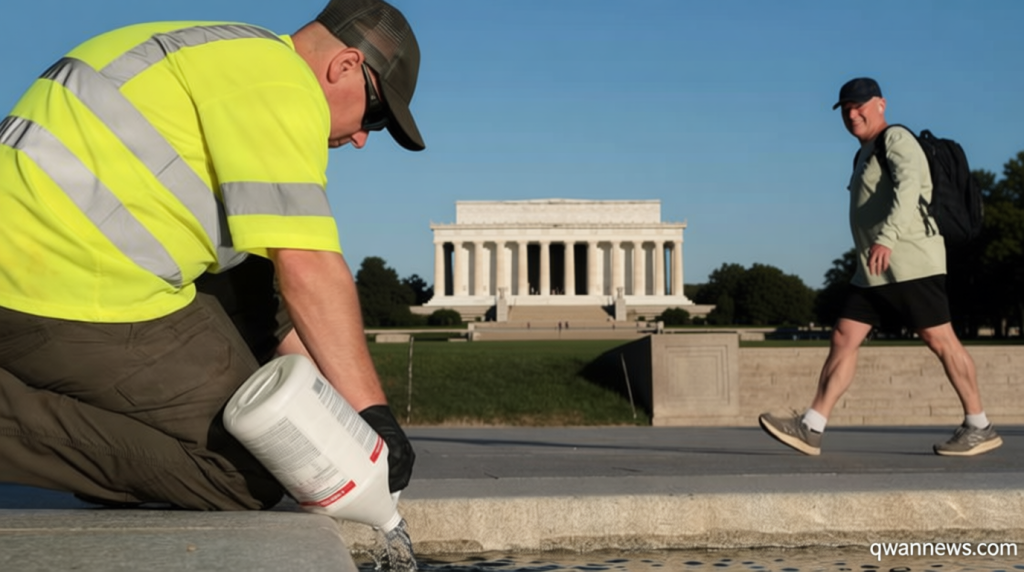
Following the pool’s refill, the Trump administration has deployed a dual strategy to combat the algae. Workers in hip-waders have been manually skimming the green growth, while a new filtration system—nicknamed the “ozone nanobubbler”—has been introduced. According to officials, the nanobubbler, described as “state-of-the-art,” is designed to destroy algae at its source. Hydrogen peroxide is used as a supplementary treatment, praised for its eco-friendly properties and minimal impact on the surrounding ecosystem. Despite these efforts, the water remains visibly green, prompting questions about the effectiveness of the approach.
Testing Reveals Persistent Algae Threat
Recent water tests conducted by the National Park Service showed phosphate levels in the Reflecting Pool far exceeding the recommended thresholds for algae prevention. The high concentrations, combined with the pool’s massive 6.5 million-gallon volume, suggest a deep-rooted issue that may not be easily resolved. A worker on the cleanup team admitted that eradicating the algae would require “a lifetime of effort,” underscoring the complexity of the problem. The administration’s reliance on hydrogen peroxide, while a step forward, may not be sufficient to address the long-term ecological imbalances.
“The algae bloom indicates a larger issue with water chemistry,” said a spokesperson from the Department of Interior. “While hydrogen peroxide and the nanobubbler are effective in the short term, we must also address nutrient levels and flow patterns to prevent future outbreaks.” This statement highlights the growing concern that the Reflecting Pool woes are not just a temporary setback but a systemic issue requiring sustained attention.
Contractor’s Role and Public Accountability
Greenwater Services, the Ohio-based firm contracted to install the ozone nanobubbler, claims its technology is “backed by government and academic research” and promises to “significantly reduce toxins and algae growth.” However, the company has yet to respond to questions about the current algae crisis, raising doubts about transparency. Critics argue that the Reflecting Pool woes stem from a combination of factors, including inadequate maintenance protocols and the lack of long-term monitoring plans. The administration’s focus on immediate solutions may overshadow the need for comprehensive water management strategies.
Expert Insights on Algae Persistence
Environmental experts have warned that the algae’s return could persist through the summer and into the fall, especially if nutrient levels and sunlight exposure remain unchanged. “Algae thrive in stagnant conditions, and this pool’s size means even small imbalances can have major consequences,” explained Dr. Lisa Morgan, a water ecology specialist. The White House has not yet clarified whether President Trump is aware of the ongoing challenges or has engaged in discussions with Interior Secretary Doug Burgum. Meanwhile, the public continues to view the Reflecting Pool as a symbol of the administration’s commitment to environmental stewardship—and its ability to overcome such setbacks.
Broader Implications for Monument Maintenance
The Reflecting Pool woes have sparked a wider debate about the adequacy of funding and resources allocated to preserving iconic landmarks. While the renovation was intended to restore the pool’s historical significance, the algae issue has drawn criticism from both environmental advocates and political opponents. With the pool’s popularity as a tourist attraction, its condition directly affects public perception of the administration’s efforts. As the cleanup continues, the challenge of balancing ecological sustainability with aesthetic demands remains a defining aspect of the Lincoln Memorial’s ongoing preservation efforts.