
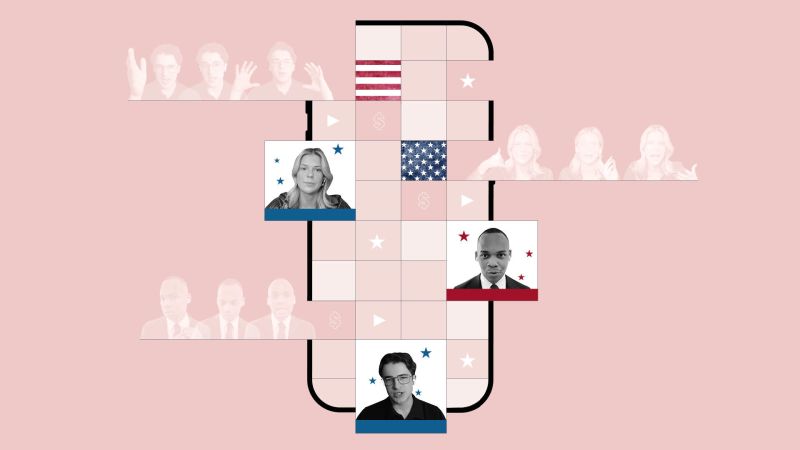
The Unconventional Economy of Gen Z Political Voices
Qwenews.com – For nearly half a century, Generation Z—those born between 1997 and 2012—has been building toward a pivotal moment. According to Tufts University’s Center for Information and Research on Civic Learning and Engagement, almost 50 million members of this cohort will cast ballots this November, positioning them as a decisive demographic for both major parties.
What began as casual social media activity has evolved into a complex professional landscape. Maria Comstock exemplifies this transformation. Without a mobile device until age eighteen, she accumulated one million followers by her following birthday through “Point of View” videos addressing dating, politics, and workplace dynamics. Political campaigns soon recognized her relatable content, converting what started as a pandemic-era pastime into a career. Now twenty-four, Comstock leverages her digital expertise to support Democratic candidates.
“Everyone’s a content creator in this day and age,” says Comstock. “The political work is hard to define both legally, and on campaigns, in payment systems, and it’s just a new world that’s ever, ever evolving – and it gets messy.”
Challenges of the New Media Landscape
The responsibilities of a Gen Z political influencer mirror those of traditional media executives. Filming, editing, and distribution require significant effort. Clients frequently demand attention, competition remains fierce, and compensation fluctuates considerably. Perhaps most unpredictably, the political party an influencer supports could lose power regardless of their efforts.
Harry Sisson represents another trajectory within this space. At twenty-three, he has amassed two million TikTok followers after beginning his political content creation six years ago. While still too young to vote when he started posting videos advocating for Joe Biden, Sisson worked from his basement during lockdowns. “Everything was shut down, so I was scrolling on social media and I saw you know, other young people talking about politics, talking about Joe Biden and Donald Trump. And I just thought I could do it too,” he explains.
Sisson’s reach extends beyond Democratic circles. Former President Donald Trump engaged with his content by sharing an artificial intelligence video last year showing Trump dumping sewage from an aircraft onto Sisson and fellow demonstrators at a No Kings rally. His management team now oversees his public appearances, and his personal life receives constant scrutiny. In March 2025, UK broadcaster Piers Morgan questioned Sisson regarding allegations that he solicited sexting messages from multiple women. Sisson offered an apology while maintaining he committed no wrongdoing.
Authenticity and Regulation
Nearly a dozen influencers speaking with CNN highlighted the challenges of navigating an industry with minimal oversight. Payment structures vary widely, and political alliances shift constantly. The concept of “authenticity” remains essential, though disclosing financial arrangements can potentially weaken that perception. Not every influential voice treats content creation as primary employment; some supplement traditional careers while others maintain it purely as recreation.
CJ Pearson, a conservative pioneer, offers an earlier example of this phenomenon. At twelve years old in 2015, Pearson received a camcorder for Christmas and recorded himself discussing support for Rudy Giuliani while criticizing President Barack Obama. Having never created a YouTube video previously, he published the footage and received two million views within twenty-four hours.
“If you have a script, buy an ad, if you want a story, hi,” Pearson advises, emphasizing the cardinal rule of allowing creators creative freedom.
Jess Rauchberg, a Seton Hall University professor specializing in digital culture, observes the lasting impact of this movement. “Whether we like it or not, influencers are not going away, and they play a big, big role in how we make sense of politics. I think at this point we can say influencers also sell us politics.”
Following Republican successes with younger voters in 2024 through nontraditional media channels, Democrats are increasingly investing in influencer partnerships. Republicans continue advancing with proven strategies. As the industry matures, these digital voices will likely remain central to political communication, despite the ongoing challenges of payment transparency, regulatory uncertainty, and the unpredictable nature of electoral outcomes.