
Senator John Fetterman Warns of Party Exit Over Anti-Israel Policies
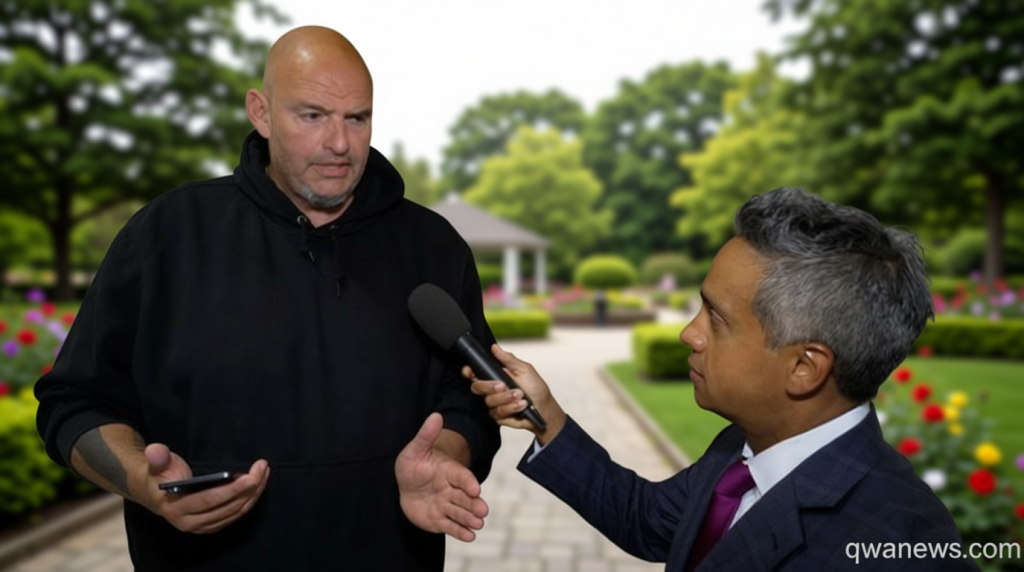
Qwenews.com – Senator John Fetterman has made it clear that his loyalty to the Democratic Party is conditional on its stance toward Israel, a position he recently solidified by laying out his “red line” in a decisive statement. During a high-profile interview with CNN’s Manu Raju on Thursday, Fetterman emphasized that if the party formally adopts anti-Israel policies, he would no longer remain a member. This declaration underscores his growing tension with the progressive wing of the party, particularly as debates over the Gaza conflict and the Iran war intensify. Fetterman’s position is seen as a bold move in a political landscape where ideological divides are becoming more pronounced, and his remarks have sparked renewed discussion about the future of Democratic unity.
Progressive Shifts and Fetterman’s Response
Fetterman’s warning comes in the wake of a controversial House vote on Wednesday, where over 100 Democrats opposed funding for Israeli military operations, signaling a significant ideological shift toward more hardline positions against the Israeli government. While he acknowledged the symbolic nature of the vote, Fetterman argued that a formal platform defining the party as anti-Israel would mark a turning point. “If the Democratic Party becomes official anti-Israel, then that’s when I would force myself out,” he stated, highlighting his commitment to maintaining the party’s support for Israel despite rising progressive pressure.
“I think it’s fantastic to keep killing Hamas leadership. I think it’s fantastic, same for Hezbollah. … Democrats were proud to stand with Israel. And look at where we are now.”
Fetterman’s frustration with the progressive left’s influence on the party’s platform has been growing for months. He has consistently criticized the movement for pushing the Democratic Party further left, particularly on issues related to the Middle East. His latest statements align with a broader pattern of resistance to what he perceives as an overreach by the party’s more radical elements. By laying out his red line, Fetterman is positioning himself as a mediator between the party’s moderate and progressive factions, aiming to bridge the gap or at least define the terms of the debate.
Contrarian Politics and Party Dynamics
Fetterman, who once presented himself as a populist progressive, has increasingly found himself at odds with the leftward drift of the Democratic Party. His vocal support for Israel has set him apart from other senators, including former moderate Joe Manchin, whom he openly opposed during key legislative battles. This divergence has not only highlighted Fetterman’s unique position but also intensified debates about the party’s direction. His recent critiques of progressive allies, such as Michigan’s Graham Platner, reflect a strategy of maintaining his political identity in a party that is rapidly evolving.
“Ask Bernie, why did he push that trash?” Fetterman said, referencing Senator Bernie Sanders. “Look at the kinds of people that we’ve elected in the primaries—just intensely, intensely anti-Israel.”
Historically, Fetterman has been known for his willingness to challenge party norms, a trait that has earned him both support and criticism. While his anti-Israel stance is a notable departure from traditional Democratic positions, it is part of a larger trend of senators embracing more distinct political identities. This shift is evident in the way Fetterman frames his red line as a necessary step to preserve the party’s credibility and appeal to a wider range of voters, including those in the Midwest who may be more sympathetic to Israel’s position.
Political Repercussions and Public Perception
The Quinnipiac University poll, which revealed that a majority of Pennsylvania Democrats support Fetterman’s potential exit, has added fuel to the debate. When asked about the poll, Fetterman expressed bewilderment, noting that his consistent voting record—supporting 90% of Democratic measures and showing 80% approval of Republican policies—should not be a cause for concern. However, he implied that his stance on Israel might be a key factor in his re-election prospects, suggesting that the issue is more than just a policy debate but a potential political reckoning.
Fetterman’s red line is also a strategic move in the context of the 2028 presidential race. By clearly defining his position on Israel, he aims to differentiate himself from the party’s more progressive candidates and appeal to moderate voters. This approach aligns with his broader efforts to reposition himself as a centrist leader, even as he faces pressure to align more closely with the party’s left flank. His decision to emphasize this issue at this critical juncture could have lasting implications for both his political future and the Democratic Party’s overall strategy.
Broader Implications for the Democratic Party
As Fetterman’s red line gains attention, it raises important questions about the Democratic Party’s ability to balance its progressive ideals with its traditional support for Israel. The party has long been a key ally of Israel, and Fetterman’s warning highlights the risk of alienating a critical bloc of voters if it moves too far left. His comments have been interpreted as a call to action for the party to maintain its commitment to Israel while also addressing concerns about its policies in the Gaza conflict and the Iran war.
Furthermore, Fetterman’s position reflects a growing trend among Democrats who are seeking to align with the broader U.S. public, which remains largely supportive of Israel despite some criticisms of its military actions. By standing firm on this issue, Fetterman is positioning himself as a leader who can navigate the complexities of party politics and maintain a pragmatic approach. His red line, therefore, is not just a personal statement but a reflection of the broader ideological challenges facing the Democratic Party in its quest for national unity.