
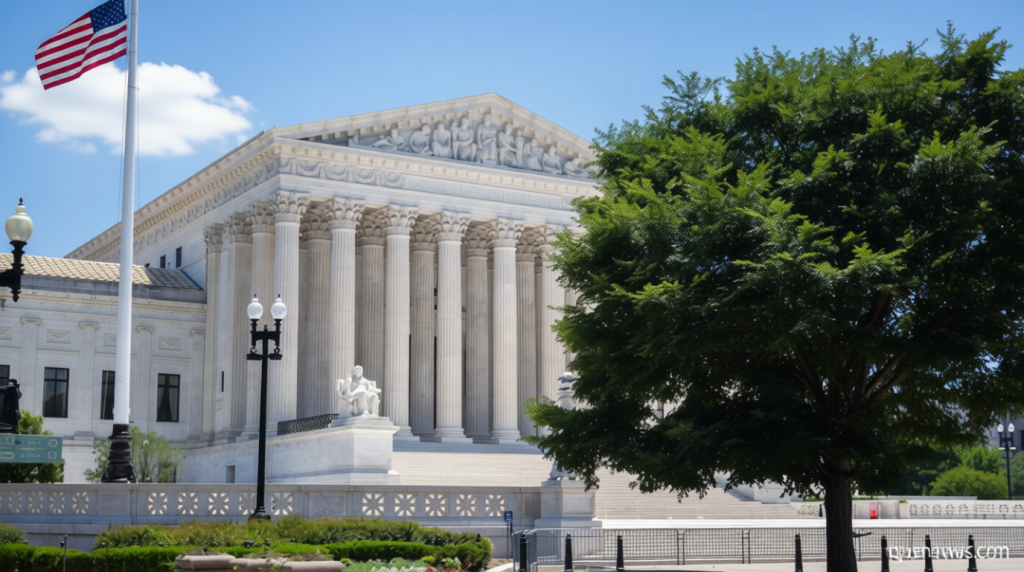
Supreme Court TPS Decision Leaves Millions in Legal Limbo
Qwenews.com – The Supreme Court’s recent TPS decision has cast a shadow over the legal status of over a million immigrants, including Haitians and Syrians, in the United States. With work permits set to expire and deportation protections revoked, the ruling has triggered a widespread scramble among beneficiaries to secure their futures. This decision, part of a broader shift in immigration policy, has significant implications for those relying on Temporary Protected Status to remain in the country.
Clarifying DHS Authority and TPS Scope
The 6-3 Supreme Court ruling affirmed the Department of Homeland Security’s (DHS) discretion to maintain or terminate TPS designations, reinforcing the administration’s power to expedite mass deportations. While the case initially targeted 350,000 Haitians and 6,000 Syrians, the decision could apply to up to 1.1 million individuals from 11 countries, including those with historical ties to the U.S. The court’s approval of this approach aligns with the Trump administration’s long-standing goal to streamline immigration removals.
“This ruling empowers DHS to act swiftly, allowing the administration to finalize the revocation of TPS for multiple nations,” noted legal analyst Sarah Lin, who has closely followed the case. “It’s a critical step in reshaping the immigration landscape.”
By validating the agency’s authority, the decision removes a key legal barrier to ending TPS, which was originally established to provide temporary relief to immigrants from countries facing catastrophic conditions. The ruling also clears the way for the Trump administration to proceed with its plan to revoke protections for other nations, potentially affecting hundreds of thousands more in the coming months.
Historical Context and Haitian TPS Timeline
Haiti’s TPS designation, first granted in 2010 following the earthquake, has been extended multiple times due to ongoing instability. The 2021 assassination of President Jovenel Moïse marked a turning point, intensifying political and security chaos. Since then, Haiti has faced unprecedented challenges, including widespread gang violence, economic collapse, and humanitarian crises, prompting the extension of TPS protections until the Trump administration’s termination.
For Haitians in the U.S., the decision means they must navigate a complex legal process to retain their status. Many work in essential sectors, such as healthcare and agriculture, and the loss of protections could disrupt local economies. Advocacy groups warn that the administration’s timeline for revocation may leave families without sufficient time to apply for alternative status, exacerbating the uncertainty.
Broader Impact on U.S. Immigration Policy
The ruling not only affects Haitians and Syrians but also reinforces the Trump administration’s strategy to prioritize deportation over asylum. By enabling DHS to act independently on TPS, the decision complements another 6-3 ruling that allows the government to reject migrant claims at the southern border. Together, these actions signal a fundamental shift in how the U.S. manages immigration, favoring a more rigid and expedited approach.
“These decisions represent a major overhaul of the immigration system,” said James Percival, the Department of Homeland Security General Counsel. “They give the administration the flexibility to address border security and domestic population growth more effectively.”
Legal experts argue that the ruling could set a precedent for future changes, including the potential end of TPS for other countries. While the administration claims the policy is temporary, critics point out that the criteria for revocation may be used to target vulnerable communities, such as those from Central America or the Caribbean, in a sustained effort to reduce the immigrant population.
Humanitarian Concerns and Legal Challenges
As the TPS revocation looms, advocates for immigrants warn of the humanitarian toll. Many beneficiaries are families, elderly individuals, and people with disabilities who lack alternatives to stay. The decision also raises questions about the legal process for challenging the revocation, with some cases already dismissed in lower courts. However, the Supreme Court’s affirmation of DHS authority may limit the scope for judicial intervention, leaving affected individuals to navigate the system on their own.
For Syrians, the revocation could be particularly devastating, as their TPS designation was initially tied to the ongoing conflict in their homeland. The decision underscores the administration’s focus on national security and economic considerations, even as it impacts individuals who have lived in the U.S. for years. Legal aid organizations are now working to assist beneficiaries in preparing for the next phase of this policy shift.
What’s Next for TPS Recipients?
With the Supreme Court’s approval, the Trump administration is poised to finalize the revocation of TPS for Haitians and Syrians within months. The process will require recipients to apply for permanent residency or other forms of relief, but many may not qualify due to time constraints. In addition to the immediate impact, the decision may influence future debates on immigration, including the status of other TPS countries and the broader conversation about citizenship.
The aftermath of the ruling has already sparked debates in Congress, with some lawmakers calling for emergency measures to protect beneficiaries. Meanwhile, the administration emphasizes that the policy reflects a clear legal pathway, ensuring that immigrants who no longer qualify for TPS can be removed without prolonged uncertainty. However, the emotional and financial strain on those caught in the crossfire remains a pressing concern.