
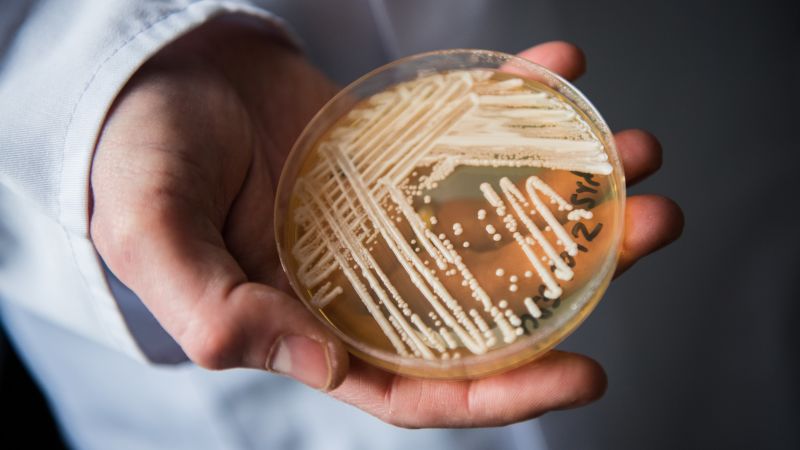
Candida auris: Understanding the Rising Fungal Threat in Healthcare
Qwenews.com – The Centers for Disease Control and Prevention reports a sharp increase in Candida auris cases across the United States this year. By July 25, health officials had documented 3,437 clinical instances spanning 27 states. This represents a notable jump from the 4,290 total clinical cases recorded throughout all of 2025. Since its initial identification in the country in 2016, the cumulative number of clinical cases has continued climbing, even though the growth rate has moderated somewhat in recent years.
What Makes This Fungus Different
Candida auris belongs to the yeast family, which is a particular category of fungus. According to Dr. Graham Snyder, who serves as medical director of infection prevention and hospital epidemiology at University of Pittsburgh Medical Center, the organism transmits through contact with contaminated surfaces and infected individuals. One distinguishing feature is its remarkable capacity to persist within healthcare environments, including nursing homes and hospitals, because it can withstand certain disinfectants.
“We quickly learned that Candida auris is very good at sticking around in the environment — and that’s not true for all types of pathogens or germs that may be spread through the environment — so we pay extra special attention when we know somebody has Candida auris to making sure that we clean and disinfect the environment,” Snyder explained.
The fungus poses greater risks to individuals with preexisting medical conditions. Dr. Scott Roberts, an associate professor of infection prevention at Yale University, outlined two distinct ways people can encounter C. auris. Colonization happens when the fungi settle on a person’s skin surface, typically without causing symptoms. Infection occurs when the organism penetrates the body through a wound or break in the skin.
Diagnosis and Clinical Impact
Healthcare providers can identify C. auris through swab samples taken from the armpit or groin region. Roberts noted that bloodstream infections represent the most common form of clinical disease. “Most of the time, the infections occur through bloodstream infection. There’s some entry into the skin somewhere; maybe your immune system’s not as good as it should be. You can’t fight it off, and you lead to a big infection,” he stated.
The CDC classifies C. auris as an “urgent threat” due to its multidrug-resistant nature. Certain strains demonstrate resistance to all three categories of antifungal medications currently available for treating fungal infections. The first documented case globally appeared in Japan in 2009, while American detection began in 2016.
Expert Perspectives on Rising Numbers
Dr. Nitipong Permpalung, director of mycology research at Johns Hopkins University, offered context for the increasing case counts. He pointed out that enhanced screening protocols have improved the ability to distinguish between colonization and active infection, which may explain part of the statistical rise. “We need to understand that ‘OK, this is a positive screening test, and this is through clinical case, and go from there,’ but I understand the concern. But we need to get some more data, and we need to work on the research in this area to improve the care,” Permpalung observed.
Symptoms and Vulnerable Populations
Dr. Ilan Schwartz, an associate professor of medicine at Duke University, described potential symptoms including fever, elevated heart rate, decreased blood pressure, and sepsis—a serious condition triggered when the fungus enters the bloodstream. Because transmission predominantly occurs within medical facilities, the organism mainly impacts patients with additional health complications.
“Generally, these are going to be in patients who are already hospitalized and who are being monitored, and so the healthcare team should be well aware already if patients are showing signs of a general infection, so I don’t think that it’s something individuals need to be vigilant about,” Schwartz commented.
Roberts emphasized that hospitalized patients and residents of medical settings should monitor for sepsis indicators such as fever, rapid heart rate, and hypotension. When doctors identify the fungus, Roberts advised patients to inform household members and others in their care facility. Additionally, focusing on proper environmental cleaning and disinfection remains essential for controlling spread.
Researchers continue investigating whether the climate crisis may contribute to the emergence and proliferation of this mysterious superbug, adding another layer to understanding its growing presence in healthcare spaces worldwide.
Related Reading
Frequently Asked Questions
What is What to know about Candida auris?
What to know about Candida auris is the main topic of this guide. The article explains the context, practical details, and next steps readers should understand.
Why does What to know about Candida auris matter?
What to know about Candida auris matters because readers are looking for a useful answer, not just a short summary. Good content should match search intent and help them decide what to do next.