
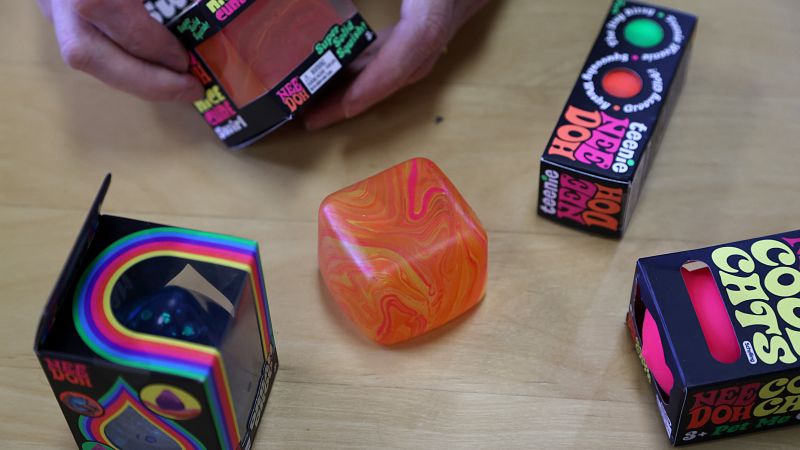
Doctors Warn Kids About Microwaving NeeDoh Toys
Qwenews.com – Children are increasingly microwaving NeeDoh toys, putting themselves at risk of severe burns, according to medical experts. Whitney Hand, a mother in Atlanta, recounted a harrowing incident where her fifth-grader suffered agonizing pain after a NeeDoh toy exploded in the microwave. The toy, which contained gel-like material, released scalding liquid that stuck to the child’s skin, causing extensive burns. “It’s so viscous, it’s like glue, and for it to be boiling hot and on her skin, I started to try to wipe it off, but it was pulling her skin off with it,” Hand described.
Parents and Experts Sound the Alarm
Hand’s case is part of a growing trend. Social media has amplified the practice, with children experimenting on platforms like TikTok and YouTube. Dr. Emily Werthman, a leading nurse at Johns Hopkins Burn Center, confirmed that several cases of burns from microwaving NeeDoh toys have been reported. “We’ve seen a handful of these cases just in our burn center alone, and if you ask burn centers across the country, they will tell you the same thing,” Werthman said. The injuries range from minor hand burns to more serious facial trauma, as the gel can reach temperatures high enough to cause third-degree damage.
Despite clear safety warnings on NeeDoh packaging, the trend persists. The toy’s website explicitly states that it should not be microwaved, as heating can damage the sealed gel and create hazardous conditions. However, children are often unaware of these risks, learning the technique from online videos or peers. “I was like, ‘Why did you even think to do this?’ And she said other kids had talked about it,” Hand explained, highlighting the role of peer influence in encouraging dangerous play.
Manufacturers and Regulators Respond
Manufacturers of NeeDoh toys have acknowledged the issue and are taking steps to mitigate it. Meghann Ellis, the company’s chief financial officer, noted that they are working with platforms like TikTok to remove content promoting microwaving NeeDoh. “We are disappointed to see there has been a trend on social media demonstrating misuse of our NeeDoh® products,” she said. While the company provides warnings, experts argue that more proactive measures are needed to prevent similar incidents.
Consumer Reports also raised concerns about the safety of NeeDoh toys, sending a letter to the Consumer Product Safety Commission (CPSC) to investigate the product. The CPSC has not yet commented on potential regulatory actions, but the issue has sparked discussions about the need for better consumer education. Meanwhile, TikTok issued a safety warning after CNN reported the trend, though the platform had previously featured videos showing the microwaving technique.
Dr. Maneesha Agarwal, a pediatric emergency medicine specialist at Emory University, emphasized that the problem extends beyond NeeDoh. “The issue is when it’s a sticky residue, it’s hard to actually get that material off very quickly,” she said. Agarwal pointed out that even leaving the toys in hot environments, such as cars or direct sunlight, can lead to unintended overheating. “We should be really teaching them not to leave them in the car, or on the pool deck, or wherever it’s going to be overheated,” she added, underscoring the importance of parental awareness.
Why Microwaving NeeDoh Toys is Risky
The gel-filled design of NeeDoh toys is meant to provide sensory stimulation, but it also makes them prone to dangerous situations when exposed to heat. Microwaving the toys can cause the gel to expand rapidly, leading to explosions or leaks. The liquid, which can reach temperatures exceeding 200 degrees Fahrenheit, poses a significant burn risk, especially for young children who may not understand the dangers. “The key is that the gel is sealed, so when it’s heated, it can’t escape until the container breaks,” Werthman explained.
Medical professionals stress that the trend is not just a minor concern but a serious public health issue. “We need to address both the visibility of the practice and its consequences,” Agarwal said. She called for clearer safety guidelines and more educational campaigns to inform parents and children about the risks. “It’s a combination of curiosity and imitation that leads to these incidents,” Werthman noted, emphasizing the role of social media in normalizing the behavior. As the trend continues, experts urge vigilance and quick action to prevent further injuries.