
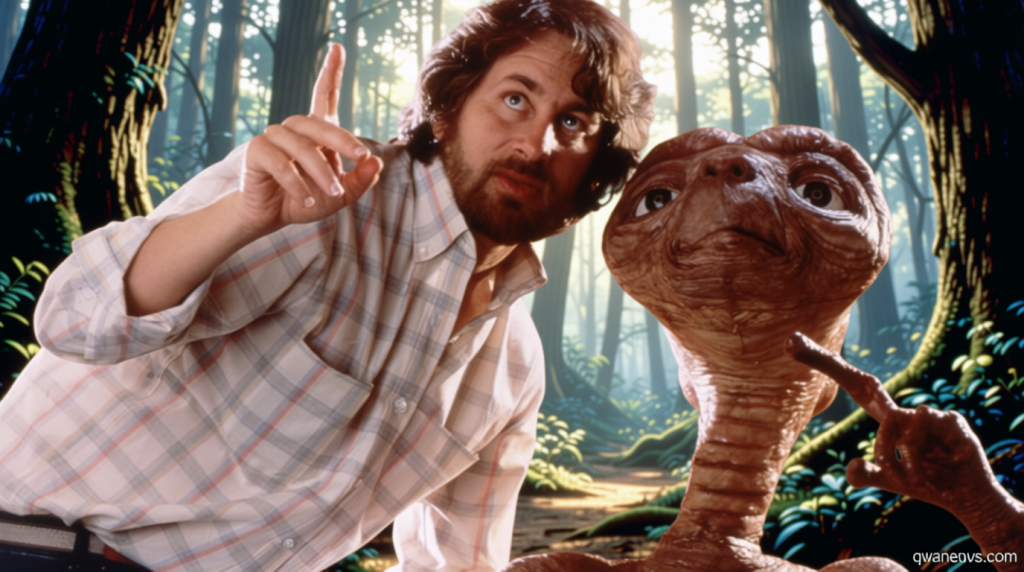
Steven Spielberg’s Alien Crusade Peaks with ‘Disclosure Day’
Qwenews.com – Steven Spielberg’s career has been a consistent exploration of extraterrestrial life, weaving themes of cosmic wonder and human curiosity into his cinematic legacy. His latest film, *Disclosure Day*, marks a pivotal moment in this narrative, as it delves into the revelation of humanity’s first direct communication with aliens. The movie, Spielberg’s first directorial effort in four years, is poised to open with significant box office potential, reflecting the director’s enduring influence on science fiction and the broader cultural discourse surrounding UFOs.
The Plot and Themes of ‘Disclosure Day’
*Disclosure Day* follows a group of whistleblowers who uncover a government conspiracy involving secret alien contact. Josh O’Connor and Colman Domingo portray these courageous figures, while Emily Blunt stars as a meteorologist caught in the crossfire of this revelation. The film’s narrative emphasizes the tension between secrecy and transparency, asking whether humanity is ready to embrace the truth about its place in the universe. Spielberg’s approach to this subject has long been characterized by a balance between skepticism and belief, a theme that resonates throughout the movie.
“The idea that there’s more out there than just us has always fascinated me,” Domingo reflected. “I look up at the stars every night, wondering if someone’s looking back at me.”
Set against a backdrop of growing public interest in UFO phenomena, *Disclosure Day* arrives as the White House releases decades-old documents detailing classified encounters with unidentified flying objects. These revelations have intensified speculation about the government’s hidden role in extraterrestrial communication. Some analysts argue that the film’s release was strategically timed to align with this renewed curiosity, suggesting that Spielberg may be contributing to a cultural shift in how we perceive the unknown.
Spielberg’s portrayal of aliens has evolved over the decades, moving from ominous threats to nuanced, sometimes benevolent, beings. This transformation began with *Close Encounters of the Third Kind* (1977), which redefined the genre by presenting extraterrestrial life as a potential bridge between humanity and the cosmos. The director’s ability to blend scientific plausibility with emotional storytelling has made his films a cornerstone of modern sci-fi, inspiring countless creators to explore the same themes. His work continues to shape public imagination, as seen in the recent surge of UFO-related media and discourse.
Spielberg’s Early Influence on Alien Narratives
Before *Close Encounters* redefined alien storytelling, sci-fi films often depicted extraterrestrials as hostile invaders, reflecting Cold War anxieties and the fear of the unknown. Spielberg’s breakthrough changed this paradigm, introducing the possibility of peaceful coexistence. His 1982 film *E.T. the Extra-Terrestrial* became a global phenomenon, capturing the hearts of audiences with its depiction of a friendly alien and its message of unity. The film’s impact extended beyond entertainment, as it even drew the attention of astronauts and high-profile figures, underscoring its cultural significance.
Spielberg’s career has been marked by a desire to explore humanity’s place in the universe, a recurring motif that ties his work together. From the mysterious extraterrestrial presence in *The War of the Worlds* to the cosmic journeys in *Five Million Years to Earth*, the director has consistently drawn from the allure of the unknown. This thread culminates in *Disclosure Day*, where the focus shifts to the moment of revelation, challenging viewers to reconsider their assumptions about alien life and its implications for our world.
Ray Morton, a film historian, highlights Spielberg’s unique contribution to the genre. “He was the first to frame extraterrestrial contact as a positive experience, setting the stage for modern sci-fi,” Morton noted. This perspective has influenced a generation of filmmakers, from the optimistic storytelling of *Contact* to the more ambiguous narratives in recent decades. As *Disclosure Day* prepares for release, it seems poised to continue this legacy, blending suspense, emotion, and the enduring mystery of the cosmos.
The film’s release also coincides with a broader movement in media to explore the possibility of alien life. With governments and scientists increasingly open about UFO sightings, Spielberg’s work offers a compelling lens through which to examine these developments. His career has been a subtle but powerful catalyst for this shift, encouraging audiences to see the unknown not as a threat, but as an opportunity for discovery. Whether through the lens of a friendly alien or a covert government program, Spielberg’s storytelling continues to shape the way we imagine the universe beyond Earth.