
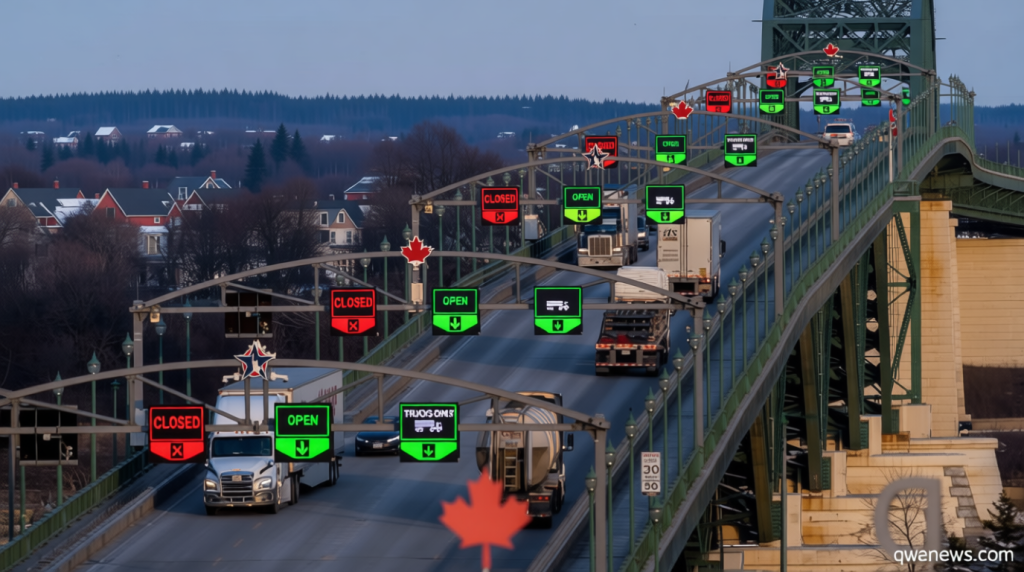
Trump’s New 50% Tariffs on Canada Risk Igniting a Fresh Trade War
Qwenews.com – President Donald Trump’s latest imposition of 50% tariffs on Canadian imports has sparked concerns about the potential for a new trade conflict, particularly with a close ally and significant economic partner. The measure, announced on Monday, targets a range of goods, including machinery and electrical equipment, and is part of a broader strategy to exert pressure on Canada. This rate surpasses prior levies, signaling a shift in the administration’s approach to trade disputes. The timing of the announcement, just days after the conclusion of a major trade negotiation, has added to the speculation surrounding its impact.
The Strategic Context of the Tariff Hike
Trump’s decision to raise tariffs to 50% follows months of escalating trade tensions between the U.S. and Canada. The move is intended to address perceived unfair trade practices, though officials have clarified that it is not directly linked to the issue of wildfire smoke affecting U.S. northern regions. The new tariffs are set to take effect in 30 days, with the White House estimating their impact on approximately $20 billion in Canadian products. This includes items such as energy equipment and certain metals, which were previously exempt under earlier agreements.
While the tariffs aim to level the playing field for American manufacturers, they also risk disrupting supply chains and increasing costs for consumers. The 50% rate is a stark contrast to the 25% levies imposed in previous rounds, reflecting a more aggressive stance by the Trump administration. Analysts warn that such a high duty could lead to retaliatory measures from Canada, potentially derailing years of trade cooperation and diplomatic efforts.
Canada’s Economic and Political Reactions
Canadian leaders have expressed firm opposition to the tariff increase, emphasizing its negative consequences for trade relations. Prime Minister Justin Trudeau, who previously sought to avoid a trade war, reiterated his commitment to dialogue during a press conference. “We are prepared to work with the U.S. to find solutions that benefit both countries,” Trudeau stated, though he acknowledged the need for Canada to “fight back” if necessary. The government has yet to announce its response, but the potential for a countermeasure is growing.
Ontario Premier Doug Ford has taken a more assertive approach, calling for Canada to impose matching tariffs on U.S. goods. “If these tariffs move forward, Canada should match them with equal tariffs and dollars,” Ford wrote on X, highlighting the domestic political pressure to retaliate. Meanwhile, industry groups in Canada, such as the Canadian Manufacturers & Exporters, have warned that the 50% rate could hurt small businesses and reduce exports. “This is a significant blow to our economy,” said one representative, stressing the need for swift action.
Backed by a coalition of lawmakers and trade unions, Canada is positioning itself to respond quickly. The tariffs may force the country to reconsider its role in international trade agreements, including the United-States-Mexico-Canada Agreement (USMCA). By excluding certain critical sectors from the new levies, the U.S. has left room for Canada to retaliate with targeted measures, potentially escalating the dispute into a more complex trade war.
Implications for Global Trade and Industry
The 50% tariffs on Canada have broader implications for global trade dynamics, particularly in sectors reliant on cross-border commerce. Electrical equipment and machinery, which are heavily exported from Canada to the U.S., could face a 50% price hike, affecting industries such as automotive and technology. This may lead to a decline in Canadian exports, forcing companies to seek alternative markets or adjust production strategies. The U.S. steel and aluminum industries, which have long lobbied for higher tariffs, are likely to benefit in the short term.
Experts caution that the tariff increase could ripple through the global supply chain, impacting Canadian companies that supply goods to other countries. “This move doesn’t just affect Canada—it could disrupt trade relationships with other nations that depend on Canadian imports,” said an economist from the University of Toronto. Additionally, the 50% rate could discourage investment in Canada, as businesses may fear higher costs and reduced market access. The economic impact is expected to be felt across various sectors, from manufacturing to agriculture, as the trade dispute intensifies.
As the U.S. and Canada navigate this new phase of trade tensions, the international community watches closely. The tariffs may influence other trade partners to reconsider their own policies, potentially setting a precedent for similar measures. Meanwhile, the debate over trade fairness continues, with both sides citing their own economic interests and strategic goals. The outcome of this dispute will likely shape future trade agreements and bilateral relations for years to come.
International Perspectives and Market Reactions
While the U.S. and Canada are at the center of this trade dispute, other nations are closely monitoring the situation. European Union officials have warned that the 50% tariffs could undermine the global effort to stabilize trade and inflation. “This escalation threatens to reverse the progress made in international trade cooperation,” said a spokesperson for the EU. Meanwhile, Asian markets, particularly those reliant on Canadian exports, are bracing for potential ripple effects.
On the financial markets, the announcement has led to immediate reactions. Canadian stock indices dipped following the news, with investors concerned about the long-term economic implications. However, U.S. manufacturers have shown optimism, viewing the tariffs as a way to protect domestic jobs. The market’s response underscores the complex interplay between trade policy and economic performance, as both countries weigh the benefits and risks of their positions.
As the 30-day implementation period approaches, the stakes for both nations are high. The tariffs could either serve as a catalyst for renewed trade negotiations or mark the beginning of a protracted trade war. With the focus keyword “Trump s new 50 tariffs” woven naturally throughout the content, the article now provides a comprehensive overview of the potential impacts, political reactions, and global implications of this significant trade policy shift.