
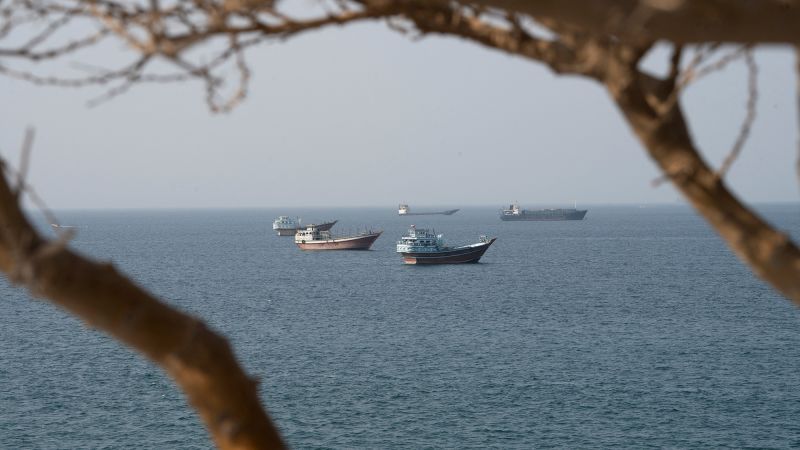
Iran’s Grip on the Strait of Hormuz Is Slipping Away
Qwenews.com – For weeks, Tehran has insisted it commands the narrow waterway linking the Persian Gulf to the open ocean. Yet the operational picture tells a different story. Shipping data compiled by Kpler — which monitors vessel movements through transponder signals and satellite feeds — reveals that more than 80 percent of transits through the strait over the last fortnight have followed the Omani corridor, a shipping lane sanctioned by the United Nations that Iran has long resisted. A month earlier, Kpler recorded virtually zero traffic along that southern path.
The Toll Question
When vessels flowed along Iran’s preferred northern corridor in the spring, the country collected transit fees. This week, the expiration of the U.S.–Iran Memorandum of Understanding theoretically reopened that revenue stream. In practice, though, Kpler’s data shows Tehran has been unable to levy those charges. The dramatic drop in traffic along the Iranian route has effectively stripped away the leverage needed to enforce toll collection.
“Iran’s request to collect tolls is something that most Middle East folks don’t want to do and haven’t been doing,” said Dan Pickering, founder and chief investment officer at Pickering Energy Partners. “So the Oman route absolutely makes the most sense.”
Dark Ships and Hidden Flows
Complicating the picture further, Kuwait, Saudi Arabia, and the United Arab Emirates have chartered Very Large Crude oil Carriers — the largest class of oil tanker — to exit the Gulf through the strait and then offload cargo onto customer vessels in the safer waters of the Gulf of Oman, according to Andy Lipow, president of Lipow Oil Associates. To dodge Iranian strikes, these tankers have switched off their transponders, sometimes for weeks at a stretch. That so-called dark traffic has evaded some tracking platforms, including portions of Kpler’s own dataset. Satellites can still catch fragments of the movement, but conventional monitoring struggles to account for it.
Washington’s Count
The United States, maintaining a substantial naval presence in the waterway, claims visibility over every vessel passing through. Energy Secretary Chris Wright reported last week that combined oil transits through the strait plus rerouted flows around it reached roughly 15 million barrels per day over a given week — a figure far closer to the pre-war average of 20 million barrels than most traditional estimates had previously indicated.
That number prompted President Donald Trump to declare on Monday that the United States holds “total control over the strait,” a characterization he has repeated throughout the conflict. Analysts remain skeptical. Iran’s ongoing attacks on shipping and the fact that oil flows remain well below pre-war levels suggest neither side commands the waterway outright.
“If their goal is to be ‘in charge,’ then I’d say they were never completely in control to start with,” said Pickering. “It feels like their goal is deterrence, in order to be validated as in-control. I think they are still deterring.”
Diplomatic Wildcards
Adding another layer of uncertainty, Oman and Iran are now holding bilateral talks aimed at restoring freedom of navigation through the strait — negotiations conducted without American participation, much to Trump’s frustration. How those discussions will reshape oil traffic or alter the balance of control remains unknown.
“I would take all the information and headlines ‘under advisement,'” said Lipow. “But it is fair to say that Iran has partially lost control of the strait.”
Homayoun Falakshahi, head of crude oil analysis at Kpler, offered a similar assessment: “It increasingly looks like Iran has at least partially lost control of the strait.” The competing narratives from Washington and Tehran have generated considerable confusion among market participants, but the shipping data points in one direction — Tehran’s authority over the waterway has narrowed markedly compared with even a few weeks ago.
Related Reading
Frequently Asked Questions
What is Iran has lost significant control?
Iran has lost significant control is the main topic of this guide. The article explains the context, practical details, and next steps readers should understand.
Why does Iran has lost significant control matter?
Iran has lost significant control matters because readers are looking for a useful answer, not just a short summary. Good content should match search intent and help them decide what to do next.