
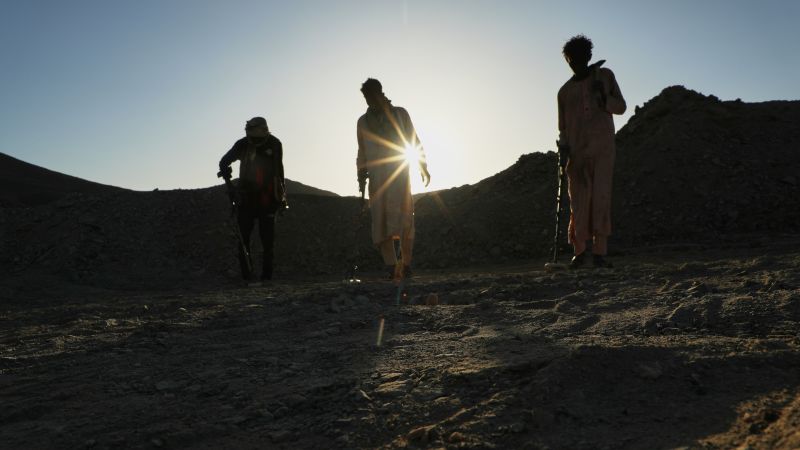
Deadly Strike Hits Artisanal Mining Area in Northern Sudan
Qwenews.com – At least 72 artisanal miners were killed after an airstrike struck a mining area in northern Sudan on Saturday, deepening concern over the growing civilian toll of a war increasingly shaped by drones and aerial attacks.
Emergency Lawyers, a Sudanese rights monitoring group, said the victims were miners working in the area. The group attributed the attack to the Egyptian air force, an allegation that could not be independently confirmed. Egypt’s military made no public statement on the incident, while its foreign ministry had not immediately responded to requests for comment.
The reported strike is the second deadly episode involving artisanal miners in northern Sudan within a matter of months. It highlights the precarious position of workers who have turned to informal gold mining as conflict has destroyed jobs, displaced communities and disrupted ordinary economic life across the country.
Images Show the Aftermath
Photographs circulated online and by local rights organizations showed scenes of extensive destruction, with bodies visible amid rubble and other victims prepared for burial in funeral shrouds. The images had not been independently verified, but miners speaking in footage described an attack from the air.
Emergency Lawyers said that if the attack involved a cross-border military operation, it would amount to a violation of international law. The group called attention to the need for accountability for civilian deaths in areas far from conventional battle lines.
“You cannot hide from a drone strike.”
That fear has become increasingly familiar in Sudan, where unmanned aircraft and other aerial weapons have expanded the reach of the conflict. For people in mining camps, displacement sites and isolated communities, the danger can arrive with little warning and leave few opportunities to escape.
Gold Mining Becomes a Survival Economy
Northern Sudan has drawn a rising number of artisanal miners since the country’s war shattered other sources of income. Makeshift mining operations have spread as families and individual workers seek ways to earn money in an economy damaged by prolonged fighting.
Gold has also become a critical source of cash for Sudan’s rival armed sides. The conflict between the Sudanese army and the paramilitary Rapid Support Forces has placed control of resources, trade routes and revenue streams at the center of the wider struggle for power.
Experts and people working in the gold sector have said that a significant share of Sudanese gold is smuggled into Egypt. Informal mining can offer a lifeline to workers facing few alternatives, yet the same industry is exposed to exploitation, insecurity and the broader pressures created by war.
Artisanal mining typically relies on small-scale labor rather than major industrial operations. Workers often operate in remote or improvised settings, where access to medical care, communications and protective infrastructure may be limited. A strike in such an area can therefore be especially devastating, both because of the immediate casualties and because survivors may struggle to obtain emergency assistance.
A Conflict Marked by Mass-Casualty Attacks
Sudan’s war has produced a mounting number of mass-casualty incidents, with drone warfare becoming an increasingly prominent feature of the fighting. The use of remotely operated aircraft has widened the geographical scope of violence and raised risks for civilians living or working near contested areas.
On Friday, 31 people were killed in a drone strike on a displacement camp in an army-held part of Blue Nile state, one of the conflict’s front-line regions. The United Nations confirmed the deaths, adding to the latest evidence of the danger faced by civilians uprooted by the war.
Displacement camps are intended to provide refuge for people forced from their homes, but attacks on or near such sites demonstrate how quickly supposedly safer spaces can become lethal. The northern mining strike and the Blue Nile attack occurred only a day apart, underlining the intensity of the current violence.
Civilians Caught Between Armed Forces
For Sudanese civilians, the consequences extend beyond the immediate loss of life. Families depend on informal work, aid networks and fragile local markets to survive. When mining areas or displacement camps are hit, communities can lose wage earners, shelter, supplies and a sense of security at the same time.
The latest deaths are likely to intensify scrutiny of military activity around civilian populations and economic sites. Rights groups have repeatedly warned that all parties involved in Sudan’s conflict must protect noncombatants and ensure that attacks do not unlawfully endanger civilians.
As the war continues, gold mining areas may remain both economically important and highly vulnerable. The reported deaths of at least 72 miners serve as another stark reminder that people seeking work and survival in Sudan are often exposed to the same violence they are trying to escape.
Related Reading
Frequently Asked Questions
What is At least 72 Sudanese artisanal miners?
At least 72 Sudanese artisanal miners is the main topic of this guide. The article explains the context, practical details, and next steps readers should understand.
Why does At least 72 Sudanese artisanal miners matter?
At least 72 Sudanese artisanal miners matters because readers are looking for a useful answer, not just a short summary. Good content should match search intent and help them decide what to do next.