
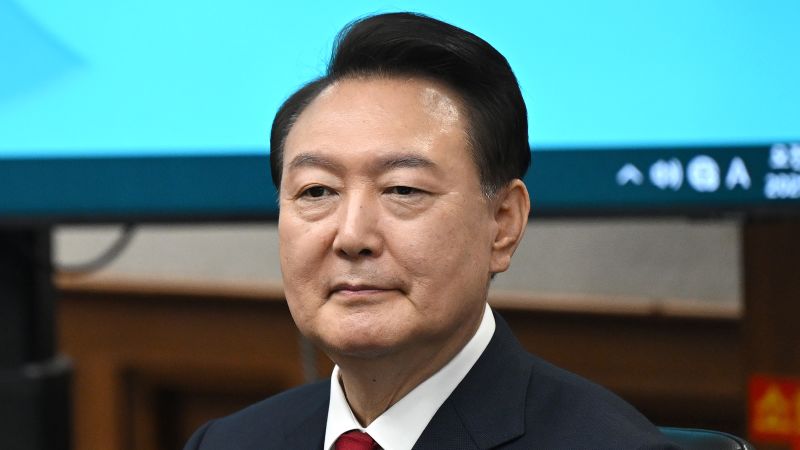
Ex South Korean President Yoon Suk Yeol Gets 30-Year Sentence for Pyongyang Drone Plot
Qwenews.com – Ex South Korean President Yoon Suk Yeol has been sentenced to 30 years in prison for his alleged involvement in a secret drone operation targeting Pyongyang. The Seoul Central District Court’s decision, reported by Yonhap News, comes after a lengthy legal process that accused Yoon of conspiracy, abuse of power, and aiding the enemy in the October 2024 mission. This ruling marks a significant turning point in the political turmoil that has engulfed South Korea since Yoon’s ousting last year, further entrenching his role as a central figure in the nation’s recent crisis.
Legal Framework and Charges
The prosecution’s case against Yoon Suk Yeol centered on evidence linking him to the planning of a military drone strike intended to disrupt North Korean activities in Pyongyang. The charges include misuse of presidential authority to orchestrate the operation, which was reportedly designed to draw Kim Jong Un into a strategic position. According to court documents, Yoon was accused of using the drone mission as a cover to justify his December 2024 martial law declaration, a move that sparked nationwide protests and constitutional challenges. The court found that his actions violated the nation’s legal boundaries, blending military strategy with political maneuvering.
Yoon’s legal team contested these allegations, arguing that the drone plot was separate from his martial law initiative. They presented evidence suggesting the mission was a spontaneous response to North Korea’s provocative balloon launches, which had been a source of diplomatic tension. Despite this defense, the court ruled that Yoon’s involvement was deliberate and premeditated, with the prosecution highlighting phone records and internal communications that implicated him in the planning stages. The 30-year sentence aligns with the severity of the charges, reflecting the gravity of his alleged actions.
Political Context and Public Reaction
Yoon Suk Yeol’s presidency was defined by a polarizing mix of hardline policies and economic reforms. His impeachment in 2024, following accusations of abuse of power, had already shaken the political landscape, but the drone case intensifies scrutiny of his leadership. The ruling has intensified debates over the balance between national security and democratic governance, with critics accusing Yoon of overstepping his authority to consolidate control. Meanwhile, supporters argue that his actions were necessary to counter North Korea’s threats and maintain stability.
Public reaction to the sentence has been mixed, with some citizens expressing relief at the conviction while others question the fairness of the trial. The case has become a symbol of the broader political divide in South Korea, where liberals and conservatives hold starkly different views on Yoon’s legacy. Analysts note that the sentence could influence upcoming elections, as it reinforces the narrative of a leader who prioritized military alliances over civilian oversight. Additionally, the ruling underscores the role of the judiciary in holding former officials accountable for their decisions.
Key to the case was the evidence presented by prosecutors, including testimony from military officials and intercepted communications. These materials detailed Yoon’s alleged collaboration with a covert group to plan the drone operation, which aimed to gather intelligence or deploy weapons in North Korea. The court’s decision to impose a 30-year sentence reflects the weight given to this evidence, as well as the broader implications of Yoon’s actions on inter-Korean relations. The sentence also highlights the strategic use of the drone plot to legitimize his martial law declaration, a point that remains central to the legal and political discourse surrounding the case.
Implications for South Korean Democracy
The conviction of Yoon Suk Yeol has sparked discussions about the future of South Korea’s democratic institutions and the potential for executive overreach. Critics argue that the charges against him are part of a broader effort to target his conservative policies and shift the country’s political direction. The court’s ruling, however, emphasizes the need for accountability in leadership, particularly when decisions have far-reaching consequences. As Yoon’s sentence becomes final, it may serve as a deterrent for future leaders considering similar actions.
Yoon’s legal team has vowed to appeal the verdict, citing procedural irregularities and insufficient evidence to link him directly to the drone mission. This challenge could prolong the case, allowing further examination of the political motivations behind the operation. Meanwhile, the ruling has drawn international attention, with neighboring countries and global observers closely watching how South Korea navigates its internal political strife. The case is seen as a test of the nation’s commitment to justice, even as it grapples with the legacy of its former president.
With the 30-year sentence, Yoon Suk Yeol joins a growing list of South Korean leaders facing long-term legal consequences for their policies. The decision comes after a February ruling that convicted him of leading an insurrection tied to the martial law attempt, resulting in a life sentence. This marks the second major conviction against Yoon, consolidating his position as a pivotal figure in the country’s current political narrative. The case not only underscores the legal ramifications of his actions but also serves as a reminder of the complex interplay between power, strategy, and accountability in South Korea’s governance.