
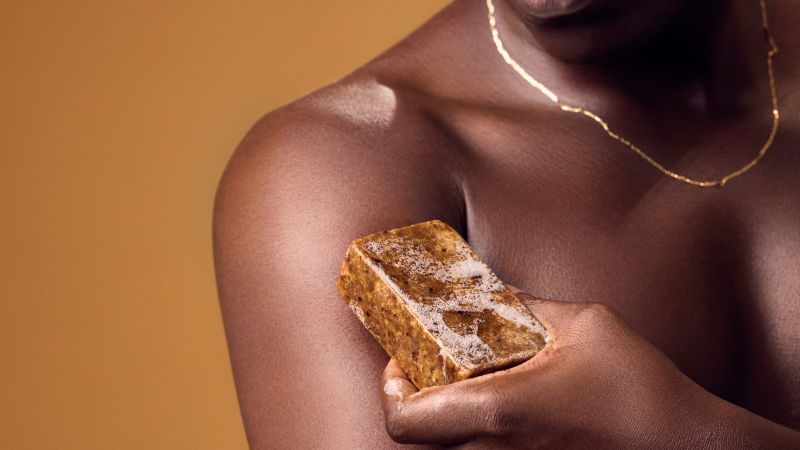
Africa is the Natural Home of Shea Butter
Qwenews.com – Africa is the natural home of shea butter, a versatile ingredient now found in products from lip balms to gourmet chocolates. While shoppers worldwide recognize shea in cosmetics, it remains a staple in West African households for both cooking and skincare. The shea tree grows exclusively in this region, with the Global Shea Alliance estimating that approximately 800,000 tons of nuts are collected each year across the continent.
From Personal Need to Business Vision
Valerie Obaze discovered a gap in the market when she welcomed her first child in Nigeria, a country producing nearly 40 percent of the world’s shea. She expected to find locally made moisturizers but instead saw only imported brands without pure formulations.
“I know that we come from the continent of natural products like cocoa butter and shea, and I couldn’t see any (African) brand on the shelf offering that in a refined way,” Obaze recalled. “All I could see were imported brands, and nothing was purely natural.”
That experience inspired Obaze to establish R&R Skincare in 2010. Based in Accra, Ghana, the company produces premium skincare using African ingredients, with shea butter at its core. The business now operates fulfillment centers in Canada, the United States, and the United Kingdom alongside its physical stores.
Building Local Capacity
R&R Skincare also produces baobab oil, rich in omega-3 fatty acids and vitamins. Baobab trees, known as the “tree of life” for their longevity exceeding 1,000 years, grow throughout much of Africa.
Despite Africa being the primary growing region for shea trees, only a small fraction of global shea butter receives local processing and branding. Rubab Abdoolla, a consultant at Euromonitor, explained that international companies have expanded clean beauty by sourcing African ingredients.
“Global brands have driven much of the growth in clean beauty (skincare products made without harmful ingredients, and usually ethically sourced), often sourcing ingredients from Africa,” Abdoolla stated. “African countries still lack sufficient local manufacturing capabilities. Even where local manufacturing exists, it can be expensive, and there may be a shortage of qualified professionals.”
To encourage investment in refined products, Nigeria extended its raw shea nut export ban in March. Nigeria leads global shea production but captures only 1 percent of market value. Ghana intends to implement similar restrictions.
Empowering Harvesters
Obaze noted that competing with multinational corporations makes shea nut procurement difficult for local businesses.
“Shea is not something that you farm. It grows in the wild, so it has its season,” she noted. “You have international buyers that come in the season and take truckloads of shea nuts … as a local business, you’re scrambling for what is left over.”
R&R Skincare solves this by paying harvesters and aggregators above-market rates before the season begins, securing nut allocations. The company also opened a processing facility in northern Ghana, giving partners access to all necessary equipment in one location.
Women make up the vast majority of Africa’s shea workforce, earning the commodity its nickname, “women’s gold.” Around 16 million women in rural West Africa collect and process shea fruits. According to Abdoolla, growing demand for African botanicals has benefited local communities, particularly women, through cooperative networks in countries like Ghana.
“These supply chains have often been closely linked to women’s economic participation, and this has been an important part of the narrative around clean beauty,” she observed.
Frequently Asked Questions
Where does shea butter come from?
Shea butter comes from the nuts of the shea tree, which grows exclusively in Africa. The Global Shea Alliance reports that approximately 800,000 tons of shea nuts are harvested annually across the continent.
How much shea butter does Nigeria produce?
Nigeria produces nearly 40 percent of the world’s shea butter, making it the leading producer globally. However, the country captures only 1 percent of the global market value for shea products.
Why is shea butter called “women’s gold”?
Shea butter is called “women’s gold” because approximately 16 million women in rural West Africa are responsible for gathering and processing shea fruits, making them the primary workforce in the industry.
What is R&R Skincare doing to help local harvesters?
R&R Skincare pays harvesters above-market rates before the harvesting season begins and operates a processing facility in northern Ghana, allowing partners to access all necessary equipment in one location.