
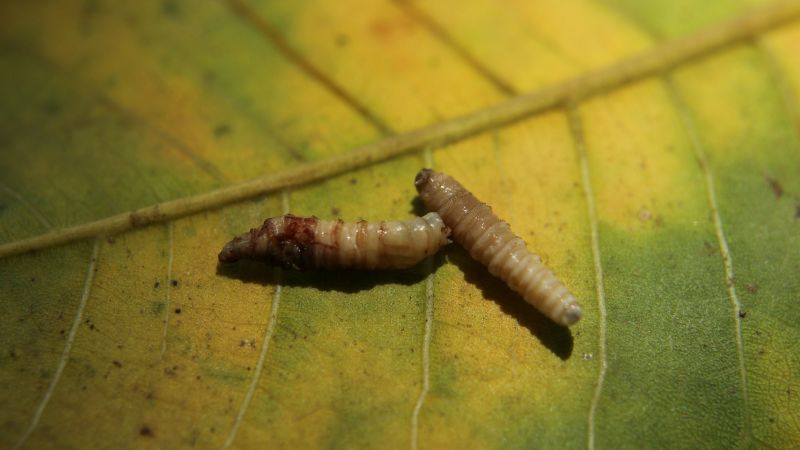
Flesh-Eating Screwworm Invades U.S. – Crisis Linked to Illegal Cattle Smuggling
Qwenews.com – Flesh eating screwworm has reached the U.S., marking a significant resurgence of the pest that threatens livestock and ecosystems. The U.S. Department of Agriculture (USDA) confirmed the presence of the New World screwworm in a Texas calf, raising alarms among agricultural experts. This discovery has reignited concerns about the fly’s return, which had been largely contained for decades through a comprehensive sterilization program. However, recent reports suggest that the invasive species is making a comeback, fueled by a combination of environmental and human factors.
The Biology and Spread of the Screwworm
The flesh-eating screwworm, *Cochliomyia macellaria*, is a parasitic fly known for its devastating life cycle. Female adults lay eggs in open wounds or natural openings of animals, where the larvae feed on tissue, causing severe infections. While the species was once widespread in North and Central America, it was eradicated in the 1970s through a targeted fly-sterilization initiative. This success was short-lived, as the screwworm has now reemerged in Mexico and Texas, with signs of its expansion into New Mexico.
The resurgence is linked to illegal cattle smuggling, a practice that has become a critical pathway for the fly’s reintroduction. These smuggled animals, often transported without inspection, may carry the parasite, which thrives in warm, humid environments. Radachowsky, a researcher at the Wildlife Conservation Society, noted that the screwworm’s reappearance is not accidental but driven by organized crime’s exploitation of livestock trafficking. The movement of cattle across borders has inadvertently created ecological conditions favorable to the pest’s survival and proliferation.
“Every illegally transported cow could harbor screwworm or other illnesses,” said Radachowsky. “The implications are serious: not only do we risk widespread livestock losses, but the screwworm’s presence also signals a growing challenge to U.S. agricultural stability.”
Organized Crime’s Role in the Infestation
Illegal cattle smuggling has become a strategic tool for organized crime groups, who use it to launder money and extend their influence. According to a 2022 InSight Crime report, these networks have established large ranching operations in Central America, often clearing forests to create more grazing land. The movement of cattle across southern borders has accelerated the spread of the screwworm, as the fly can survive for months in warm climates, hitching rides on infected animals.
Environmental impacts are also a concern. The expansion of cattle ranching has led to deforestation, soil degradation, and biodiversity loss, all of which weaken natural barriers against pests like the screwworm. Radachowsky emphasized that the fly’s resurgence is a direct result of human activity, including both legal and illegal trade. “The screwworm’s return is not just an ecological issue—it’s a public health crisis,” he added, highlighting the potential for the parasite to affect not only livestock but also humans in the long term.
Efforts to Control the Threat
Both the USDA and Mexico’s Agriculture Department have initiated measures to combat the infestation. One approach involves releasing sterile male flies to reduce reproduction rates. However, this method has faced criticism, with some experts arguing that it may not be sufficient to halt the spread. The last major outbreak in Texas during the 1970s caused hundreds of millions in economic losses, and officials warn that similar consequences could arise if the problem is not swiftly addressed.
Texas Agriculture Commissioner Sid Miller has advocated for more aggressive strategies, such as the use of the Screwworm Adult Suppression System (SWASS). This pesticide-based technique combines bait and chemical agents to target adult flies, offering a more direct solution. Miller has consistently pushed for SWASS, citing its effectiveness in past outbreaks. Despite his efforts, the USDA has hesitated, citing environmental concerns and the potential for SWASS to harm non-target species.
A Controversy Over Management Strategies
Miller’s push for SWASS has sparked a debate between environmental and economic priorities. While the USDA favors a biological approach to reduce chemical exposure, critics argue that the current methods are too slow to contain the infestation. The agency’s task force has emphasized the need for a balanced strategy, but the timeline for implementation remains uncertain.
The Mexican government has also been scrutinized for its role in the infestation. Agriculture Secretary Brooke Rollins accused Mexico of failing to regulate “cartel trafficking and immigration,” which has facilitated the movement of infected cattle. Mexican President Claudia Sheinbaum’s office