
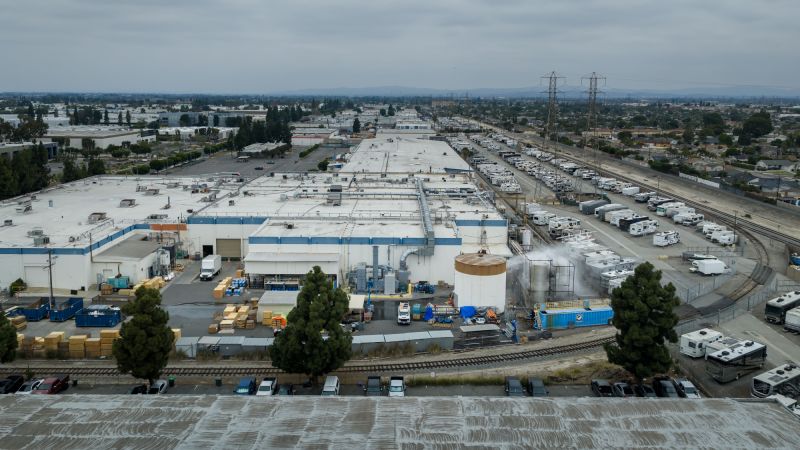
FBI Seizes Evidence at California Plant Following Tank Overheat Incident
Qwenews.com – The FBI is seizing evidence at a California plant after a chemical tank overheated, leading to the evacuation of nearly 50,000 residents. Federal agents executed a search at the Southern California aerospace facility on Wednesday, supported by a warrant issued by a federal judge. The investigation centers on gathering data about the storage, handling, and disposal of methyl methacrylate—a flammable chemical stored in the tank—and examining cooling systems to prevent similar incidents. This action underscores the agency’s focus on uncovering potential safety violations at the plant, which is located in Garden Grove, Orange County.
Officials confirmed the tank contained 6,000 to 7,000 gallons of methyl methacrylate, a substance used in manufacturing plastics, coatings, and dental prosthetics. The Environmental Protection Agency warns that exposure to the chemical can cause respiratory problems, neurological effects, and skin or eye irritation. The temperature spike in the tank raised alarms, prompting emergency crews to evacuate nearby homes and businesses. While no explosions occurred, the event highlighted the risks posed by industrial chemical storage near populated areas, with officials emphasizing the need for thorough safety assessments.
Company Response and Community Engagement
GKN Aerospace, the plant’s operator, has pledged full cooperation with the FBI and other agencies investigating the incident. A spokesperson stated, “We are committed to transparency and will provide all necessary information to ensure public safety.” During a Tuesday evening meeting, Steve Carlin, a company representative, addressed residents and acknowledged the disruption caused by the evacuation. “This event was particularly unsettling for our community,” he said, adding that the company is working to address concerns and prevent future risks.
“I understand the impact this incident has had, and we are taking it seriously,” Carlin emphasized. “Our priority is to ensure the safety of Garden Grove and the surrounding areas while working with authorities to determine the cause of the temperature rise.”
Local leaders and residents have called for stricter regulations and the relocation of chemical tanks away from residential zones. However, Carlin noted that the investigation is ongoing, and no immediate relocation plans have been finalized. The company also committed to regular updates on its safety measures and any findings from the FBI’s search.
Legal Proceedings and Environmental Impact
The Orange County District Attorney’s Office is conducting its own independent probe into the incident, with spokesperson Kimberly Edds confirming the issuance of a preservation directive to GKN. “We’ve directed the company to safeguard all evidence related to the event, ensuring it remains available for review,” Edds explained. This directive aims to prevent the destruction or alteration of critical documents and samples, which could compromise the investigation’s findings.
About a dozen affected individuals and businesses have filed lawsuits against GKN, alleging negligence in maintaining safe chemical storage practices. Some residents reported lingering odors and health symptoms in the days following the evacuation, prompting concerns about long-term environmental effects. Orange County health officials have assured the public that no harmful fumes or contaminants were released during the incident, though they are continuing to monitor air and water quality for potential residual effects.
Broader Implications for Industrial Safety
This event marks the first of two major chemical emergencies on the West Coast in recent weeks. Just five days earlier, a corrosive chemical tank at a Longview, Washington, paper mill ruptured, resulting in an implosion that killed 11 people. The proximity of these incidents to residential areas has intensified scrutiny over industrial safety standards and emergency preparedness. Experts warn that the combination of aging infrastructure and increasing industrial activity in urban zones could heighten the risk of such events, emphasizing the need for more robust regulatory frameworks.
Environmental advocates and industry representatives are now debating the adequacy of current safety protocols. While GKN has not yet disclosed the exact cause of the temperature rise, investigators are examining potential factors, including equipment failure, human error, or environmental conditions. The FBI’s seizure of evidence aims to build a case that could lead to regulatory changes or legal accountability, setting a precedent for future industrial safety investigations in the region.
Public Health and Safety Measures
As part of the response, local health authorities are conducting detailed assessments of the affected population’s exposure levels. Preliminary tests indicate that air quality returned to normal within 24 hours of the evacuation, but some residents are still seeking further clarity on health risks. The Orange County Public Health Department has launched a long-term monitoring program, with plans to track respiratory and skin conditions among evacuees over the next several months.
Meanwhile, the FBI’s evidence collection is expected to take several days, with agents reviewing records, interviewing staff, and analyzing chemical samples. The goal is to determine whether the incident was an isolated occurrence or part of a larger pattern of safety lapses. As the investigation unfolds, officials are preparing for potential public hearings to address community concerns and outline corrective actions to prevent future incidents at the plant and similar facilities.