
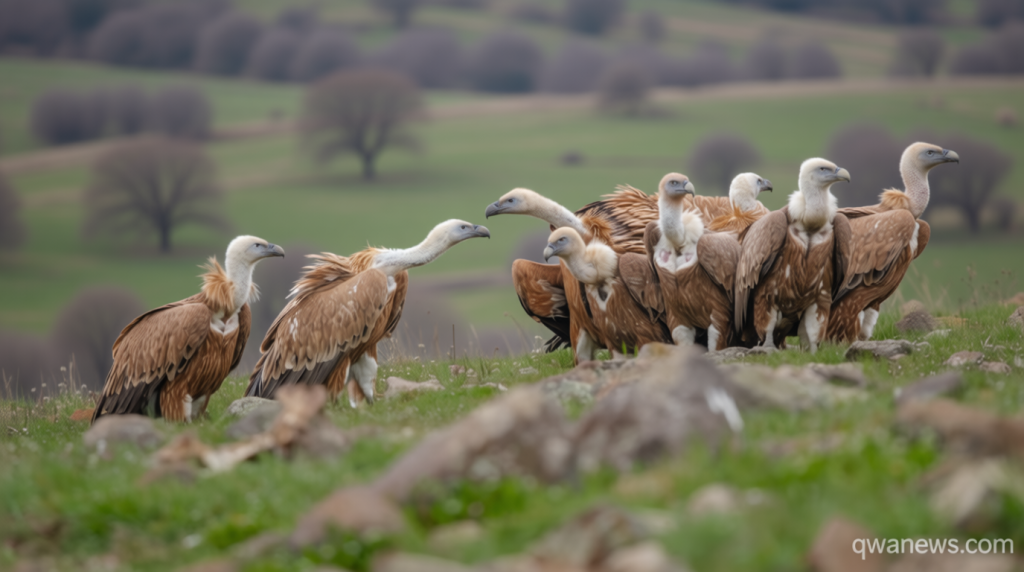
Nature’s Cleanup Crew: Captivating Images Reveal Vultures in a New, More Favorable Light
Qwenews.com – On July 20, the Vulture Interactions photography contest, now in its second year, unveiled its winning entries. These images showcase a range of vulture species, from the critically endangered bearded vulture of Europe to the California condor, whose population dwindles to around 600 individuals. The contest, organized by the Hawk Conservancy Trust and supported by Rolex’s Perpetual Planet Initiative, aims to shift public opinion about these often-overlooked birds.
Vultures are vital to ecosystems, acting as natural scavengers that dispose of carrion. This role prevents the spread of disease and reduces the burden on humans to clean up dead animals. André Botha, Africa Projects Manager at the Hawk Conservancy Trust, emphasizes that people’s judgments of vultures are often based on their appearance. “If you don’t like it, you won’t conserve it,” he says, highlighting the need to appreciate their ecological value beyond aesthetics.
Ecological Importance and Conservation Challenges
While vultures are essential to the environment, they face significant survival threats. Habitat loss, energy infrastructure like power lines and wind turbines, and poaching all contribute to their decline. Some poachers target vultures directly, while others poison predators such as lions or hyenas, inadvertently killing vultures that feed on the carcasses.
Botha also underscores the unique adaptations of vultures, such as their exceptional eyesight, which allows them to detect a three-foot-long carcass from four miles away. These traits make them efficient at their role, but they also expose them to dangers. The contest seeks to foster a deeper understanding of their importance, even among those who may not find them visually appealing.
A Crisis in India: Diclofenac and the Vulture Decline
One of the most severe threats to vultures emerged in the 1990s when diclofenac, an anti-inflammatory drug, was introduced for veterinary use in India. This medication caused kidney failure in vultures that consumed poisoned animals, leading to the death of 95% of the country’s wild vulture population by the mid-2000s. The loss had cascading effects, including an estimated 500,000 excess human deaths over five years, as disease spread unchecked.
“There is no other animal on the planet that is designed to do what vultures do,” says Botha, who also serves as co-chair of the vulture specialist group at the International Union for Conservation of Nature (IUCN).
Efforts to revive species like the Andean condor highlight the urgency of vulture conservation. Botha believes that raising awareness through photography can inspire a new generation to take up the cause. “We need to have a younger generation of people to step in and carry the flag forward,” he adds, stressing the importance of sustained action for these critical birds.