
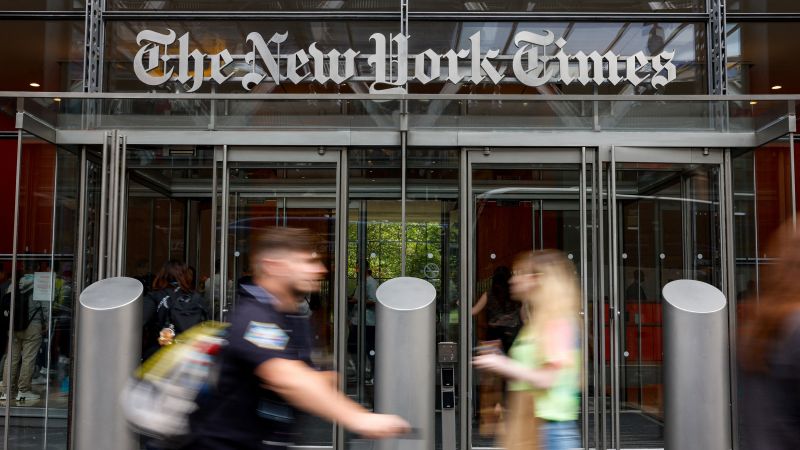
The New York Times Countersues EEOC Over Alleged Retaliatory Use of Authority
Qwenews.com – The New York Times countersues EEOC, accusing the agency of using its authority in a retaliatory and bad-faith manner. This legal move comes as the newspaper challenges the Equal Employment Opportunity Commission’s (EEOC) claim that it engaged in race- and gender-based discrimination against employee Bryant Rousseau. The case, which was filed in May, centers on Rousseau’s alleged denial of a promotion to deputy editor due to his race and sex, and now the Times is seeking to reverse the decision through a countersuit.
The New York Times countersues the EEOC, arguing that the agency’s actions were politically motivated. The lawsuit claims the EEOC used its power to target the newspaper after it published a report revealing staff members expressed pressure to prioritize discrimination cases aligning with President Donald Trump’s agenda. This report, released eight days before the EEOC’s formal complaint, suggests the agency may have been incentivized to pursue cases that fit a specific ideological narrative. The Times’ legal team asserts that the EEOC’s actions undermine the independence of the press and threaten democratic principles.
Context of the EEOC’s Allegations
The New York Times countersues the EEOC, which initially filed its complaint without naming Rousseau. However, the agency later included him as a plaintiff, and the Times now contends that the EEOC’s investigation was biased. The newspaper argues that the EEOC’s complaint lacks substantial evidence and that the timing of its filing—just two days after the Times’ internal report—raises questions about its legitimacy. This timing is seen as a potential sign of retaliation, with the Times claiming the EEOC was trying to pressure the newspaper into compliance with Trump’s policies on diversity and inclusion.
“The Commission’s retaliatory, bad faith use of its authority to target The New York Times violates the First and Fifth Amendments and the Administrative Procedure Act (APA),” the Times’ attorneys state in the lawsuit. “This action poses a uniquely insidious threat to a free and independent press, and to our democracy.”
The claim highlights the broader conflict between the EEOC and the media, with the Times asserting that the agency is not acting in good faith but as an extension of the Trump administration’s priorities. The newspaper also emphasizes its merit-based employment practices, stating that the EEOC’s allegations are an attempt to delegitimize its editorial independence.
Broader Implications for Media and Legal Integrity
The New York Times countersues the EEOC, further intensifying the legal tensions between the media outlet and the Trump administration. This countersuit adds to a series of disputes, including a $15 billion defamation lawsuit filed by Trump in September 2025. The EEOC’s case, meanwhile, is part of a pattern of the Trump era’s approach to labor law, where the agency has been accused of prioritizing political goals over impartial enforcement. The Times’ legal team is now pushing for the dismissal of the EEOC’s case, arguing that the agency’s actions are not only unjust but also set a dangerous precedent for future employment disputes.
“Our employment practices are merit-based and focused on recruiting and promoting the best talent in the world,” a Times spokesperson stated in May. “We will defend ourselves vigorously.”
The newspaper’s attorneys also note that Rousseau left the company by June, raising concerns about the EEOC’s decision to use his case as a foundation for its lawsuit. This timeline suggests that the EEOC may have acted with a strategic motive, leveraging internal reports to build a case against the Times. The countersuit is framed as a necessary step to protect the newspaper’s reputation and ensure fair treatment under the law.
The New York Times countersues the EEOC, marking a significant moment in the ongoing battle between the press and regulatory agencies under Trump’s leadership. The lawsuit not only challenges the EEOC’s handling of the discrimination claim but also underscores the newspaper’s commitment to defending its editorial autonomy. With the EEOC accused of targeting the Times for political reasons, the case has sparked discussions about the role of federal agencies in shaping workplace policies and their potential bias toward media organizations. As the legal proceedings unfold, the focus remains on whether the EEOC’s use of authority was legitimate or an act of retaliation against a news outlet that has long been critical of the administration.