
Salman Rushdie: A Comprehensive Fast Facts Overview of His Literary Career and Controversies
Qwenews.com – Salman Rushdie Fast Facts offer a concise yet insightful look into the life and work of the celebrated author whose literary achievements have spanned decades and whose public persona has been shaped by both acclaim and controversy. Born in 1947, Rushdie’s journey from Bombay to global recognition is marked by personal milestones and pivotal events that have defined his career. His early life, groundbreaking novels, and dramatic public incidents all contribute to the rich narrative of his fast facts, making him a significant figure in contemporary literature.
Early Life and Formative Years
Salman Rushdie Fast Facts begin with his birth on June 19, 1947, as Ahmed Salman Rushdie in Bombay, now Mumbai, India. Raised in a family with distinct cultural backgrounds—his father, Anis Ahmed Rushdie, was a businessman, and his mother, Negin Rushdie, was a teacher—his early exposure to diverse influences laid the groundwork for his creative development. At the age of 16, Rushdie moved to England, where he attended Rugby School, an experience that shaped his identity and fueled his passion for writing. His initial struggles with racial taunts from peers in England became a catalyst for his literary voice, as he began to channel these experiences into his storytelling.
Rushdie’s career initially took a different path, as he worked as an advertising copywriter in London before committing to writing. His first novel, *Grimus*, published in 1975, showcased his early talent but was largely overlooked. However, his 1981 novel *Midnight’s Children* propelled him into the literary spotlight, earning critical acclaim and the prestigious Booker Prize. This work, which blends magical realism with postcolonial themes, became a cornerstone of his Salman Rushdie Fast Facts and established him as a transformative voice in modern fiction.
Major Works and Literary Legacy
Following *Midnight’s Children*, Rushdie continued to captivate readers with novels such as *Shame* (1983) and *Haroun and the Sea of Stories* (1990), which further cemented his reputation as a masterful storyteller. His 1988 work *The Satanic Verses* sparked international debate and controversy, particularly in Muslim-majority countries, where it was perceived as blasphemous. This led to widespread protests, riots, and the issuance of a fatwa by Iran’s Ayatollah Khomeini in 1989, which called for Rushdie’s assassination. The Salman Rushdie Fast Facts highlight how this incident not only threatened his life but also brought global attention to the tension between free speech and religious expression.
Despite the fatwa, Rushdie’s career flourished. He received a knighthood from Queen Elizabeth II in 2007 for his contributions to literature, a recognition that underscored his enduring impact. His later works, such as *Midnight’s Children* (which was reissued in 2012 with a new preface) and *The Golden House* (2017), continue to explore themes of identity, migration, and cultural conflict. The Salman Rushdie Fast Facts also reveal his efforts to navigate the challenges of his controversial past, including his adoption of the pseudonym “Joseph Anton” during the fatwa period.
Life in Hiding and Resilience
Salman Rushdie Fast Facts include the period he spent in hiding after the fatwa. Adopting the alias “Joseph Anton” in 1989, he lived under constant threat, limiting his public appearances and relying on the protection of British authorities. This phase of his life, which lasted over a decade, became a symbol of the risks associated with literary expression in a polarized world. During this time, several individuals linked to his work, including translators and editors, were targeted by extremists, underscoring the global reach of his Salman Rushdie Fast Facts.
One notable quote from Rushdie’s reflections on this period comes from his 2003 interview with *The Sunday Telegraph*, where he stated, “If I had not become a writer, my dream was to be an actor.” This personal insight adds depth to the Salman Rushdie Fast Facts, revealing his early aspirations and the unexpected path that led him to literary fame. His resilience during these challenging years not only protected his life but also reinforced his commitment to his craft, even as he faced assassination threats.
Recent Developments and Public Reemergence
Salman Rushdie Fast Facts also document his recent comeback. On August 12, 2022, he was stabbed multiple times during a lecture at the Chautauqua Institution in New York. The attack, which left him with severe injuries including a hand injury and vision loss in one eye, was carried out by Hadi Matar, 24, who was later charged with attempted murder. This incident, widely covered in the media, reignited discussions about the dangers of public discourse and the Salman Rushdie Fast Facts that have shaped his life.
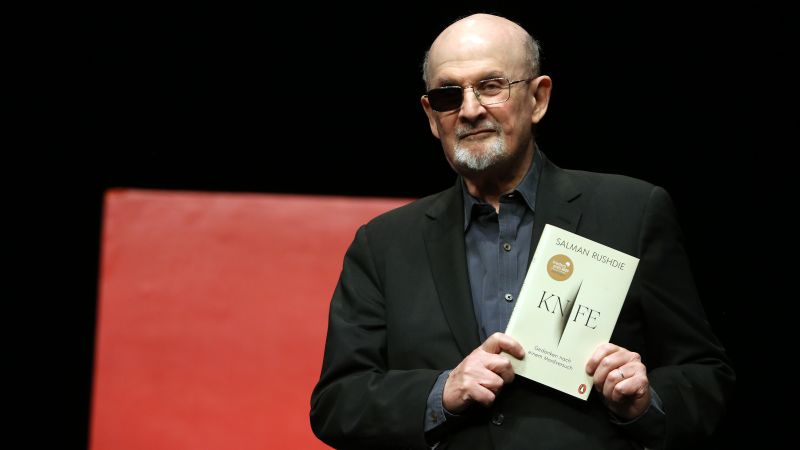
In the aftermath, Rushdie released his memoir *Knife: Meditations After an Attempted Murder*, which provides a personal account of the attack and its broader implications. He also made a public video statement at the 2023 British Book Awards, emphasizing the fragility of free speech and the importance of defending it. His recovery has been slow, but his continued presence in the literary world reaffirms his Salman Rushdie Fast Facts as a testament to his perseverance and influence. In April 2024, he participated in his first television interview since the attack, sharing his premonition of the event just days before it occurred and offering a glimpse into his thoughts on the incident.
Rushdie’s story, as reflected in the Salman Rushdie Fast Facts, is one of resilience, creativity, and global impact. His ability to navigate personal and public challenges while producing groundbreaking literature has made him a central figure in the discussion of postcolonial narratives and the power of storytelling. As he continues to engage with readers and advocates for free expression, his legacy remains a vital part of the Salman Rushdie Fast Facts that define his career and life.