
July 4, 1776: A Day of Dual Significance
Qwenews.com – On the morning of July 4, 1776, Philadelphia’s weather was mild, with temperatures starting at 68 degrees. By midday, the heat had risen to 76, while the evening brought a slight cool-down to 73.5. These readings, meticulously documented, reveal a unique perspective on a pivotal day in American history. Thomas Jefferson, the principal author of the Declaration of Independence, recorded the temperatures multiple times, offering a rare glimpse into the personal rhythm of a man shaping a nation.
The Revolutionary Weather
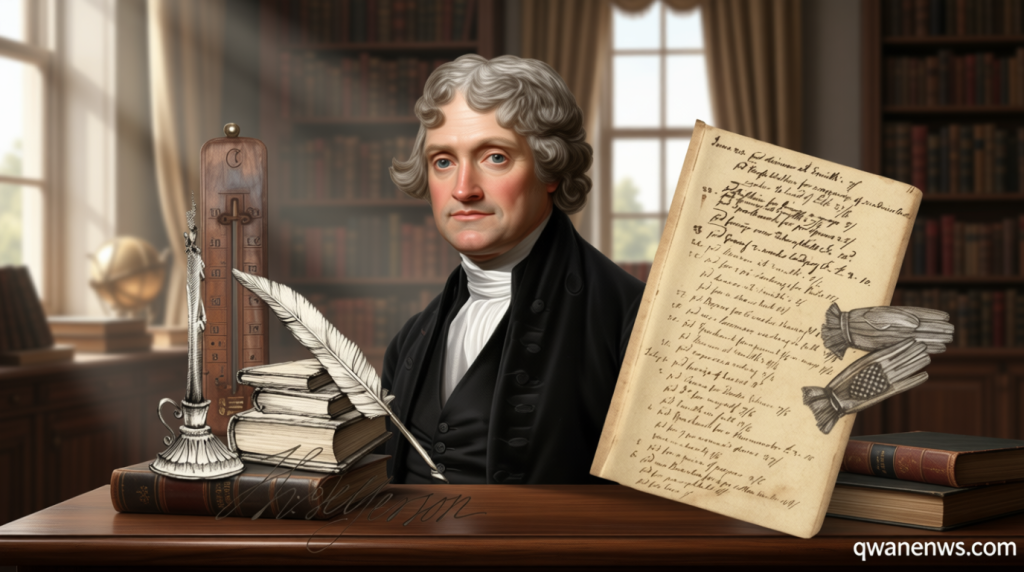
While the Continental Congress finalized the Declaration’s wording, Jefferson’s attention seemed to be on the weather rather than the momentous act of declaring independence. His detailed memorandum books show he spent three pounds and 15 shillings on a thermometer from John Sparhawk, a bookseller and apothecary on Second Street. This purchase was part of a broader spending spree that included seven pairs of women’s gloves for 17 shillings and a donation of one shilling and six pence to charity.
“It’s a mundane day, except it’s a revolutionary one.” — Andrew Davenport, vice president of research at Jefferson’s estate, Monticello
Davenport noted that Jefferson’s focus on daily tasks highlights the balance between grand historical events and routine life. “Even during the most frenetic times in our history, daily business still needs to be attended to. That’s the fabric of civic life, and civic life is the foundation of the nation,” he explained.
A Day of Dual Significance
Though July 4 is now celebrated as a national holiday, it was not an instant turning point. The actual decision to break from Britain occurred on July 2, when the Continental Congress approved Richard Henry Lee’s “Resolution for Independence.” John Adams, in a letter to his wife Abigail on July 3, predicted that the Second of July would become a legendary date, marked by “solemn Acts of Devotion to God Almighty” and “Pomp and Parade” across the continent.
“The Second Day of July 1776, will be the most memorable Epocha, in the History of America.” — John Adams, letter to Abigail Adams
James P. McClure, general editor of the *Papers of Thomas Jefferson* project, emphasized that July 4 was less about the final declaration and more about the administrative work that followed. Jefferson, along with Robert Hemmings, an enslaved teenager who assisted him, had arrived in Philadelphia in May for the Second Continental Congress. By June 28, the Declaration draft was submitted to Congress, with the formal adoption likely occurring in the morning of July 4. Yet, the day’s significance was not solely political—Jefferson’s errands reflected the practicalities of leadership.
Cara Rogers Stevens, a Jeffersonian scholar at Ashland University, proposed that Jefferson’s ability to manage both political and personal tasks might indicate he was not as heavily involved in committees as peers like John Adams. “The fact that he could run errands on the same day suggests a different role in the Congress,” she noted.
The Fabric of Civic Life
July 4, 1776, was a day when the revolutionaries were still navigating the complexities of independence. While the Declaration was being approved, the Continental Congress also handled military logistics, public affairs, and ongoing debates. McClure pointed out that the actual formalization of independence was a gradual process, with the final steps completed by the time the day ended. This duality—of monumental decisions and everyday chores—shaped the legacy of the day, reminding us that history is often made through both grand gestures and quiet routines.