
Strong Explosions Rock Kyiv Hours After Zelensky Warns of ‘Massive’ Russian Attack
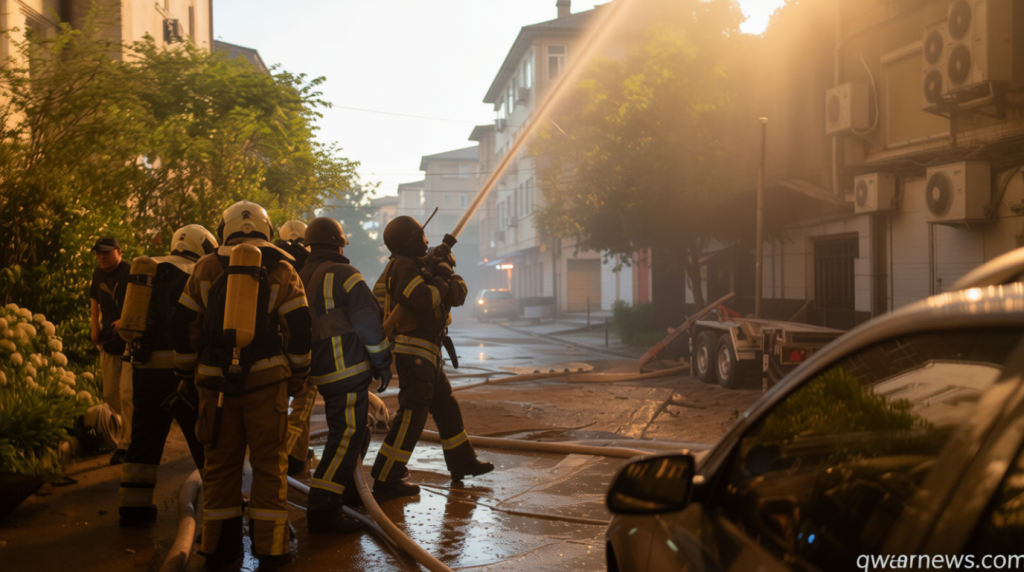
Qwenews.com – Hours after Ukrainian President Volodymyr Zelensky issued a dire warning about an impending “massive” Russian attack, Kyiv was struck by powerful explosions during the early hours of Thursday. The attacks, which targeted residential districts and critical infrastructure, caused significant damage, with reports of at least one death and 11 people hospitalized. A nine-story building in the heart of the city collapsed partially, leading to urgent evacuations and ongoing efforts to rescue those trapped inside. The events underscore the escalating intensity of the conflict, as Russian forces continue to intensify their bombardment of the capital.
Zelensky’s Emergency Warning and Kyiv’s Response
On Wednesday, Zelensky delivered a stark message to the public, emphasizing the imminent threat posed by Russian military operations. In a statement posted on X, he described the situation as “one of the most severe in our war,” urging citizens to take shelter and prepare for an all-out assault. His warning aligned with intelligence assessments that indicated a coordinated strike aimed at destabilizing Kyiv’s defenses and civilian morale. The air-raid sirens began blaring around 8 p.m. local time, prompting thousands to rush to underground shelters, including metro stations and basements, as the city braced for the onslaught.
“That is exactly the threat we are facing tonight,” Zelensky said in a post to X.
Targeted Strikes and Civilian Impact
The Russian strikes focused on areas densely populated with residential buildings, making the attacks particularly devastating. Local officials confirmed that multiple structures were damaged, with some entirely destroyed. The city’s infrastructure, including roads and utilities, faced disruption, compounding the challenges for emergency responders. In addition to the casualties, an ambulance station was hit, leaving medical staff injured and complicating evacuation efforts. The explosions also ignited fires in several neighborhoods, forcing residents to flee with minimal belongings as the city’s fire services scrambled to contain the blazes.
Analysts noted that the timing of the attacks, just after Zelensky’s warning, was a calculated move to maximize psychological and physical impact. The strikes coincided with a period of relative calm, suggesting Russian forces intended to catch Kyiv off guard. Despite the chaos, Ukrainian defenders managed to respond quickly, deploying anti-aircraft systems and mobile units to intercept incoming projectiles. However, the sheer scale of the assault overwhelmed some defenses, highlighting the vulnerability of the capital under sustained attacks.
Drone Warfare and Strategic Shifts
Recent weeks have seen a significant shift in the tactics employed by both sides. Ukraine has increasingly relied on drone attacks to target Russian energy infrastructure, aiming to weaken supply lines and create a strategic advantage. Zelensky highlighted this approach as a key component of Ukraine’s defense strategy, noting its effectiveness in disrupting enemy operations. Meanwhile, Russia has responded with a massive drone interception campaign, claiming to down 660 drones across 12 regions in a single night, a record high since the full-scale invasion began in 2022.
Experts suggest that the combination of drones and ballistic missiles used in the Kyiv strikes reflects Russia’s evolving strategy to blend precision and overwhelming force. This approach allows for targeting high-value assets while maintaining the element of surprise. The use of drones also underscores the technological arms race in the conflict, with both nations investing heavily in unmanned systems to gain an edge on the battlefield.
Historical Context and Strategic Significance
The recent attacks in Kyiv echo a similar assault that occurred in June, when Russian forces targeted the Kyiv Pechersk Lavra, a UNESCO-recognized historical site and religious center. That attack, which destroyed centuries-old buildings, was a symbolic strike meant to send a message about the potential destruction of Ukraine’s cultural heritage. The current strikes, while less focused on historical landmarks, still highlight the strategic value of Kyiv as a target for Russian military planners. The city’s symbolic role as the political and cultural heart of Ukraine makes it a key objective in the ongoing conflict.
With Kyiv experiencing strong explosions, the attacks serve as a reminder of the war’s ongoing nature. Despite Zelensky’s warnings and the resilience of Ukrainian forces, the city remains a focal point for Russian military operations. The intensity of the strikes, combined with the strategic use of drones, signals a renewed effort to weaken the capital’s defenses and assert dominance in the region. As the situation develops, officials and analysts are closely monitoring the aftermath to assess the long-term implications for the war.
Global Reactions and Ongoing Concerns
International reactions to the Kyiv attacks have been swift, with leaders from allied nations expressing concern over the escalating violence. The United States and European Union officials reiterated their support for Ukraine, pledging additional military aid to help counter the Russian assault. Meanwhile, some Russian-aligned countries have called the strikes a necessary measure to secure Ukraine’s submission. The events have also raised questions about the potential for further attacks on other cities, including Kharkiv and Odessa, which have been targeted in recent weeks.
As Kyiv dealt with the aftermath of strong explosions, the city’s residents and officials remained focused on recovery efforts. Emergency services worked tirelessly to rescue trapped individuals and assess damage to the infrastructure. The Ukrainian government has since announced plans to reinforce Kyiv’s defenses, including the deployment of additional air defense systems and the mobilization of reserve forces. These measures aim to prevent future attacks and protect the city from becoming a primary target in the war’s next phase.