
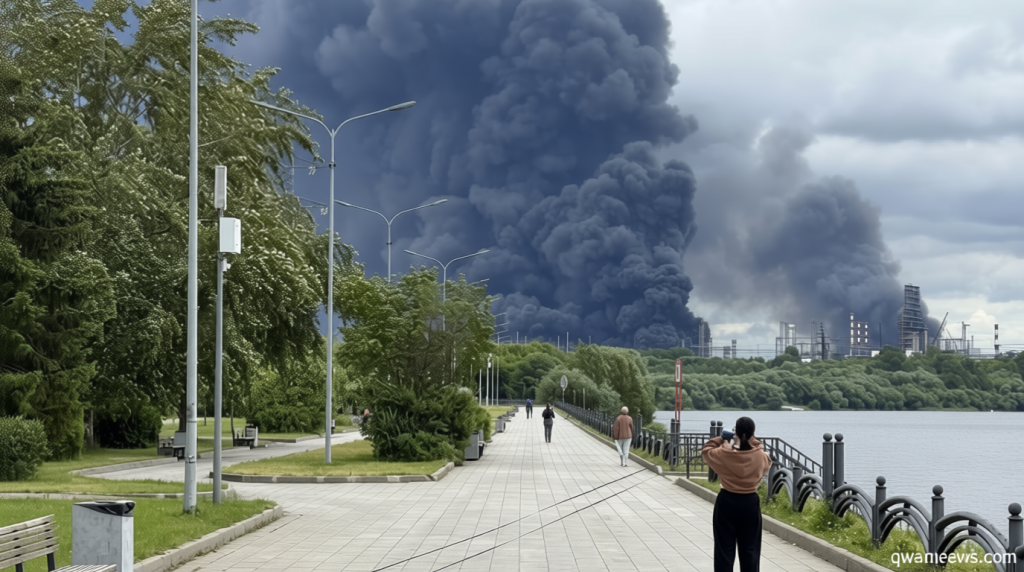
Russia is burning, but don’t expect Putin to blink
Qwenews.com – Russia is burning but don’t expect Putin to blink. The nation’s fuel crisis, which has left Moscow’s motorists scrambling for gasoline, highlights the growing strain on the war economy. With long lines of cars and trucks forming at gas stations, the scarcity of fuel has become a visible symbol of the conflict’s reach beyond the battlefield. Drivers, some having waited hours for a single tank, describe the situation as a sharp contrast to Russia’s historical dominance over energy resources. The once-reliable supply chain is now faltering, signaling a deeper crisis that threatens daily life and economic stability.
The Escalating Fuel Crisis
As the war rages on, Russia’s internal energy infrastructure has come under unprecedented pressure. Refineries in key regions like Rostov and Krasnodar have been hit by drone attacks, disrupting production and storage. The state of emergency declared in Crimea further underscores the gravity of the situation, with fuel sales temporarily halted to prioritize military needs. Putin, despite these challenges, has shown no signs of retreating from his war strategy. In a recent meeting with senior officials, he emphasized the importance of maintaining supply chains, even as the nation grapples with a shortage that has sparked frustration among citizens and businesses alike.
The fuel crisis is not just a logistical problem but a strategic one. With Russia’s economy increasingly dependent on exports, the loss of domestic energy capacity has forced the government to reconsider its policies. Reports indicate that the country’s gasoline reserves have dwindled to critical levels, forcing officials to implement strict rationing measures. This has led to a surge in demand for alternatives, such as biofuels and imported petroleum, while also highlighting the vulnerability of Russia’s energy sector to external threats. Analysts warn that the situation could worsen if the drone attacks continue, potentially forcing the Kremlin to divert resources from military operations to meet civilian needs.
Ukraine’s Strategic Shift
The reversal of fortune in the war is now evident. Ukraine’s drone campaign, once focused on targeting Russian energy infrastructure, has shifted to directly impact the war economy. Over the past weeks, Russian officials have reported the destruction of multiple refineries and oil terminals, disrupting the flow of fuel both domestically and internationally. This strategy, which mirrors the tactics once used to weaken Ukraine, has created a domino effect, straining supply chains and forcing Moscow to prioritize domestic shortages over its broader geopolitical goals. The effectiveness of these attacks has been underscored by the noticeable decline in Russia’s military momentum, as fuel shortages hinder the movement of troops and equipment.
The irony of the situation is not lost on observers. For years, Russia’s aerial strikes on Ukrainian energy systems were designed to cripple the nation’s infrastructure and undermine its ability to sustain the war effort. Now, the same tactics are being used against Russian territory, creating a cycle of disruption that challenges the war’s long-term viability. The impact of these strikes extends beyond fuel shortages, affecting industries reliant on consistent energy supply. This has led to a reevaluation of Russia’s economic resilience, with experts questioning whether the nation can sustain its war efforts without significant internal strain.
“The tide is turning for Ukraine,” European Commission President Ursula von der Leyen declared at the G7 summit. “The situation in 2026 is very different from 2025. Russia’s fatigue is openly showing. That’s the time to double down on our support.”
Western analysts are closely monitoring the implications of Ukraine’s strategy. The disruption of Russian fuel supplies has forced the Kremlin to adjust its operations, with some reports suggesting that the ban on diesel exports is a calculated move to conserve resources. While this decision may seem like a concession, it reflects the broader reality of Russia’s economic vulnerability. The war has not only drained the nation’s financial reserves but also exposed weaknesses in its supply chain, making it increasingly difficult to maintain control over its energy resources. As the conflict enters a new phase, the question remains: will Putin’s resolve waver, or will he continue to push forward despite the mounting challenges?