
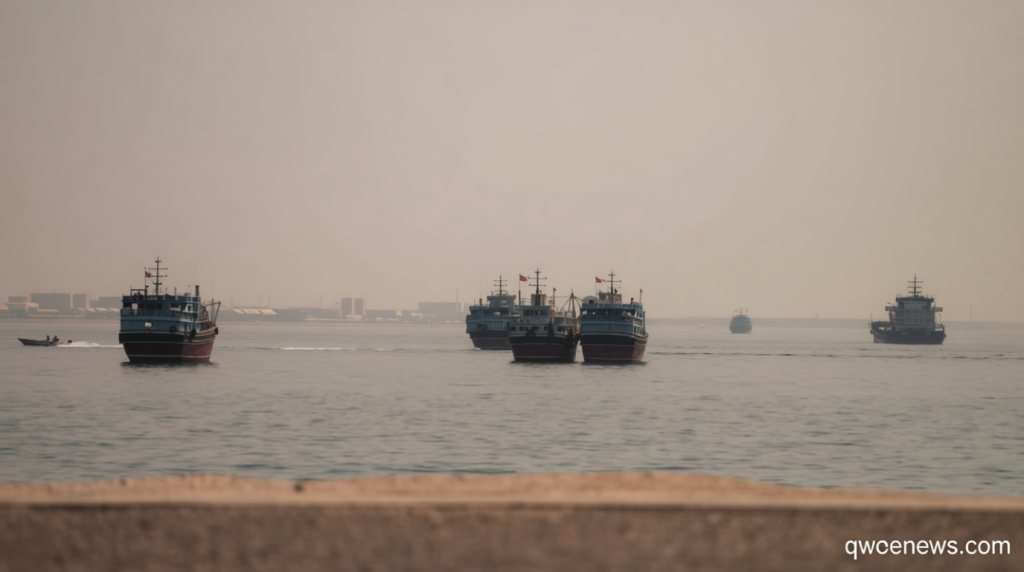
Iran Hits US Targets Amid Hormuz Tensions
Qwenews.com – Iran says it hit US targets, escalating regional tensions as the fragile agreement over the Strait of Hormuz faces its first major challenge. The Islamic Republic’s state media reported that its forces launched strikes against U.S. military installations in the Middle East, a move described as retaliation for recent American operations near the vital waterway. This development has raised concerns about the stability of the deal, which aimed to ease hostilities and secure safe passage for commercial vessels. While the U.S. has not yet confirmed the attacks, the incident signals a potential breakdown in the diplomatic efforts that have so far kept conflicts in check.
Escalation and Ceasefire Violations
On Saturday, Iran’s military targeted a U.S. base in Bahrain, marking the first direct hit under the current agreement. The attack, which involved drones, was condemned by the island nation as a “clear breach of sovereignty.” Despite the strike, Iran maintained that it was acting in self-defense, citing the U.S. as the aggressor in the region. Meanwhile, the United Kingdom Maritime Trade Operations (UKMTO) confirmed that an unidentified projectile struck a merchant vessel in the Strait of Hormuz, causing damage but no casualties. This event has intensified scrutiny of the agreement’s effectiveness in preventing such incidents.
“Iran’s actions have shown that the agreement is being tested,” said a U.S. defense official, highlighting the ongoing uncertainty. The official noted that while the strikes were localized, they could have broader implications for the region’s security dynamics. The U.S. military has reportedly deployed additional assets to the area, signaling readiness to respond to further Iranian aggression. This strategic shift underscores the delicate balance between maintaining peace and preparing for potential conflict.
Agreement Under Scrutiny
The Joint Maritime Information Center (JMIC) raised the threat level in the Strait of Hormuz to “substantial” following the attacks, reflecting growing concerns about the safety of global trade routes. This move comes as the U.S. and Iran debate the terms of the agreement, which requires Iran to “make arrangements using its best efforts” to ensure unimpeded shipping. However, the lack of clear definitions in the pact has led to disagreements over Iran’s ability to enforce tolls on vessels traversing the strait. U.S. officials have insisted that the waterway will remain open without charges, a stance Iran has contested as a violation of its sovereignty.
Analysts warn that the strikes could undermine the agreement’s credibility, especially as both sides struggle to define their commitments. Iran’s military spokesperson emphasized that the attacks were a necessary response to U.S. threats to commercial shipping, while U.S. officials framed the strikes as a demonstration of their readiness to protect interests. The situation has sparked discussions about whether the agreement’s framework is sufficient to prevent future confrontations, or if it needs further revisions to address emerging tensions.
Regional allies have expressed mixed reactions to the latest developments. Saudi Arabia, a key U.S. partner in the region, called for a swift resolution to the crisis, urging both sides to avoid actions that could escalate hostilities. Meanwhile, Gulf Cooperation Council (GCC) nations have urged caution, as the strikes threaten to disrupt the flow of oil and gas through the Strait of Hormuz, a critical artery for global energy markets. The incident has also drawn attention to the broader geopolitical stakes of controlling this strategic chokepoint.
As the situation unfolds, the focus keyword “Iran says it hit US targets” continues to resonate in diplomatic and military circles. The U.S. has not officially acknowledged the attacks, but its continued presence in the region and recent airstrikes have been seen as provocative. Iran’s actions, meanwhile, have been framed as a bold assertion of its power, challenging the U.S. to defend its position in the face of escalating pressure. This back-and-forth has created a precarious equilibrium, with both nations eyeing the other for potential further moves.