
Mamdani Defends Criticism of AIPAC Amid Antisemitism Allegations
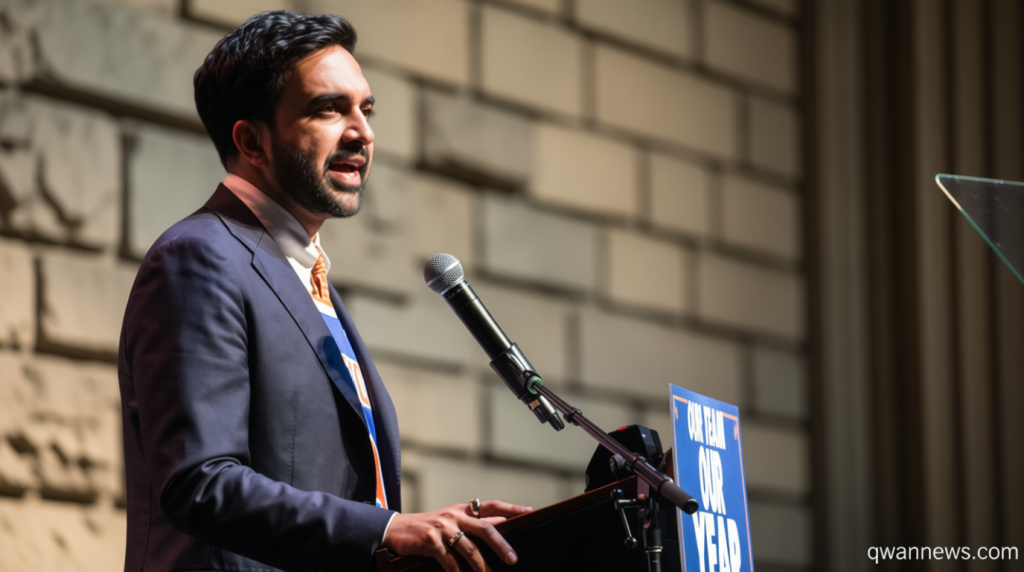
Qwenews.com – Following intense scrutiny over his remarks, New York City Mayor Zohran Mamdani has reiterated his defense of criticizing AIPAC, the American Israel Public Affairs Committee, during a recent address in the wake of accusations of antisemitism. The controversy emerged after Mamdani’s sharp critique of AIPAC’s influence on U.S. foreign policy sparked backlash from Jewish advocacy groups. The focus of his comments centered on AIPAC’s perceived role in maintaining policies that prioritize geopolitical stability over human rights in the Middle East. In a statement released on Monday, Mamdani emphasized that his criticism of AIPAC is part of a broader effort to challenge systems he believes perpetuate injustice.
The Rhetoric Behind AIPAC’s Influence
Mamdani’s defense of his criticism of AIPAC was articulated during a press conference at City Hall, where he argued that the organization’s actions have long been aligned with a status quo that suppresses moral progress. “My comments are not about Jews or their identity, but about the political machinery that enables harmful systems,” he said, pointing to AIPAC’s strategic funding of candidates to shape public opinion. The mayor’s remarks were framed as a critique of how AIPAC leverages financial support to maintain its dominance in New York’s political landscape, often at the expense of addressing pressing social issues.
“When it comes to defending the status quo, they frequently do so by funding campaigns that spread misleading narratives, ensuring our leaders remain divided instead of united in pursuit of moral progress,” Mamdani stated.
He further clarified that his use of the term “monsters” to describe opponents of his endorsed candidates was a deliberate choice, borrowed from Italian communist theorist Antonio Gramsci, to illustrate how institutions like AIPAC manipulate public discourse. “This term is not an attack on Jewish people but a description of the forces that fuel inequality and injustice,” he asserted. Mamdani argued that the language applies to all entities—regardless of their affiliations—that prioritize power over people in political campaigns.
Jewish Leaders Condemn Mamdani’s Comments as Antisemitic
Reactions from Jewish leaders were swift and strong, with organizations such as the Anti-Defamation League (ADL) and the American Jewish Committee (AJC) calling Mamdani’s rhetoric a dangerous form of antisemitism. Ted Deutch, CEO of the AJC, criticized the mayor’s use of the term “monsters” on X, stating it risks painting Jewish groups as conspiratorial. “Mamdani’s criticism of AIPAC is framed as a necessary critique, but it also carries the potential to vilify the entire Jewish community,” Deutch said.
“Swap ‘AIPAC’ for ‘Jews’ and you’re left with the oldest antisemitic conspiracy theory,” Democratic Rep. Josh Gottheimer, a Jewish leader, added on X. “This rhetoric risks alienating the very community your city depends on.”
Mamdani, who has long been vocal about Israel’s policies, defended his stance by highlighting the humanitarian impact of recent conflicts. He cited data from the Palestinian Ministry of Health, which reported over 1,000 deaths in Gaza since the ceasefire began in mid-October, to underscore his argument that AIPAC’s support for Israeli policies enables ongoing suffering. “My criticism of AIPAC is a call for accountability, not an attack on Jewish identity,” he said, aiming to position his remarks as a necessary step toward addressing systemic issues.
AIPAC’s Political Spending in New York Elections
Recent federal filings have revealed the extent of AIPAC’s influence in New York’s political arena, with its super PAC, United Democracy Project, contributing over $600,000 to BOLD America, a group backing Rep. Adriano Espaillat. This funding came amid Mamdani’s support for Darializa Avila Chevalier, who is running against Espaillat in New York’s 13th Congressional District. The mayor’s criticism of AIPAC’s spending strategy is part of a larger debate about how political donations shape policy priorities, with some arguing that AIPAC’s efforts often overshadow grassroots movements advocating for justice.
Mamdani’s argument that AIPAC’s tactics divide voters and hinder progress aligns with his broader critique of political institutions. He described the organization’s role as one that “pulls the strings of elected officials, ensuring policies that favor the powerful remain unchanged.” This perspective has sparked a conversation about the balance between holding AIPAC accountable and avoiding stereotypes that could marginalize Jewish communities. As the New York primaries approach, the mayor’s stance on AIPAC is expected to remain a focal point in discussions about political spending and its impact on public opinion.
The Broader Implications of the Debate
While Mamdani’s defense of criticizing AIPAC is rooted in his belief that the organization supports unjust policies, the debate has intensified as critics argue his language could be interpreted as antisemitic. This tension highlights the complexities of political discourse, where critiques of foreign policy often intersect with cultural and communal identities. The mayor’s emphasis on naming and shaming political entities like AIPAC underscores his commitment to transparency, even as he faces accusations of targeting Jewish groups.
“I’m not attacking Jews, I’m attacking the system that Jews help perpetuate,” Mamdani said in an interview with CNN, addressing the controversy directly. “If we don’t hold AIPAC accountable, we’re not holding anyone accountable.”
As the New York primaries draw closer, the discussion around Mamdani’s comments on AIPAC is likely to shape voter perceptions. Supporters of the mayor argue that his criticism of AIPAC is essential to advancing progressive agendas, while opponents worry it could deepen divisions within the Jewish community. The situation remains a key issue for political analysts and activists, who are closely monitoring how the debate over AIPAC evolves in the lead-up to the election.
Conclusion: AIPAC and the Future of Political Discourse
The ongoing debate between Mamdani and his critics reflects the growing importance of political spending in shaping public narratives. As the mayor continues to defend his criticism of AIPAC, the focus remains on whether his rhetoric is a legitimate critique of foreign policy or a form of antisemitism. With the New York primaries looming, the discussion is expected to intensify, influencing both the political landscape and the broader conversation about how to hold powerful institutions accountable.
Ultimately, Mamdani’s defense of criticizing AIPAC serves as a reminder of the challenges faced by politicians in balancing ideological critique with the need to avoid alienating key constituencies. His argument that the term “monsters” is a tool to expose deceptive practices has been met with both support and skepticism, setting the stage for a heated discussion that could impact future elections and policy decisions.