
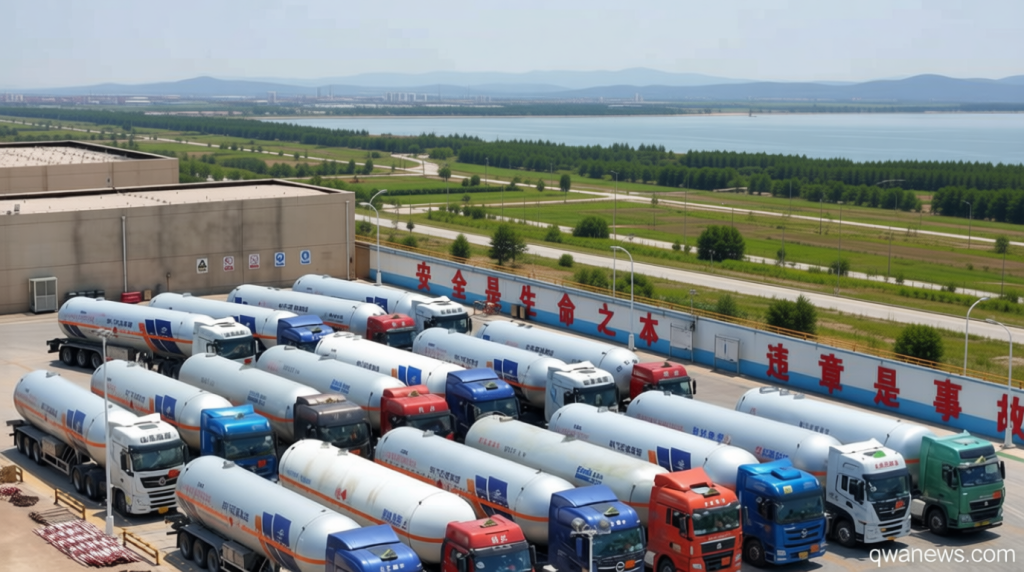
The Future of Oil Prices May Depend on China
Qwenews.com – As the global energy landscape continues to evolve, the future of oil prices appears increasingly intertwined with China’s strategic decisions. With its vast consumption of crude oil, the world’s second-largest importer has become a critical player in stabilizing market dynamics, even as geopolitical tensions in the Middle East disrupt supply chains. The recent conflict in Iran, which has caused a significant reduction in oil exports, has underscored the importance of China’s role in mitigating price volatility. Analysts suggest that China’s ability to adapt its energy strategy could determine the trajectory of global oil prices in the coming months.
China’s Strategic Response to Supply Shocks
China’s proactive measures to cushion the impact of the Iran conflict have demonstrated its growing influence in the oil market. The country has implemented a combination of policies, including reducing imports, leveraging its substantial oil reserves, and accelerating the adoption of renewable energy sources. These steps have helped dampen the immediate surge in prices, though the long-term effects remain under scrutiny. By cutting imports by over 3 million barrels per day, China has effectively acted as a buffer, preventing the Asian market from experiencing sharper fluctuations than elsewhere.
Global Market Reactions and Price Trends
The ripple effects of China’s actions are evident in the global oil market. Despite a supply loss of more than 11 million barrels per day from the Iran conflict, crude prices have not skyrocketed as some had predicted. This resilience is attributed to China’s strategic stockpile building, which has been supported by discounted Russian and Iranian oil. As a result, the nation now holds over 1 billion barrels in reserves, providing a strategic cushion against potential supply disruptions. The price of Brent crude, the global benchmark, recently fell below $78 per barrel, reflecting traders’ confidence in China’s ability to stabilize demand.
“China’s role in balancing the market cannot be overstated,” said Janiv Shah, a senior analyst at Rystad Energy. “Its policy decisions are not just about domestic stability—they’re shaping the global oil price narrative.”
Additionally, China’s efforts to reduce its reliance on fossil fuels have played a key part in this shift. The country’s rapid expansion of electric vehicle (EV) production has significantly lowered oil demand, with nearly half of all new passenger cars sold in China now being electric. This transition has created a buffer for the global crude market, allowing prices to remain relatively stable amid geopolitical uncertainties. However, the International Energy Agency (IEA) warns that a potential reopening of the Strait of Hormuz could lead to oversupply conditions next year, highlighting the delicate balance between demand and supply.
The Broader Implications for Global Energy Markets
China’s growing energy independence and strategic reserves are reshaping the global oil market. With its ability to control domestic demand through policy interventions, the nation is becoming a pivotal actor in determining price trends. This shift is not only affecting Asia but also influencing international oil markets worldwide. The 1973 Arab embargo, which caused a 134% spike in oil prices, serves as a historical reference for the potential volatility of the future of oil prices. However, China’s current strategies suggest a more measured and predictable market response.
Analysts from Societe Generale have pointed out that the Iran conflict, while impacting 14% of global supply, has not led to the same level of market chaos as past crises. This is largely due to China’s ability to absorb the shock. The government has also imposed restrictions on exports of refined fuels, prioritizing domestic needs and reducing the incentive for refiners to purchase oil globally. These actions have not only stabilized prices but also signaled a broader shift in energy consumption patterns.
As the world continues to grapple with the aftermath of the most severe oil crisis in recent history, the future of oil prices remains uncertain. China’s influence is expected to grow further, with its renewable energy investments and domestic policy choices playing a central role. The IEA forecasts a potential surplus of 4.7 million barrels per day in the coming year, which could provide opportunities for markets to rebuild reserves or adjust strategies. However, this also depends on China’s continued commitment to maintaining its reserves and managing demand.