
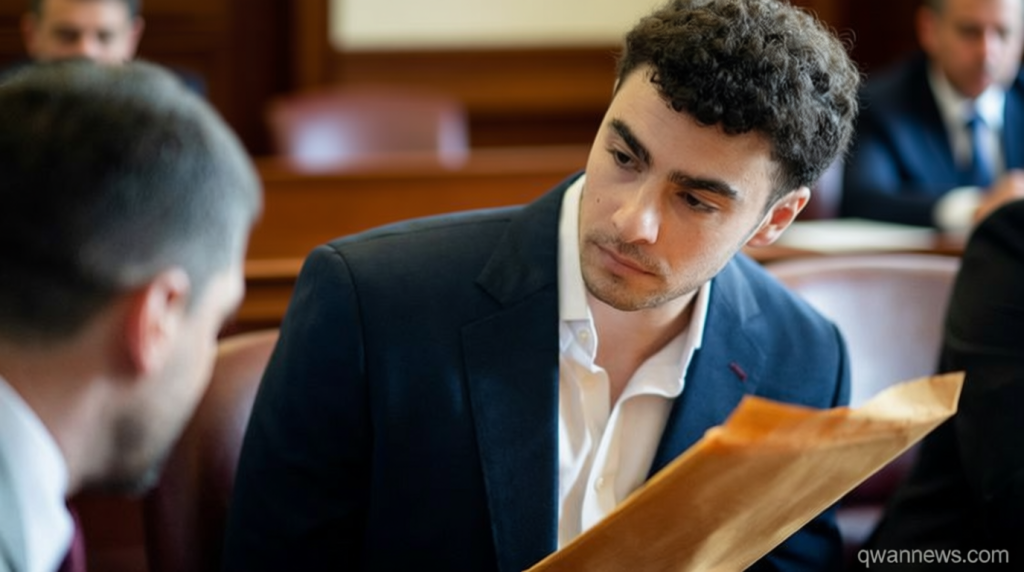
Luigi Mangione’s Psychiatric Defense in State Murder Trial
Qwenews.com – Luigi Mangione will argue a psychiatric defense in his state murder trial, a legal strategy that could reshape the narrative around the December 2024 shooting of UnitedHealthcare CEO Brian Thompson. The defense aims to establish that Mangione’s actions were driven by an extreme emotional disturbance, a condition that may have impaired his ability to fully comprehend the consequences of his actions. By introducing this defense, Mangione’s legal team seeks to challenge the prosecution’s claim that the killing was premeditated, arguing instead that it was the result of a sudden and intense emotional reaction. This approach is not new, but its application in this high-profile case has drawn significant attention from legal experts and the public alike.
Preparation and Legal Challenges
Mangione’s attorneys have been working diligently to build a compelling case for the psychiatric defense, emphasizing the psychological state he was in at the time of the shooting. The defense plans to present evidence suggesting that the incident occurred during a period of heightened stress, which could be tied to Mangione’s personal grievances against the healthcare industry. Prosecutors, however, have pushed back, asserting that the strategy is a last-minute attempt to sway the jury’s perception of the crime. Assistant District Attorney Joel Seidemann has criticized the defense for withholding critical information, including details about Mangione’s mental health history and the psychiatric expert they intend to call.
During a recent hearing, Judge Gregory Carro reiterated his stance on the importance of transparency, stating that the psychiatric defense strategy must be fully developed before trial. The judge emphasized that the defense could not delay further, as doing so might jeopardize their ability to present the argument effectively. Carro also approved the release of sealed documents related to the defense, ensuring that the public and media have access to key evidence. This decision comes after the defense argued that the information was too sensitive to be disclosed early, potentially influencing the trial’s outcome.
Context and Implications of the EED Defense
The extreme emotional disturbance (EED) defense, which Mangione’s team is leveraging, is a legal tool that allows defendants to claim diminished responsibility for their actions. To qualify, the prosecution must prove that the defendant’s mental state was so disturbed at the time of the crime that they could not control their behavior. This defense is often associated with cases involving sudden, intense emotional reactions, such as rage or panic, triggered by specific events. Legal analysts note that while the EED defense has been used in previous high-profile cases, its application here hinges on the jury’s belief that Mangione’s actions were not entirely voluntary.
Luigi Mangione’s psychiatric defense strategy also includes the presentation of his writings and statements expressing hostility toward the healthcare sector, which prosecutors argue demonstrate premeditation. However, the defense contends that these materials were created after the emotional trigger that led to the shooting. If successful, the psychiatric defense could reduce the charge from murder to manslaughter, significantly altering the potential sentence. Carro’s evidentiary rulings have been pivotal in allowing the defense to proceed, but the outcome will depend on the jury’s interpretation of Mangione’s mental state during the incident.
Case Timeline and Legal Proceedings
The trial, set to begin in September, has seen several key developments as Mangione’s team prepares its case. Earlier this month, a sealed hearing was held to discuss the psychiatric defense, revealing that the defense had initially planned to pivot to a different strategy before finalizing their approach. This move was met with skepticism by prosecutors, who argue that the defense is using the psychiatric angle to create doubt in the jury’s mind. Carro’s decision to mandate the release of documents has added pressure to the defense, forcing them to provide a clear rationale for their chosen strategy and the credibility of their expert witnesses.
Mangione’s legal team has been focused on building a narrative that frames the shooting as an impulsive act rather than a calculated one. This includes highlighting the psychological impact of the victim’s role in the healthcare industry, which Mangione has repeatedly criticized in social media and personal letters. The defense also plans to present testimony from a psychiatric expert who will evaluate Mangione’s mental health at the time of the crime. If the jury accepts this evidence, the case could shift from a first-degree murder charge to a reduced offense, potentially leading to a lesser sentence. However, the prosecution maintains that the evidence will not be enough to overturn the murder charge.
Public and Media Reaction
The psychiatric defense has sparked a debate among legal experts and the media about its viability in this case. Some analysts argue that the physical evidence, including Mangione’s backpack and the gun used in the shooting, strongly supports the prosecution’s claim of premeditation. Others believe that the defense has a solid case, particularly if they can establish that Mangione was in a heightened emotional state at the time of the crime. The public’s perception has also been influenced by the defense’s approach, with some expressing sympathy for Mangione’s alleged emotional turmoil and others criticizing the strategy as a way to avoid full accountability.
As the trial approaches, the psychiatric defense is expected to be a central theme in both the prosecution and defense arguments. The challenge lies in persuading the jury that Mangione’s actions were not entirely voluntary, despite the evidence of his intent. Legal experts suggest that the success of the defense will depend on the credibility of the psychiatric expert, the emotional impact of the evidence presented, and the jury’s ability to distinguish between premeditated murder and a crime of passion. With the trial set to begin, the courtroom is poised to become the focal point of this psychological battle.