
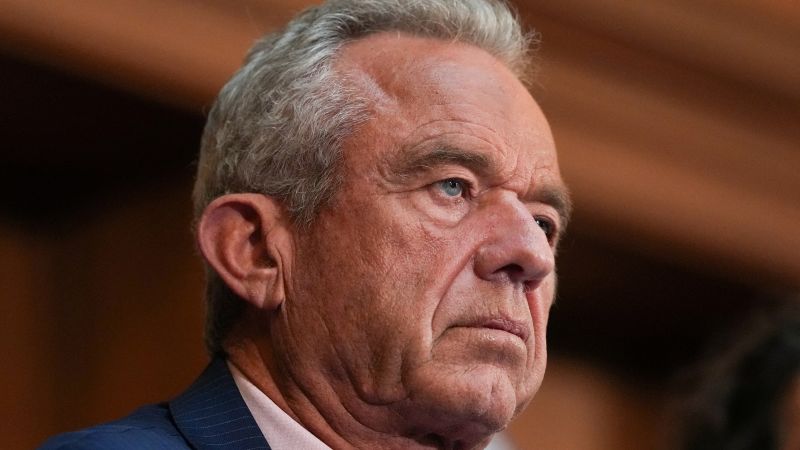
RFK Jr. Orders Passenger to Stay in Quarantine Amid Hantavirus Outbreak
Quarantine Dispute Sparks Debate Over Federal Control
Qwenews.com – Robert F. Kennedy Jr. has issued a federal quarantine order requiring Angela Perryman, a 47-year-old woman exposed to the hantavirus during a cruise aboard the MV Hondius, to remain isolated in Nebraska. Despite the Centers for Disease Control and Prevention (CDC) advising her return to Florida, Perryman continues to be held under federal supervision. The decision has ignited a discussion about the balance between state and federal authority in public health crises.
Perryman’s case highlights the growing tension between state health protocols and federal mandates. She was one of 18 U.S. passengers initially quarantined at the Nebraska Medical Center in early May after contracting the rare hantavirus strain. While most opted to leave once their home states agreed to monitor symptoms and provide 24/7 oversight until June 21, Perryman’s situation has stalled due to Florida’s inability to meet federal criteria. Her continued isolation has drawn criticism from both state and public health advocates.
“At this point, it’s just a state-federal spat, and I’m just a hostage,” Perryman told CNN.
The CDC’s Dr. Michael Bell reviewed Perryman’s case and argued that Florida’s once-daily telehealth monitoring would effectively curb the spread of the virus. His nine-page analysis emphasized that the state’s proposed plan aligns with the core objectives of quarantine—preventing infectious transmission while allowing individuals to return to their communities. However, Kennedy’s order overrides this, insisting that federal oversight is crucial to ensure safety for Perryman and those around her. This contradiction has raised questions about the consistency of public health guidelines.
Hantavirus: A Rare but Deadly Threat
Hantavirus, a group of viruses spread primarily by rodents, poses a serious risk to human health. The strain Perryman contracted is particularly rare and can lead to severe respiratory illness, with symptoms including fever, fatigue, and muscle pain that may progress to pulmonary syndrome. Cases of hantavirus are uncommon in the U.S., making the outbreak on the MV Hondius a notable event. The CDC’s recommendation for quarantine is based on the virus’s incubation period and the risk of transmission through exhaled air, especially in enclosed spaces.
The cruise ship incident underscores the challenges of managing infectious diseases in a mobile, international context. With 18 U.S. passengers initially placed in quarantine, the case has drawn attention to how federal and state agencies coordinate during health emergencies. Kennedy’s decision to extend Perryman’s isolation suggests a preference for centralized control, even as Florida argues its plan is sufficient. This divergence has sparked debates about the efficiency of federal protocols and their potential impact on individual freedoms.
Political and Public Health Implications
Kennedy’s quarantine order has drawn scrutiny from public health experts and state officials alike. A spokesperson for the Health and Human Services (HHS) stated that the decision was made after consultations with CDC acting director Dr. Jay Bhattacharya, emphasizing the need for “robust public health measures.” However, Perryman’s frustration with the system has grown, as she notes repeated promises from health officials that have yet to materialize. “If there had been a scientific reason from the start, I would have agreed,” she said, highlighting the perceived politicization of the situation.
The controversy reflects broader disagreements over how to manage infectious disease outbreaks. While federal agencies prioritize strict containment measures, some states argue that localized monitoring can be just as effective. Perryman’s case has become a focal point for these tensions, with her isolation serving as a symbol of the growing divide between national and state-level responses. As the debate continues, the question remains: how long will federal oversight persist, and what does this mean for future outbreaks?
State-Federal Collaboration and Quarantine Standards
Nebraska Medical Center confirmed that quarantine orders should technically be issued by the CDC, raising questions about the legal basis for Kennedy’s decision. The facility has been a key player in managing the quarantine, housing Perryman and others until their states could assume responsibility. Florida’s Department of Health has yet to comment on the matter, but the state’s current monitoring plan—focused on symptom tracking and regular check-ins—has been deemed inadequate by federal officials.
The CDC’s protocol for hantavirus quarantine requires rigorous oversight, including daily monitoring and isolation until the risk of transmission is minimized. Perryman’s case has been a test of this system, with Florida’s proposed plan falling short of the federal standard. This has led to criticism that the federal government is using the situation to assert control, even as some state officials stress the importance of flexibility in public health strategies. The dispute now centers on whether the CDC’s recommendation is the gold standard or a bureaucratic overreach.
With 10 passengers already released under state agreements, Perryman’s case remains an outlier. Her continued quarantine has sparked a conversation about the scalability of federal mandates and their potential to disrupt state autonomy. Health experts warn that such conflicts could complicate efforts to manage future outbreaks, as differing priorities may lead to inconsistent enforcement. The situation also raises concerns about how public health decisions are communicated and perceived by affected individuals and communities.